
UT State Guide · Updated March 2026
Best Grass Seed for Utah
Top grass seeds for Utah lawns that handle drought, alkaline soil, and high-altitude conditions. Expert picks for Salt Lake City, Provo, Ogden, and St. George.
Disclosure: This article contains affiliate links. If you buy through our links, we may earn a commission at no extra cost to you. All opinions are our own. Learn more.
Utah lawn care is fundamentally a conversation about water — who has it, who doesn't, and how much of it you're willing to put on grass in a state that averages barely 13 inches of annual precipitation. The Wasatch Front, where roughly 80% of Utah's population lives in a narrow corridor from Ogden through Salt Lake City to Provo, sits in a high desert climate where summer irrigation accounts for the majority of residential water use. Utah State University's Extension program has been at the forefront of water-wise landscaping research for decades, and their turfgrass trials at the Greenville Research Farm in North Logan have tested virtually every grass variety that can survive Utah's unique combination of alkaline soil, high elevation, intense UV exposure, and chronic water scarcity. The state's lawn culture is evolving rapidly — ten years ago, Kentucky bluegrass was assumed on every lot, but today water-conserving grass varieties, reduced turf footprints, and xeriscaping are gaining serious traction as drought conditions persist and water rates climb. Understanding your specific location within Utah matters enormously, because a lawn in Logan at 4,500 feet in Zone 5a faces entirely different challenges than one in St. George at 2,800 feet in Zone 8a.
Kentucky bluegrass has been Utah's default residential grass since the postwar suburban boom, and it remains the most planted species across the Wasatch Front. Drive through any neighborhood in Sandy, Draper, Lehi, or South Jordan and you'll see miles of KBG — dark green, dense, and drinking deeply from sprinkler systems that run every other night from May through September. The cultural attachment to green lawns runs deep in Utah, tied to community aesthetics and the legacy of settlers who literally made the desert bloom. But KBG's water appetite — it needs 1.5 to 2 inches per week during Utah's bone-dry summers — is increasingly at odds with the state's water reality. The Great Salt Lake is shrinking to historically low levels, reservoirs along the Wasatch regularly dip below 50% capacity by late summer, and municipalities from Salt Lake City to Orem have implemented tiered water pricing that makes heavy irrigation genuinely expensive. Improved KBG varieties like Midnight offer better drought tolerance and disease resistance than the old common types, but even the best bluegrass needs consistent water in Utah's climate. The gap between what homeowners want and what the water supply can sustain is widening every year.
The smart money in Utah lawn care is shifting toward water-efficient grass varieties that maintain acceptable appearance with significantly less irrigation. RTF (Rhizomatous Tall Fescue) water saver blends have gained substantial market share along the Wasatch Front because they deliver a lawn that looks like traditional turf but survives on 30 to 40% less water than Kentucky bluegrass. These deep-rooted tall fescue varieties send roots down 3 to 4 feet in Utah's well-drained soils, accessing moisture that shallow-rooted bluegrass can't reach. Buffalo grass represents an even more aggressive water-saving strategy — as a native Great Plains species, improved varieties like Sharp's Improved can survive on natural precipitation alone in parts of northern Utah, though they go dormant and turn golden-brown during the driest stretches. USU Extension has been testing and recommending these alternatives with increasing enthusiasm, recognizing that Utah's water future demands a fundamental shift in what homeowners consider an acceptable lawn. Water-wise landscaping isn't a fringe movement here anymore — it's becoming the mainstream expectation in communities from Bountiful to Springville.
Utah's soil is overwhelmingly alkaline, and this single factor shapes every fertilization and amendment decision you'll make. Across the Wasatch Front, soil pH typically runs 7.5 to 8.5, driven by the ancient Lake Bonneville lakebed deposits that underlie the entire Salt Lake Valley and Utah Valley. This high pH locks up iron, manganese, and zinc, producing the chlorotic yellowing that plagues Utah lawns every summer — you'll see it in every neighborhood from Murray to Orem, grass blades turning yellow while the veins stay green, a textbook iron deficiency caused not by a lack of iron but by soil chemistry that makes existing iron unavailable to roots. You'll see homeowners dumping sulfur and iron supplements on their grass from April through August trying to combat the yellowing, and USU Extension's soil testing lab processes thousands of samples annually from frustrated residents wondering why their grass looks anemic despite regular fertilization. The fix is consistent iron supplementation with chelated iron (EDDHA formulation, which stays available above pH 7.5) applied monthly during the growing season, rather than trying to permanently lower the pH of soil that's been alkaline for thousands of years. Southern Utah around St. George adds caliche — a rock-hard calcium carbonate layer — that can sit just inches below the surface and block root penetration entirely.
Elevation is the other defining variable for Utah lawns. Logan sits at 4,500 feet, Salt Lake City at 4,300, Park City at 7,000, and even the suburban communities of Eagle Mountain and Saratoga Springs in Utah Valley sit above 4,500 feet. High elevation means intense UV radiation that stresses grass differently than lowland heat, wider temperature swings between day and night (30-degree differentials are routine in summer), and a compressed growing season that gives you roughly May through September to establish, maintain, and prepare grass for winter. St. George in the far south drops to 2,800 feet and Zone 8a warmth, making it functionally a different state for lawn purposes — bermuda grass thrives there while it would winterkill in Salt Lake City. Cache Valley around Logan represents the cold extreme, where Zone 4b to 5a winters regularly hit minus 15 to minus 20 degrees and the growing season is among the shortest of any populated area in the Intermountain West. Your elevation and USDA zone should be the first thing you identify before making any grass seed purchase in Utah, because what thrives in Provo may fail in Logan and what works in St. George is impossible everywhere else in the state.
Quick Picks: Our Top 3 for Utah
Understanding Utah's Lawn Climate
Arid to semi-arid with cold winters and hot, dry summers along the Wasatch Front. Utah's lawn challenges are defined by water scarcity — the state averages only 12-16 inches of precipitation annually, and most of it falls as winter snow. The Wasatch Front (Salt Lake City, Provo, Ogden) sits at 4,200-4,500 feet elevation with intense UV, alkaline soil, and mandatory water conservation. St. George in the south is Mojave Desert with 115F summer heat. Park City and Logan in the mountains have short growing seasons and Zone 4-5 cold.
Key Challenges
Best Planting Time for Utah
Late August through September (fall) for best results along the Wasatch Front; late May for mountain communities after last frost
Our Top 3 Picks for Utah
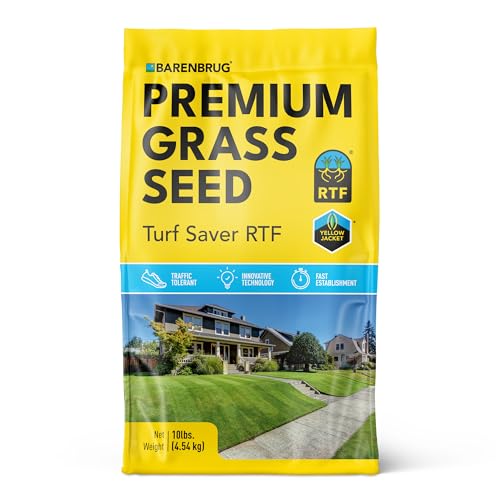
Barenbrug RTF Water Saver
Barenbrug · Cool Season · $40-55 for 5 lbs
Why this seed for Utah: RTF is the water-wise fescue choice for Utah's Wasatch Front. Deep roots and self-repair mean less water and less reseeding — critical when every gallon counts.

Outsidepride Midnight Kentucky Bluegrass Seed
Outsidepride · Cool Season · $35 (5 lbs) – $300 (50 lbs)
Why this seed for Utah: KBG is Utah's most popular lawn grass, and Midnight is the premium choice. Handles the alkaline soil, intense UV, and cold winters along the Wasatch Front.
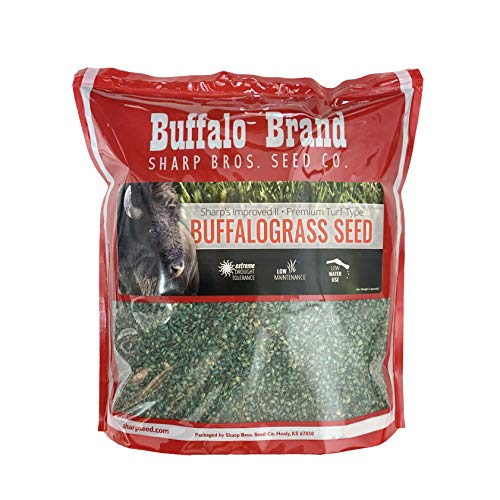
Sharp's Improved II Buffalo Grass
Sharp Bros. Seed Co. · Warm Season · $24 (3 lbs)
Why this seed for Utah: For Utah homeowners ready to break free from irrigation dependency, buffalo grass survives on minimal water. Ideal for the western valleys and anyone tired of fighting the water bill.
Best Grass Seed by Region in Utah
Wasatch Front / Salt Lake City
The Wasatch Front — Salt Lake City, Sandy, Draper, West Jordan, Murray, Millcreek, Cottonwood Heights, Herriman, and Riverton — is Zone 6b to 7a and home to roughly 1.2 million people packed into the Salt Lake Valley between the Wasatch Range and the Great Salt Lake. The valley floor is ancient Lake Bonneville lakebed: heavy clay in the lowlands near the Jordan River, transitioning to well-drained gravelly loam on the benches and foothills east of I-15. Soil pH runs 7.5 to 8.5 across the valley, and iron chlorosis is the most common lawn complaint at USU Extension's Salt Lake County office. Summer precipitation is negligible — July averages 0.7 inches of rain — making irrigation the sole water source for lawns from June through September. Salt Lake City Public Utilities' tiered water pricing penalizes heavy irrigation use, and the Flip Your Strip program offers rebates for removing park strips and converting to water-wise landscaping. Jordan Valley Water Conservancy District's Localscapes initiative encourages homeowners to reduce turf footprint while maintaining functional lawn areas. Despite the water conversation, KBG remains dominant on residential lots, though RTF tall fescue blends are appearing in new construction at an accelerating rate.
Top picks for this region:
- ✓Iron chlorosis is the number one lawn problem in the Salt Lake Valley — apply chelated iron (EDDHA formulation works best in high-pH soil) monthly from May through August instead of trying to lower pH with sulfur, which is a losing battle on Lake Bonneville clay
- ✓Salt Lake City's tiered water rates make KBG lawns expensive to maintain — RTF water saver blends reduce irrigation needs by 30 to 40% while maintaining a green appearance that satisfies HOA requirements
- ✓The bench neighborhoods east of I-15 (Millcreek, Holladay, Cottonwood Heights) have better-drained gravelly soil than the valley floor clay — these areas are ideal for deep-rooted tall fescue varieties that struggle in waterlogged lowland clay
- ✓Apply pre-emergent when forsythia and early daffodils bloom along the Wasatch Front, typically mid-to-late March in the valley — crabgrass pressure is heavy in the warm microclimates along the west side of the valley near the Great Salt Lake
Utah Valley / Provo-Orem
Utah Valley — Provo, Orem, Lehi, American Fork, Pleasant Grove, Springville, Spanish Fork, and the booming tech corridor communities of Eagle Mountain and Saratoga Springs — sits at 4,500 to 5,000 feet in Zone 6a to 6b. The valley is ringed by mountains that create dramatic microclimate variation: the east bench of Provo against the Wasatch Range gets more precipitation and cooler summers than the exposed western side near Utah Lake. Lehi and the northern Utah Valley tech corridor have seen explosive growth, with thousands of new homes built on former agricultural land that was laser-leveled for irrigation — the resulting soil is compacted clay with virtually no organic matter. Utah Valley's water comes primarily from snowpack-fed reservoirs and the Provo River system, and drought years put severe pressure on the supply. BYU's campus and surrounding neighborhoods feature some of the most meticulously maintained KBG lawns in the state, setting a visual standard that influences homeowner expectations across the valley. USU Extension's Utah County office is one of the busiest in the system, fielding constant questions about iron chlorosis, water conservation, and transitioning from KBG to lower-water alternatives.
Top picks for this region:
- ✓New construction in Lehi, Eagle Mountain, and Saratoga Springs is built on brutally compacted former farm clay — core aerate twice annually (May and September) for the first three years to break through construction compaction before expecting a quality lawn
- ✓Utah Valley's alkaline soil (pH 7.5 to 8.5) demands iron supplementation, not more nitrogen — yellow grass with green veins is iron chlorosis from high pH, not nitrogen deficiency, and adding nitrogen just makes it grow faster while staying yellow
- ✓Buffalo grass is a viable low-water alternative for Utah Valley park strips and low-traffic areas — Sharp's Improved goes dormant golden-brown in drought but survives on rainfall alone once established, which is remarkable in a valley that gets 16 inches of annual precipitation
- ✓The east bench of Provo and Orem (near Rock Canyon, Edgemont) gets 10 to 15% more precipitation and runs 5 to 8 degrees cooler in summer than the valley floor — these microclimates support KBG with less supplemental irrigation than the exposed western valley
Southern Utah / St. George
Southern Utah — St. George, Washington, Hurricane, Ivins, and the communities of Washington County — is a completely different world from the Wasatch Front. Sitting at 2,800 feet in Zone 8a to 8b, St. George regularly hits 110 degrees in July and receives only 8 inches of annual precipitation, making it functionally a Mojave Desert outpost. The Washington County Water Conservancy District has implemented some of Utah's most aggressive water conservation measures, including tiered pricing, outdoor watering schedules, and the largest turf buyback program in the state. Bermuda grass is the dominant warm-season choice here — it thrives in the heat, handles the alkaline caliche-laden soil, and goes dormant in the mild winters rather than dying. Many St. George homeowners overseed bermuda with perennial ryegrass in October for winter color, creating year-round green on the golf courses and higher-end residential properties. The soil in Washington County is sandy with a caliche hardpan that can sit 6 to 18 inches below the surface, blocking drainage and root penetration. Breaking through caliche during site prep is essential for any lawn that's expected to develop deep roots and survive long-term in this extreme desert environment.
Top picks for this region:
- ✓St. George is warm enough for bermuda grass — it's the only area in Utah where warm-season turf is viable, and Scotts Bermudagrass establishes readily in the 110-degree summer heat that would kill any cool-season grass
- ✓Caliche hardpan is the hidden enemy in Washington County soil — if water pools on the surface after irrigation, you likely have a caliche layer 6 to 18 inches down that must be broken through with an auger or jackhammer during site preparation
- ✓Washington County's turf buyback rebate program pays homeowners to remove grass and install xeriscape — check current rates before planting a new lawn, as the financial incentive to reduce turf may exceed the cost of installation
- ✓If you keep cool-season grass in St. George, RTF water saver blends are the only realistic option — standard KBG will burn out by June without heroic irrigation, while deep-rooted RTF fescue survives the heat with 40% less water
Cache Valley / Logan
Cache Valley — Logan, Smithfield, North Logan, Hyde Park, Providence, and the communities surrounding Utah State University — is the cold extreme of Utah lawn care. Sitting at 4,500 feet in Zone 4b to 5a, Cache Valley experiences winter lows of minus 15 to minus 20 degrees regularly, with occasional plunges below minus 25 during Arctic outbreaks. The valley is a classic cold-air drainage basin — cold air pools on the valley floor during winter inversions, creating temperatures 10 to 15 degrees colder than the surrounding benches. Growing season runs from mid-May through mid-September, giving you barely four months of active turf growth. The good news: Cache Valley's soil is generally better than the Salt Lake and Utah Valley clay, with loamy agricultural soils derived from ancient Lake Bonneville shoreline deposits and alluvial fans that drain well and hold nutrients effectively. USU's main campus is here, and their turfgrass research program at the Greenville Research Farm is literally in the community's backyard — the variety trials and water conservation research conducted there directly inform what works in Cache Valley. Kentucky bluegrass dominates residential lawns because it handles the extreme cold winters better than tall fescue, which can suffer crown damage during the deepest freezes.
Top picks for this region:
- ✓Cache Valley's cold-air pooling means valley floor lawns experience temperatures 10 to 15 degrees colder than benchland properties — choose varieties rated for Zone 4 on the valley floor, even though the surrounding area is technically Zone 5
- ✓USU's Greenville Research Farm in North Logan publishes annual turfgrass variety trial results — consult these before choosing seed, as they test under actual Cache Valley conditions including the brutal winter freezes and short growing season
- ✓Fine fescue blends are excellent low-input alternatives for Cache Valley shade and low-traffic areas — they need less water and fertilizer than KBG and handle the cold winters without winterkill under aspen and maple canopy
- ✓Spring seeding in Cache Valley should wait until late May when soil temperatures hold above 55 degrees — the temptation to seed in April after snowmelt is strong, but cold soil temperatures prevent germination and waste seed
Utah Lawn Care Calendar
Spring
March - May
- •Apply pre-emergent herbicide when soil temperatures reach 55 degrees at 4-inch depth — on the Wasatch Front that's typically mid-to-late March when forsythia blooms, in Utah Valley early April, in Cache Valley mid-to-late April, and in St. George as early as late February
- •Submit a soil test through the USU Analytical Laboratories (about $14 per sample) — this is essential in Utah where alkaline pH affects nutrient availability and most homeowners are unknowingly fighting iron lockout rather than true nutrient deficiency
- •Begin irrigation in late April to early May on the Wasatch Front as temperatures climb and precipitation drops — start with once-per-week deep watering and increase frequency as summer heat intensifies
- •Apply chelated iron (EDDHA formulation) in April when grass greens up — don't wait for chlorosis symptoms to appear, as preventive monthly applications from April through August keep Utah lawns green without excess nitrogen
- •Seed bare spots and new lawns from late April through May on the Wasatch Front, mid-May through early June in Cache Valley — cool-season grass seed needs soil temps above 55 degrees for germination
- •Core aerate compacted clay soils in late April to early May — Wasatch Front and Utah Valley Bonneville clay benefits enormously from spring aeration before the soil bakes dry and hard in summer
Summer
June - August
- •Water deeply and infrequently — KBG needs 1.5 to 2 inches per week in Utah's arid summer, applied in two to three early-morning sessions rather than daily light sprinkling that promotes shallow roots and fungal disease
- •Raise mowing height to 3 to 3.5 inches for KBG and 3.5 to 4 inches for tall fescue during peak heat — taller grass shades the soil, reduces evaporation, and keeps root zone temperatures down in Utah's intense high-altitude sun
- •Apply monthly iron supplements (chelated iron or ferrous sulfate at 2 to 4 oz per 1,000 sq ft) to combat chlorosis — this is a Utah-specific maintenance task that replaces additional nitrogen applications on alkaline soil
- •Monitor for billbugs, which are the most damaging insect pest of Utah KBG lawns — look for irregular brown patches in June and July with stems that break off at the crown and contain sawdust-like frass
- •Reduce irrigation during any municipal water restriction periods and allow KBG to go semi-dormant rather than trying to maintain full green on a reduced watering schedule — it will recover when water returns
- •In St. George, bermuda lawns need 1 inch of water per week split into three applications and mowing at 1.5 to 2 inches — water before 5 AM to minimize the extreme evaporation from desert heat
Fall
September - November
- •Core aerate and overseed KBG lawns in September — this is the single best time for lawn improvement along the Wasatch Front and in Utah Valley, when soil temperatures are warm enough for germination but air temperatures are cooling
- •Apply fall fertilizer with higher potassium (such as 10-5-20) in early October to harden grass for winter — potassium strengthens cell walls and improves freeze tolerance, which matters enormously in Cache Valley and mountain communities
- •Reduce irrigation frequency gradually as temperatures drop — most Wasatch Front lawns can go to once per week by mid-September and stop entirely by late October after the first hard freeze
- •In St. George, overseed bermuda with perennial ryegrass in mid-October when nighttime temperatures consistently drop below 65 degrees for winter green color
- •Apply pre-emergent in late September to prevent winter annual weeds (Poa annua, henbit) from establishing in the fall — this is often skipped in Utah but matters for a clean spring lawn
- •Winterize your irrigation system by mid-to-late October on the Wasatch Front, early-to-mid October in Cache Valley — a hard freeze with water in the lines means cracked pipes and expensive spring repairs
Winter
December - February
- •Leave dormant cool-season grass alone — no fertilizer, no traffic on frozen turf, and avoid piling snow from driveways onto lawn areas where road salt contamination will burn the grass in spring
- •Plan water-wise lawn renovations — winter is the time to research RTF fescue or buffalo grass conversion, design reduced-turf landscapes, and apply for municipal turf removal rebates before the spring rush
- •Check soil test results from fall submissions and purchase amendments (chelated iron, gypsum, sulfur) before spring demand depletes garden center inventory — USU Extension recommendations are calibrated to Utah's alkaline soils specifically
- •Service your irrigation system and mower during winter — replace worn sprinkler heads, adjust coverage zones, and ensure your system is ready for a mid-April startup on the Wasatch Front
- •Order grass seed by February — improved KBG varieties and RTF water saver blends sell out at IFA Country Store, Millcreek Gardens, and local nurseries by mid-spring as everyone tries to seed at once
Utah Lawn Tips You Won't Find on the Seed Bag
USU Extension Is Utah's Lawn Authority
Utah State University's Cooperative Extension operates offices in every county and runs the most relevant turfgrass research program for Intermountain West conditions. Their soil testing lab at the USU Analytical Laboratories costs about $14 per sample and returns results with Utah-specific fertilizer and amendment recommendations — not generic national advice that ignores your alkaline soil. The Greenville Research Farm in North Logan conducts ongoing variety trials for KBG, tall fescue, fine fescue, and buffalo grass under actual Utah conditions, and results are published free online. Your county Extension agent can diagnose lawn problems from a photo, and the weekly Extension gardening columns in the Deseret News and Salt Lake Tribune are surprisingly useful. These resources exist because your tax dollars fund them — use them before taking advice from a YouTube channel filmed in Ohio.
Alkaline Soil Is Utah's Universal Lawn Challenge
Almost every soil in urban Utah runs pH 7.5 to 8.5, a legacy of the ancient Lake Bonneville deposits that underlie the Wasatch Front, Utah Valley, and Cache Valley. This high pH locks up iron, manganese, and zinc in the soil, making them unavailable to grass roots even when the minerals are physically present. The result is iron chlorosis — yellow grass with green veins — that looks like a nutrient deficiency but is actually a pH-induced availability problem. Dumping more nitrogen fertilizer on chlorotic grass makes it grow faster while staying yellow, which is the most common and expensive mistake Utah homeowners make. The solution is regular chelated iron applications (EDDHA chelate works best above pH 7.5) from April through August. Attempting to permanently lower Utah soil pH with elemental sulfur is a losing battle — the buffering capacity of calcareous soil is enormous, and the pH rebounds within months. Accept the alkaline soil and manage around it with iron supplements.
Water Conservation Is Not Optional Anymore
Utah is the second-driest state in the nation and has the highest per-capita residential water consumption — a contradiction that's becoming unsustainable as population growth outpaces water supply. The Great Salt Lake's declining levels, shrinking reservoir storage, and persistent drought conditions mean that the era of unlimited lawn irrigation is ending. Municipalities across the Wasatch Front have implemented tiered water pricing, mandatory watering schedules, and turf removal rebate programs. Salt Lake City's Flip Your Strip program, Jordan Valley Water Conservancy District's Localscapes initiative, and Washington County's turf buyback are real financial incentives to reduce lawn footprint. If you're keeping grass, switching from standard KBG to RTF water saver blends or buffalo grass can cut irrigation needs by 30 to 60%. The lawn of the future in Utah is smaller, more water-efficient, and likely not Kentucky bluegrass on every square foot of the yard.
Elevation Creates Microclimates That Matter
Utah's populated areas span from 2,800 feet (St. George) to over 7,000 feet (Park City, Heber), with most Wasatch Front communities sitting at 4,300 to 5,000 feet. Elevation affects grass selection in ways that USDA zone maps don't fully capture: intense UV radiation at elevation stresses grass differently than lowland heat, nighttime temperatures drop faster and further than at lower elevations, and the growing season compresses significantly above 5,000 feet. A lawn in Draper at 4,500 feet behaves differently from one in Alpine at 5,000 feet, even though they're 15 miles apart. Communities in the benches and foothills experience microclimates shaped by slope aspect, cold air drainage, and mountain shadow. South-facing slopes green up two to three weeks earlier than north-facing slopes at the same elevation, and frost-pocket locations need more cold-hardy varieties than exposed benchlands.
The HOA Green Lawn Pressure Is Real
Utah has one of the highest rates of HOA-governed communities in the nation, and many HOA covenants still require maintained green lawns on front yards and park strips. This creates a direct conflict with water conservation goals, as homeowners who want to reduce turf or install xeriscape find themselves fighting CC&R requirements written twenty years ago when water was cheap and abundant. Utah state law now prohibits HOAs from banning water-wise landscaping entirely, but enforcement is inconsistent and the cultural pressure for green lawns remains strong in many communities across Lehi, Herriman, South Jordan, and Eagle Mountain. If your HOA requires maintained turf, RTF water saver blends are your best compromise — they satisfy the green lawn requirement while using significantly less water than standard KBG. Document your water savings and share with your HOA board, because most boards will support alternatives that demonstrably maintain property aesthetics while reducing the community's water footprint.
IFA Country Store Is Utah's Local Lawn Resource
IFA (Intermountain Farmers Association) Country Stores are Utah's version of a regional farm-and-garden chain that actually stocks products appropriate for local conditions. Unlike big-box stores that carry the same national seed brands regardless of location, IFA locations along the Wasatch Front, in Utah Valley, and in Cache Valley carry grass seed blends specifically formulated for Utah's alkaline soil, high elevation, and arid climate. Their staff are often former Extension agents, ranchers, or experienced landscapers who understand Utah-specific challenges like iron chlorosis, caliche soil, and water-efficient grass transitions. IFA also carries chelated iron products, soil sulfur, and fertilizer blends designed for high-pH soil that you won't find at Home Depot. For bulk seed purchases on new lawns or large renovations, IFA's pricing beats the box stores significantly. They're the first stop for any serious Utah lawn project.
What Utah Lawn Pros Actually Plant
Kentucky Bluegrass
Most PopularKBG remains the default residential grass across the Wasatch Front, Utah Valley, and Cache Valley, installed on the vast majority of existing homes and still specified by many builders for new construction. Midnight Kentucky Bluegrass is the premium variety choice for Utah, offering improved drought tolerance, darker color, and better disease resistance than common KBG — qualities that matter in a state where iron chlorosis, billbugs, and summer drought stress are annual challenges. The appeal of KBG is its dense, carpet-like appearance, excellent cold hardiness (critical for Cache Valley's Zone 4b winters), and self-repairing rhizomatous growth that fills in bare spots without overseeding. The limitation is water: KBG needs 1.5 to 2 inches per week during Utah's dry summers, making it the thirstiest option on the market. For homeowners with irrigation and the budget for summer water bills, KBG delivers the traditional Utah lawn aesthetic that HOAs and neighbors expect. For everyone else, it's becoming increasingly hard to justify.
RTF Water Saver Tall Fescue
Very PopularRTF (Rhizomatous Tall Fescue) water saver blends have become the fastest-growing segment of Utah's residential grass seed market, driven by water conservation awareness and the practical reality of rising irrigation costs. Barenbrug's RTF Water Saver is the leading brand, available at IFA Country Stores, local nurseries, and increasingly at big-box retailers along the Wasatch Front. The appeal is straightforward: RTF fescue develops roots 3 to 4 feet deep in Utah's well-drained soils, survives on 30 to 40% less water than KBG, and maintains green color through moderate drought without irrigation. Unlike standard tall fescue, RTF varieties spread by rhizomes to fill bare spots, giving them some of KBG's self-repairing capability. The grass looks slightly coarser than KBG up close but reads as a normal green lawn from the street, which is what matters for curb appeal and HOA compliance. For Utah homeowners navigating water restrictions, HOA requirements, and rising water bills, RTF water saver is the pragmatic middle ground.
Buffalo Grass
Growing in PopularityBuffalo grass is gaining serious attention in Utah as the ultimate water-conserving lawn option — a native Great Plains species that survives on 12 to 15 inches of annual precipitation, which is roughly what the Wasatch Front receives naturally without irrigation. Sharp's Improved Buffalo Grass is the recommended variety, producing a finer-textured, denser turf than older buffalo grass types that looked like neglected pasture. USU Extension has tested buffalo grass extensively and recommends it for park strips, low-traffic side yards, and large lots where irrigation is impractical or unaffordable. The trade-off is aesthetic: buffalo grass grows slowly, stays shorter than traditional turf (3 to 5 inches unmowed), and goes dormant golden-brown during extended dry periods and from October through late April. For homeowners who prioritize water savings over year-round green and can accept a different lawn aesthetic, buffalo grass aligns with Utah's water future better than any other option.
Fine Fescue Blend
Niche ChoiceFine fescue blends — combinations of creeping red, chewings, hard, and sheep fescue — fill the shade and low-maintenance niche in Utah lawns. These grasses perform well under the mature trees in Salt Lake City's older neighborhoods (the Avenues, Sugar House, Federal Heights), in shaded park strips along the Wasatch Front, and on Cache Valley's north-facing slopes where KBG struggles with reduced light. Fine fescues need less water and fertilizer than KBG, tolerate Utah's alkaline soil reasonably well, and maintain decent winter color. They're not a primary lawn grass for sunny Utah lots — they thin out in full sun and high heat — but as a component of a shade mix or a standalone solution for low-light areas, they're an underutilized option in a state where most homeowners default to KBG for everything regardless of site conditions.
Bermuda Grass (St. George Only)
Niche ChoiceBermuda grass is exclusively a Southern Utah choice, viable only in the St. George, Hurricane, and Washington area where Zone 8a to 8b heat supports warm-season turf. Scotts Bermudagrass seed is widely available at St. George garden centers and Home Depot locations in Washington County. Bermuda handles St. George's 110-degree summer highs without stress, develops deep roots that access moisture in sandy desert soil, and creates a dense, wear-tolerant turf for families. It goes dormant in St. George's mild winters (December through February), and many homeowners overseed with perennial ryegrass for winter color. Bermuda is not viable anywhere on the Wasatch Front, in Utah Valley, or in Cache Valley — winter temperatures below zero kill it outright. For St. George residents, bermuda uses significantly less water than trying to maintain cool-season grass in desert heat, making it both the performance choice and the water-wise choice for Washington County.
Utah Lawn Seeding Tips
Getting the best results from your grass seed in Utah comes down to timing, soil prep, and choosing the right variety for your specific conditions. Here are our top tips:
- Test your soil first. A $15 soil test from your Utah extension office tells you exact pH and nutrient levels. Most cool-season grasses prefer pH 6.0-7.0.
- Prep the seedbed properly. Rake or aerate to ensure good seed-to-soil contact. This single step improves germination rates more than any seed coating or starter fertilizer.
- Use a starter fertilizer. Apply a phosphorus-rich starter fertilizer at seeding time to promote root development. We recommend Scotts Starter Fertilizer or The Andersons Starter.
- Water correctly. Keep the seedbed consistently moist (not soaked) for the first 2-4 weeks. Light watering 2-3 times per day is better than one heavy soaking.
- Be patient. Kentucky Bluegrass takes 14-28 days to germinate. Tall Fescue is faster at 7-14 days. Don't panic if you don't see results immediately.
- Consider pre-germinating KBG. If you're planting Kentucky Bluegrass, you can cut germination time from 30 days to under a week using the bucket-and-bubble pre-germination method. This is especially valuable for late-season seeding in Utah.
Frequently Asked Questions
When is the best time to plant grass seed in Utah?
Late August through September (fall) for best results along the Wasatch Front; late May for mountain communities after last frost
What type of grass grows best in Utah?
Utah is best suited for cool-season grasses like Kentucky Bluegrass, Tall Fescue, and Perennial Ryegrass. These grasses thrive in spring and fall, stay green longer into winter, and handle cold temperatures well.
What are the biggest lawn care challenges in Utah?
The main challenges for Utah lawns include extreme aridity — water scarcity is the #1 issue, highly alkaline soil (ph 7.5-8.5), intense uv radiation at altitude, water restrictions and conservation mandates. Choosing the right grass variety that is adapted to these specific conditions is the single most important decision you can make for your lawn.
Can I grow Kentucky Bluegrass in Utah?
Absolutely — Kentucky Bluegrass is one of the best choices for Utah. It thrives in the cool-season climate, produces a beautiful dense lawn, and self-repairs through rhizome spread. Midnight KBG is our top pick for the darkest, most premium-looking lawn.
How much does it cost to seed a lawn in Utah?
For a typical 5,000 sq ft lawn, expect to spend $150-$400 on seed alone depending on the variety. Premium seeds like Midnight Kentucky Bluegrass or Zenith Zoysia cost more per pound but deliver better results. Add $50-$100 for starter fertilizer and $20-$50 for soil amendments. The seed is the smallest part of your total investment — proper soil prep and consistent watering matter more than saving $50 on cheaper seed.
More Lawn Care Resources
Not in Utah?
We have state-specific grass seed guides for all 50 states.