
AZ State Guide · Updated March 2026
Best Grass Seed for Arizona
The best grass seeds for Arizona lawns that survive extreme desert heat, caliche soil, and water restrictions. Expert picks for Phoenix, Scottsdale, Tucson, and Mesa.
Disclosure: This article contains affiliate links. If you buy through our links, we may earn a commission at no extra cost to you. All opinions are our own. Learn more.
Arizona is the most unlikely lawn state in America. Phoenix averages 8 inches of rain per year, regularly hits 115 degrees in June and July, and sits on some of the most inhospitable soil on the continent — yet the Valley of the Sun is covered in green lawns. You can thank the golf course industry and the steady stream of Midwest transplants who moved to the desert and brought their lawn expectations with them. There are over 200 golf courses in the Phoenix metro alone, and that aesthetic seeped into residential landscaping decades ago. The result is a city that uses roughly 20% of its water on outdoor landscaping, maintaining grass in a place that gets less annual rainfall than the Sahara Desert's northern fringe.
Below every lawn in the Phoenix metro lurks caliche — a cement-like layer of calcium carbonate that forms 6 to 18 inches below the surface and acts like a concrete slab under your yard. Caliche is impenetrable to roots, blocks drainage completely, and creates perched water tables that drown grass during monsoon season only to leave the soil bone-dry two days later. Every serious lawn installation in Maricopa County starts with a caliche assessment. Thin deposits can be fractured with a pickaxe or rototiller. Thick deposits — and some are 3 feet deep in parts of Mesa and Chandler — require a jackhammer or complete soil replacement above the layer. If you skip this step, you'll spend years wondering why your bermuda looks thin no matter how much you water it.
The winter overseed is the defining ritual of Phoenix lawn culture. Every October, as bermuda goes dormant and turns brown, homeowners across the Valley scalp their lawns to the dirt and broadcast perennial ryegrass seed over the top. Within three weeks, a lush green carpet emerges that stays green all winter through the mild Phoenix winters (average January lows around 44 degrees). Come April, rising temperatures kill off the ryegrass and the bermuda wakes up underneath. This transition — managed with precise timing, mowing height changes, and deliberate water stress — is the single most important skill a Phoenix lawn owner can develop. Get it wrong and you end up with a patchy mess of competing grasses that looks terrible from March through May.
Water costs are reshaping the Arizona lawn conversation faster than any other factor. The Central Arizona Project canal that pipes Colorado River water 336 miles to Phoenix is operating under Tier 1 shortage conditions, and further cuts are likely as Lake Mead continues to decline. Maricopa County has begun restricting new developments from relying on groundwater, and Scottsdale has already cut off water deliveries to some Rio Verde Foothills communities. Municipal water rates from SRP and the City of Phoenix have climbed steadily, with tiered pricing that punishes heavy outdoor use. Xeriscaping with desert landscaping — gravel, native plants, drip irrigation — is increasingly common in new builds, and some HOAs that once required green lawns are now mandating desert-friendly yards instead.
Then there's the Arizona that most people forget exists. Flagstaff sits at 7,000 feet with ponderosa pine forests, genuine winters with 100-plus inches of annual snowfall, and summer highs in the 80s. Prescott, at 5,400 feet in the Bradshaw Mountains, has four distinct seasons and gets enough rain to support grass without heroic irrigation efforts. These high-elevation communities are Zone 7 territory — cool-season grass country — and the lawn care advice that applies in Phoenix is not just unhelpful up north, it's actively wrong. A Flagstaff homeowner growing Kentucky bluegrass and a Phoenix homeowner managing bermuda-to-ryegrass transitions might as well be gardening on different planets.
Quick Picks: Our Top 3 for Arizona
Understanding Arizona's Lawn Climate
Arid desert in the low elevations (Phoenix, Tucson) with extreme summer heat exceeding 115F and virtually no rainfall from April through June. The monsoon season from July through September brings brief but intense thunderstorms. Winter is mild in the desert with daytime highs in the 60s-70s — the only comfortable season for outdoor lawn activities. Northern Arizona (Flagstaff) at 7,000 feet has a completely different climate with cold winters and pine forests. Most of the population lives in the scorching Sonoran Desert.
Key Challenges
Best Planting Time for Arizona
Late March through May for warm-season grasses; October overseeding with ryegrass is common for green winter lawns in Phoenix
Our Top 3 Picks for Arizona
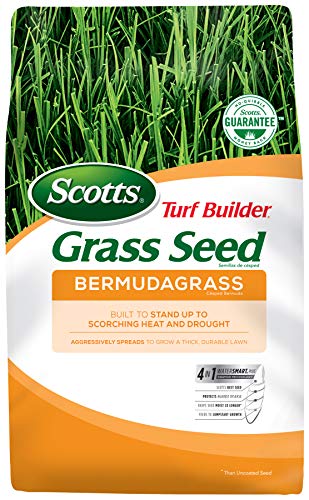
Scotts Turf Builder Bermudagrass
Scotts · Warm Season · $30-45 for 10 lbs
Why this seed for Arizona: Bermuda is the only real option for most Arizona lawns. It thrives in extreme heat, handles full sun, and stays green during the scorching summers that kill everything else. Overseed with ryegrass in winter for year-round green.
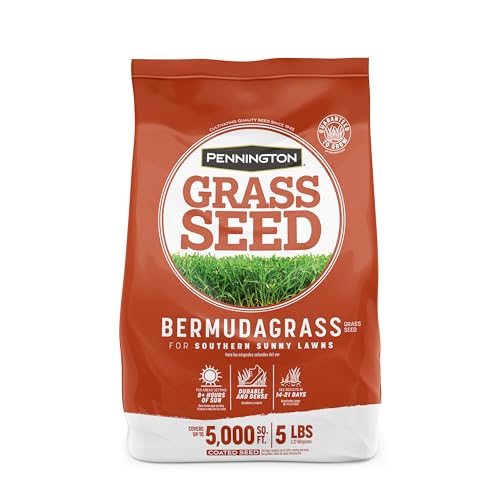
Pennington Smart Seed Bermudagrass
Pennington · Warm Season · $20-35 for 8.75 lbs
Why this seed for Arizona: Pennington's bermuda blend with WaterSmart coating helps with establishment in Arizona's arid conditions. The coating improves germination success — critical when you're fighting 115F soil temperatures.
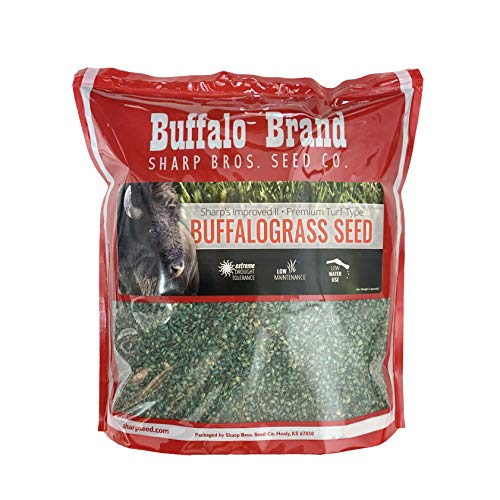
Sharp's Improved II Buffalo Grass
Sharp Bros. Seed Co. · Warm Season · $24 (3 lbs)
Why this seed for Arizona: For the Arizona homeowner who wants a lawn without the massive water bill, buffalo grass survives on minimal irrigation. Best for Flagstaff, Prescott, and higher-elevation areas where bermuda struggles in winter.
Best Grass Seed by Region in Arizona
Phoenix Metro / Valley of the Sun
The greater Phoenix area — including Scottsdale, Tempe, Mesa, Chandler, Gilbert, Glendale, and Peoria — is ground zero for desert lawn culture. Zone 9b to 10a conditions mean 50-plus days above 110 degrees each summer, with surface soil temperatures that can hit 150 degrees on exposed ground. The soil is alkaline sandy loam (pH 7.5 to 8.5) with minimal organic matter, underlain by caliche hardpan at variable depths. Annual rainfall is a paltry 8 inches, roughly half of which falls during the July-September monsoon season in intense bursts that cause flooding rather than deep soil moisture. Bermuda grass dominates residential lawns, with the annual winter overseed to perennial ryegrass being a near-universal practice. SRP (Salt River Project) and City of Phoenix tiered water rates mean that a 5,000-square-foot bermuda lawn can cost $100 to $180 per month to irrigate during peak summer — a number that drives many homeowners toward reduced lawn footprints or full xeriscaping.
Top picks for this region:
- ✓Water bermuda between midnight and 4 AM to minimize evaporation — daytime irrigation in 115-degree heat can lose 60% of applied water before it reaches roots
- ✓Test for caliche depth before any lawn installation — use a steel probe rod or dig test holes every 10 feet across the yard to map the hardpan layer
- ✓Apply iron sulfate monthly during summer to combat iron chlorosis caused by the alkaline soil — chelated iron (EDDHA form) works best at pH above 7.5
- ✓During monsoon season (July-September), reduce irrigation by 50% and watch for standing water on caliche — bermuda drowns quickly when water perches on impermeable layers
- ✓Install a smart irrigation controller — Maricopa County offers rebates up to $200 for WiFi-connected controllers that adjust watering based on weather data and ET rates
Tucson / Southern Arizona
Tucson sits at 2,400 feet — roughly 1,200 feet higher than Phoenix — which buys it slightly cooler summers (105 vs. 115 degree peaks) and a more robust monsoon season that delivers 11 to 12 inches of annual rainfall. The soil is similar to Phoenix — alkaline, sandy, caliche-prone — but Tucson's lawn culture is distinctly different. Tucson Water has been aggressive about water conservation for decades, offering substantial rebates for turf removal (up to $2 per square foot through the Zanja program) and enforcing permanent watering schedules. As a result, Tucson has far less residential lawn per capita than Phoenix. The lawns that do exist are predominantly bermuda with winter ryegrass overseed, though buffalo grass is gaining traction among water-conscious homeowners in the Catalina Foothills and Oro Valley areas. Pima County's desert aesthetic leans heavily toward native mesquite, palo verde, and desert willow landscaping.
Top picks for this region:
- ✓Take advantage of Tucson Water's turf removal rebate — reduce your lawn to a functional play area and xeriscape the rest to cut water bills dramatically
- ✓Bermuda establishment is best done in May when soil temperatures are consistently above 70 degrees and you still have 6 weeks before monsoon moisture helps with germination
- ✓Tucson's slightly higher elevation means winter overseed timing is about 2 weeks earlier than Phoenix — target early to mid-October when nighttime lows drop below 65
- ✓Caliche is shallower and more widespread in Tucson's east side and foothills — Tanque Verde and Sabino Canyon neighborhoods often have hardpan within 8 inches of the surface
- ✓Use a 1-inch layer of composted mulch as a topdressing each spring to build organic matter in the nutriite-dead sandy soil — the desert soil has essentially zero organic content without amendment
Flagstaff / Northern Arizona
Flagstaff at 7,000 feet is a completely different climate from the desert below. Zone 6b to 7a conditions bring genuine winters with average January lows around 15 degrees, 100-plus inches of annual snowfall, and summer highs in the low 80s. The soil is volcanic cinder and clay loam — acidic to neutral (pH 5.5 to 7.0), well-drained, and rocky from the San Francisco Peaks volcanic field. This is cool-season grass territory, and the ponderosa pine forests that surround the city create significant shade challenges. Kentucky bluegrass and fine fescue are the standard lawn grasses, with tall fescue gaining ground for its drought tolerance at altitude. The growing season is short — roughly mid-May through September — which makes establishment timing critical. Summer afternoon thunderstorms provide supplemental moisture, but winters are dry and windy, and spring desiccation is a real threat to shallow-rooted lawns.
Top picks for this region:
- ✓Seed cool-season grasses in late August to early September — this gives the best germination window before first frost, which typically hits Flagstaff by mid-October
- ✓Under ponderosa pines, fine fescue blends are your only realistic option — the needle duff, dry shade, and root competition eliminate bluegrass as a viable choice
- ✓Apply a winterizer fertilizer in late September with high potassium to harden off grass before the long freeze — Flagstaff lawns are dormant for 6 months or more
- ✓The volcanic cinder soil drains extremely fast — water more frequently in shorter cycles rather than deep soaks that pass right through the porous substrate
- ✓Elk and deer browse on lawns regularly in Flagstaff neighborhoods near forest edges — during winter dormancy, they can graze turf down to bare soil
Prescott / Verde Valley
Prescott, Prescott Valley, Cottonwood, Camp Verde, and Sedona form Arizona's middle-elevation transition zone, sitting between 3,500 and 5,500 feet. The climate is neither Phoenix-hot nor Flagstaff-cold — summers reach the mid-90s, winters bring occasional snow and temperatures in the teens, and annual rainfall runs 17 to 20 inches, primarily from summer monsoons and winter storms. Zone 7b to 8a conditions make this genuinely transitional territory where both warm-season and cool-season grasses can work depending on exact elevation, aspect, and microclimate. Prescott's granite soils are decomposed granite and sandy loam — better draining than Phoenix caliche but still low in organic matter. Bermuda works in the warmest microclimates (south-facing, low elevation in the Verde Valley), while bluegrass and fescue blends are standard in Prescott proper. Water comes from wells and limited surface supplies, and Prescott has strict outdoor watering restrictions — typically two days per week during summer.
Top picks for this region:
- ✓In Prescott above 5,000 feet, treat your lawn like a cool-season climate — tall fescue and bluegrass blends are the safe choice over bermuda, which struggles with winter cold at this elevation
- ✓Down in Cottonwood and Camp Verde (3,500 feet), bermuda works well and you can follow a Phoenix-style overseed schedule, just shifted 2 to 3 weeks earlier in fall
- ✓Prescott's decomposed granite soil needs organic amendment — work 2 to 3 inches of compost into the top 6 inches before any new lawn installation
- ✓Afternoon thunderstorms during monsoon season (July-August) can deliver an inch of rain in 30 minutes on DG soil that doesn't absorb fast — grade your yard to prevent erosion and runoff
- ✓Sedona's red clay soil is a unique challenge — it holds water when wet and becomes rock-hard when dry, requiring gypsum and aggressive aeration to remain viable for turf
Arizona Lawn Care Calendar
Spring
March - May
- •Scalp dormant bermuda to 0.5 inches in mid-March as soil temperatures hit 60 degrees and green-up begins — this is the critical spring reset that removes dead winter ryegrass thatch and exposes stolons to sunlight
- •Begin the ryegrass-to-bermuda transition by cutting water back to every 4 to 5 days in late March — stress the winter ryegrass to give bermuda the competitive advantage as temperatures rise
- •Apply pre-emergent herbicide for summer weeds (spurge, crabgrass) in early March before soil temps hit 55 degrees — in Phoenix this is typically the first week of March
- •Seed bare bermuda areas in late April to early May once soil temperatures are consistently above 65 degrees — the window between overseed transition and summer heat is tight
- •Apply a slow-release fertilizer (21-7-14 or similar) to bermuda in late April once the lawn is fully transitioned and actively growing — never fertilize during the ryegrass-bermuda transition period
- •In Flagstaff and Prescott, spring comes late — don't touch cool-season lawns until mid-April at earliest, and hold off on seeding until late May when soil temps finally warm
Summer
June - September
- •Maintain bermuda at 1.5 to 2 inches through June and July — lower mowing heights help it spread laterally but raise the height to 2 inches during peak heat weeks above 115 degrees
- •Water bermuda deeply 3 to 4 times per week in June (pre-monsoon) delivering 1 to 1.5 inches total — the pre-monsoon weeks of June are the hottest and driest of the year
- •Reduce irrigation by 40 to 50 percent during monsoon season (typically mid-July through mid-September) and rely on storm moisture — overwatering during monsoon promotes root rot
- •Watch for Bermuda mites in June and July — they cause rosetting (witch's broom deformation) of grass tips and are difficult to treat once established; apply abamectin at first sign
- •Apply a light nitrogen feeding (0.5 lb N per 1,000 sq ft) in early June, then hold off on fertilizer through monsoon to avoid pushing growth during stress
- •In Flagstaff, this is the prime growing season — fertilize cool-season lawns in June, water consistently, and enjoy the short window of active growth before fall dormancy approaches
Fall
October - November
- •The overseed window is everything — in Phoenix, scalp bermuda to 0.5 inches between October 1 and October 15, then broadcast perennial ryegrass seed at 10 to 15 lbs per 1,000 sq ft immediately after
- •Keep overseeded areas constantly moist for the first 10 to 14 days — water 3 to 4 times daily in short 5-minute cycles to keep seed damp without washing it away
- •Once ryegrass germinates (typically 7 to 10 days after seeding), reduce watering to once daily, then transition to every-other-day deep soaking by week three
- •Begin mowing winter ryegrass at 2 inches once it reaches 3 inches tall — first mowing is usually 3 to 4 weeks after seeding
- •Apply a starter fertilizer (high phosphorus, like 18-24-12) at seeding time to promote ryegrass root development, then follow with nitrogen (46-0-0 urea) at 0.5 lb N per 1,000 sq ft four weeks later
- •In Flagstaff, fall seeding of cool-season grasses should happen by Labor Day at the latest — after mid-September, soil temps drop too fast for reliable germination before first hard freeze
Winter
December - February
- •Maintain winter ryegrass at 2 to 2.5 inches with weekly mowing — ryegrass grows slowly in winter but still needs consistent cutting to maintain density
- •Water overseeded lawns once every 5 to 7 days during winter — Phoenix winter temps (60s during the day, 40s at night) reduce evapotranspiration dramatically compared to summer
- •Apply nitrogen to winter ryegrass every 4 to 6 weeks at 0.5 lb N per 1,000 sq ft to maintain dark green color through the cooler months
- •Watch for Poa annua (annual bluegrass) invading the ryegrass overseed — it's lighter green, clumpy, and produces seedheads; hand-pull small patches before they spread
- •Plan spring transition strategy by February — decide whether you'll do a gradual transition (reduce water, raise mowing height) or a hard transition (stop watering ryegrass entirely in late March)
- •In Flagstaff and Prescott, lawns are under snow or fully dormant — leave them alone and focus on equipment maintenance and soil testing for spring
Arizona Lawn Tips You Won't Find on the Seed Bag
Breaking Through Caliche — The Make-or-Break Step for Phoenix Lawns
Caliche is the invisible enemy of every lawn in the Phoenix metro. This calcium carbonate hardpan forms a concrete-like layer 6 to 18 inches below the surface, and it is everywhere — Mesa, Chandler, Gilbert, North Scottsdale, Surprise, practically every neighborhood built on the Valley floor. Roots cannot penetrate intact caliche, period. Water cannot drain through it. During monsoon storms, water pools on top of the caliche and drowns roots. Then two days later, the shallow soil above it is completely dry. Before installing any lawn, probe the soil with a steel rod every 5 to 10 feet to map caliche depth. Thin layers (under 4 inches) can be broken with a pickaxe or rented jackhammer. Thick deposits require either mechanical removal or building up — import 8 to 12 inches of quality topsoil mix above the caliche and install it as a raised lawn bed. This costs more upfront but saves years of frustration with thin, struggling turf.
Nailing the October Overseed — Timing Is Measured in Days, Not Weeks
The bermuda-to-ryegrass winter overseed is the signature move of Phoenix lawn care, and the window is ruthlessly narrow. Seed too early (late September) and the bermuda is still actively growing, competing with ryegrass seedlings for resources and creating a tangled mess. Seed too late (November) and soil temperatures have dropped below the 55-degree threshold ryegrass needs for reliable germination. The sweet spot in Phoenix is October 1 through October 15 — soil temps are in the 70s (perfect for ryegrass germination), bermuda growth is slowing, and you have a full month of mild weather for the ryegrass to establish before December's shorter days slow growth. In Tucson, shift this window two weeks earlier. Scalp the bermuda as low as your mower allows, remove all clippings, and consider verticut or power raking to expose bare soil. Seed-to-soil contact is everything.
Soil Salinity From Irrigation — The Silent Killer of Arizona Lawns
Phoenix's municipal water and groundwater carry dissolved salts — 500 to over 1,000 ppm total dissolved solids depending on your source and neighborhood. Every time you irrigate, water evaporates and salts stay behind, accumulating in the soil over months and years. The symptoms look like drought stress — yellow tips, thinning turf, reduced growth — but adding more water actually makes it worse by depositing more salts. The fix is periodic deep leaching: once a month during summer, run your irrigation for 2 to 3 times its normal duration to push accumulated salts below the root zone. This wastes water in the short term but prevents the slow salt poisoning that kills lawns from the roots up. Have your soil tested annually for electrical conductivity (EC) — readings above 4 dS/m indicate salinity levels that stress bermuda, and above 8 dS/m is approaching lethal territory. Gypsum applications (25 to 50 lbs per 1,000 sq ft) can help displace sodium ions and improve soil structure.
The Spring Bermuda Scalp — Transition Management That Makes or Breaks Your Year
The spring transition from winter ryegrass back to bermuda is where most Phoenix lawn owners struggle. The goal is to kill off the ryegrass and let the bermuda underneath emerge cleanly — but the timing depends on watching the bermuda, not the calendar. When you see bermuda stolons greening up beneath the ryegrass canopy (typically mid to late March in Phoenix), it's time to act. Stop fertilizing the ryegrass immediately. Gradually reduce watering over two weeks, going from every 3 days to every 5, then every 7. Drop your mowing height from 2.5 inches to 1 inch to stress the ryegrass and let sunlight reach the bermuda crown. Some homeowners do a hard transition — scalp to half an inch and let the ryegrass die all at once — which looks brutal for 10 to 14 days but gives bermuda the fastest start. The gradual approach takes longer but avoids the bare-dirt phase. Either way, apply a bermuda-appropriate fertilizer once the transition is complete and bermuda is the dominant grass.
Water Budgeting With SRP and City of Phoenix Tiered Rates
Water in Phoenix is not expensive by national standards, but the tiered pricing structures from SRP (Salt River Project) and City of Phoenix punish heavy users — and a lawn is the single biggest water consumer on most residential properties. SRP charges progressively higher rates once you exceed baseline allocations, and during summer months, the top tier can be three to four times the base rate per thousand gallons. A 3,000-square-foot bermuda lawn in Phoenix needs roughly 15,000 to 20,000 gallons per month during peak summer to stay green. Reduce that lawn to 1,500 square feet and you may stay within the lower pricing tiers entirely. Smart controllers, drip irrigation for non-turf areas, and cycle-and-soak programming (three short watering cycles instead of one long one, allowing infiltration between cycles) can reduce consumption by 20 to 30 percent without visible turf quality loss. Check with your water provider for rebate programs — most Phoenix-area utilities offer $1 to $3 per square foot for turf removal.
Bermuda Mite Damage — The Valley's Most Misdiagnosed Lawn Problem
Bermuda grass mite (Eriophyes cynodoniensis) is endemic throughout the Phoenix Valley and responsible for more unexplained bermuda decline than most homeowners realize. These microscopic mites live inside the leaf sheaths and cause a distinctive rosetting or witch's broom pattern — shortened internodes and tufted, stunted growth that looks like the grass is producing tiny bunched clusters instead of spreading normally. It is frequently misdiagnosed as nutrient deficiency, herbicide damage, or drought stress. By the time you notice rosetting, the population is large and established. Treatment is difficult because the mites are protected inside the sheath tissue. Abamectin-based miticides are the most effective option, applied twice at 10-day intervals in May or June when mite populations are building. Prevention includes keeping bermuda vigorous with proper fertility and irrigation, and scalping hard in spring to remove infested tissue before the new growing season begins.
What Arizona Lawn Pros Actually Plant
Bermuda Grass
Most PopularBermuda is the foundation of every lawn in the Phoenix metro and southern Arizona deserts. It's the only grass that genuinely thrives in 115-degree heat, and it has the aggressive growth habit needed to recover from the brutal scalping and overseed cycle that Phoenix lawns endure twice a year. Common bermuda is what most builders install via sod, but seeded improved varieties offer significantly better density, finer texture, and deeper green color. Bermuda's only real weakness in Arizona is its complete winter dormancy — from late November through early March, untreated bermuda lawns turn a uniform straw-brown, which is why the ryegrass overseed culture exists. It also needs full sun; the palm-tree shade that's common in Phoenix front yards can thin bermuda out significantly.
Perennial Ryegrass (Winter Overseed)
Universal for Winter ColorPerennial ryegrass isn't a permanent lawn grass in Arizona — it's a seasonal rental. Every October, Phoenix homeowners broadcast 10 to 15 pounds per 1,000 square feet over dormant bermuda to maintain a green lawn through winter. Ryegrass germinates fast (5 to 10 days), establishes quickly in the mild fall temperatures, and provides a lush, dark green lawn from November through March. It dies naturally as spring temperatures climb above 85 degrees, ideally just as the bermuda underneath breaks dormancy. The overseed industry is massive in Phoenix — local sod farms sell truckloads of ryegrass seed every September and October, and overseeding services are one of the most common offerings from Valley lawn care companies. Homeowners who skip the overseed accept a brown lawn for four months but save $200 to $500 in seed, water, and fertilizer costs.
Buffalo Grass
Growing (Water-Conscious Choice)Buffalo grass is gaining serious traction in Arizona's water-conservation movement. Native to the Great Plains, it survives on 12 to 15 inches of annual rainfall — still more than Phoenix's 8 inches, but achievable with minimal supplemental irrigation. Sharp's Improved buffalo grass produces a fine-textured, blue-green turf that looks surprisingly good maintained at 3 to 4 inches. It works best in the middle elevations — Prescott, Verde Valley, and the outskirts of the Phoenix metro where summer extremes are slightly less severe. In central Phoenix, buffalo grass requires some summer irrigation to look its best, but far less than bermuda. The trade-offs include slow establishment (plant in May, expect full coverage by the following spring), early dormancy in fall, and intolerance of shade and heavy foot traffic. For homeowners who want grass without the water guilt, buffalo is the most credible option in Arizona.
Kentucky Bluegrass
Standard in Flagstaff / High ElevationKentucky bluegrass sounds absurd in Arizona until you remember that Flagstaff exists. At 7,000 feet, Flagstaff has the climate, rainfall, and cool summers that bluegrass loves. Midnight Kentucky Bluegrass in particular performs well in northern Arizona's high-elevation conditions, offering deep green color and good density through the short growing season. It handles Flagstaff's cold winters (Zone 6b-7a) without issue and benefits from the summer monsoon moisture that supplements irrigation. Bluegrass is also viable in Prescott and the higher Verde Valley communities above 5,000 feet. Below that elevation, bluegrass is a non-starter — it cannot survive the sustained heat of a Phoenix or Tucson summer regardless of how much water you throw at it.
Fine Fescue
Niche (High-Elevation Shade)Fine fescue fills the shade niche in northern Arizona's high-elevation communities. Under Flagstaff's ponderosa pine canopy, where even bluegrass thins out from lack of direct sun, fine fescue blends (creeping red fescue, hard fescue, chewings fescue) maintain decent coverage with as little as 3 to 4 hours of filtered light. Legacy Fine Fescue and creeping red fescue varieties are the most commonly planted. Fine fescue also has lower water requirements than bluegrass, which matters in Flagstaff and Prescott where municipal water supplies are limited. The drawback is that fine fescue produces a wispy, less manicured look compared to the dense carpet of a bluegrass lawn — it's a utility grass for difficult shade situations rather than a showpiece. In Sedona and lower Verde Valley, fine fescue blends can work in irrigated, shaded microclimates but should be considered experimental below 4,500 feet.
Arizona Lawn Seeding Tips
Getting the best results from your grass seed in Arizona comes down to timing, soil prep, and choosing the right variety for your specific conditions. Here are our top tips:
- Test your soil first. A $15 soil test from your Arizona extension office tells you exact pH and nutrient levels. Most warm-season grasses prefer pH 6.0-6.5.
- Prep the seedbed properly. Rake or aerate to ensure good seed-to-soil contact. This single step improves germination rates more than any seed coating or starter fertilizer.
- Use a starter fertilizer. Apply a phosphorus-rich starter fertilizer at seeding time to promote root development. We recommend Scotts Starter Fertilizer or The Andersons Starter.
- Water correctly. Keep the seedbed consistently moist (not soaked) for the first 2-4 weeks. Light watering 2-3 times per day is better than one heavy soaking.
- Be patient. Warm-season grasses are slower to establish. Bermuda takes 7-14 days, but Zoysia and Centipede can take 3-4 weeks. Don't panic if you don't see results immediately.
Frequently Asked Questions
When is the best time to plant grass seed in Arizona?
Late March through May for warm-season grasses; October overseeding with ryegrass is common for green winter lawns in Phoenix
What type of grass grows best in Arizona?
Arizona is best suited for warm-season grasses like Bermuda, Zoysia, Centipede, and Bahia. These grasses thrive in heat, go dormant in winter, and grow most actively from late spring through early fall.
What are the biggest lawn care challenges in Arizona?
The main challenges for Arizona lawns include extreme heat (50+ days above 110f in phoenix), minimal rainfall, caliche soil that blocks root growth, water scarcity and mandatory conservation. Choosing the right grass variety that is adapted to these specific conditions is the single most important decision you can make for your lawn.
Can I grow Kentucky Bluegrass in Arizona?
Kentucky Bluegrass is not recommended for Arizona. KBG is a cool-season grass that will struggle with the heat and go dormant or die during Arizona's hot summers. Stick with warm-season options like Bermuda or Zoysia for the best results.
How much does it cost to seed a lawn in Arizona?
For a typical 5,000 sq ft lawn, expect to spend $150-$400 on seed alone depending on the variety. Premium seeds like Midnight Kentucky Bluegrass or Zenith Zoysia cost more per pound but deliver better results. Add $50-$100 for starter fertilizer and $20-$50 for soil amendments. The seed is the smallest part of your total investment — proper soil prep and consistent watering matter more than saving $50 on cheaper seed.
More Lawn Care Resources
Not in Arizona?
We have state-specific grass seed guides for all 50 states.