
OK State Guide · Updated March 2026
Best Grass Seed for Oklahoma
Top grass seeds for Oklahoma lawns that survive wind, extreme heat, and red clay. Expert picks for Oklahoma City, Tulsa, Norman, and the panhandle.
Disclosure: This article contains affiliate links. If you buy through our links, we may earn a commission at no extra cost to you. All opinions are our own. Learn more.
Oklahoma sits dead center in the transition zone, and that means every lawn decision you make is a compromise. We're too far south for bluegrass to thrive through July, and too far north for bermuda to coast through January without taking a beating. Tulsa and Oklahoma City homeowners have been arguing about warm-season versus cool-season grass for decades, and the honest answer is that both can work — but only if you pick the right variety and manage it for Oklahoma's specific brand of weather chaos. We get 110-degree heat in August, ice storms that snap tree limbs in January, and tornadoes that redistribute your topsoil across three counties in between.
The soil tells the story of where you are in the state. In central Oklahoma, you're dealing with the iconic red clay — that iron-rich, brick-colored dirt that stains everything it touches and turns into slick grease when wet. It's fertile, but it compacts into something resembling pottery if you don't aerate regularly. Head east toward Tulsa and Broken Arrow and you hit the Cross Timbers region, where the soil transitions to sandy loam mixed with sandstone and shale fragments. It drains better than the red clay but doesn't hold nutrients worth a darn. Then there are the alluvial river bottoms along the Arkansas, Canadian, and Red Rivers — deep, fertile, and prone to flooding every spring when the rivers run high.
Wind is the factor that separates Oklahoma lawn care from our neighbors to the east. It's not just that it blows — it's that it never stops. The Oklahoma Mesonet records average wind speeds of 10 to 15 mph across most of the state, with spring gusts regularly exceeding 40 mph. That constant airflow desiccates turf faster than you'd think possible. A lawn that got an inch of rain on Tuesday can be drought-stressed by Friday if the wind doesn't let up. Newly seeded areas are especially vulnerable — you'll lose seed to wind erosion if you don't use a tackifier or straw mulch, and young seedlings dry out before roots can establish. OSU Extension recommends irrigating newly seeded lawns twice daily in windy conditions, and they're not exaggerating.
Bermuda is the dominant lawn grass across Oklahoma, and for good reason — it handles the heat, tolerates the wind, recovers from hail damage, and goes dormant through winter without dying. But the bermuda your builder put down is almost certainly common bermuda, and it's thin, weedy, and the first grass in the neighborhood to go brown in October. Improved seeded varieties like Yukon bermuda, which was actually developed at Oklahoma State University specifically for transition-zone performance, offer dramatically better cold tolerance, density, and color retention. If you're going to seed bermuda in Oklahoma, use one that was literally bred for this climate.
For the cool-season camp — and there's a real contingent of Oklahoma homeowners who want green grass in winter — tall fescue is the only realistic option. Kentucky bluegrass melts in our summers without heroic irrigation, and perennial ryegrass won't survive its second July. But a heat-tolerant tall fescue blend, overseeded every September to maintain density, can give you year-round color in the Tulsa area and parts of OKC where shade from mature trees helps it through the worst of summer. It's more work than bermuda, it drinks more water, and you'll need to reseed thin spots annually. But if you want a green lawn on Thanksgiving, fescue is how you get it in Oklahoma.
Quick Picks: Our Top 3 for Oklahoma
Understanding Oklahoma's Lawn Climate
Humid subtropical in the east transitioning to semi-arid in the western panhandle. Oklahoma is one of the most extreme transition zone states — summer heat exceeds 110F in western OK, while winter ice storms can coat everything in inches of ice. The wind is relentless, causing desiccation that dries out grass faster than any other factor. Eastern Oklahoma receives 50+ inches of rain, while the panhandle gets barely 17 inches. Severe weather including tornadoes, hail, and straight-line winds can devastate lawns in minutes.
Key Challenges
Best Planting Time for Oklahoma
Late May through June for bermuda; September through mid-October for fescue in eastern OK
Our Top 3 Picks for Oklahoma

Outsidepride Yukon Bermudagrass
Outsidepride · Warm Season · $45-65 for 5 lbs
Why this seed for Oklahoma: Bermuda is king in Oklahoma, and Yukon's cold hardiness means it survives the ice storms that devastate standard bermuda. Handles the wind, heat, and red clay that define the Oklahoma lawn experience.
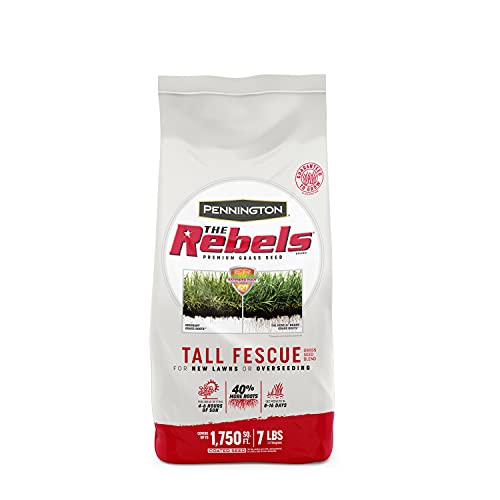
Pennington The Rebels Tall Fescue Mix
Pennington · Cool Season · $30-50 for 7 lbs
Why this seed for Oklahoma: For eastern Oklahoma homeowners who prefer cool-season turf, The Rebels' drought-tolerant genetics handle the state's brutal wind desiccation better than standard fescue.

Outsidepride Xeriscape Native Prairie Grass Mix
Outsidepride · Warm Season · $25 (1 lb) – $175 (25 lbs)
Why this seed for Oklahoma: For western Oklahoma where rainfall drops below 20 inches, native prairie grass is the only honest recommendation. Buffalo Grass and Blue Grama evolved on these exact plains.
Best Grass Seed by Region in Oklahoma
Oklahoma City / Central Oklahoma
The OKC metro sits on the red clay prairie that defines central Oklahoma. The soil is heavy, compacted, iron-rich clay with a pH typically between 6.5 and 7.5. Summer temperatures routinely hit triple digits, and the constant wind across the flat terrain accelerates evaporation dramatically. This is Zone 7a territory — warm enough for bermuda to dominate but cold enough that winter temperatures regularly dip into the teens. The red clay soil is notoriously difficult to work with: it's slippery when wet, rock-hard when dry, and compacts under foot traffic faster than almost any soil type in the country. Norman, Moore, Edmond, and Yukon all share these same conditions. Bermuda is king here, but improved varieties bred for cold hardiness are essential — common bermuda thins out badly after harsh winters.
Top picks for this region:
- ✓Core aerate red clay lawns twice a year — April and September — to break through the compaction layer that forms from Oklahoma's wet-dry cycles
- ✓Apply gypsum at 40 lbs per 1,000 sq ft each fall to improve clay structure without changing pH — the calcium displaces sodium and helps the clay particles aggregate
- ✓Yukon bermuda was developed at OSU specifically for Oklahoma's climate — it offers better cold tolerance and earlier spring green-up than common bermuda
- ✓Pre-emergent timing in OKC is typically the first week of March — use the Oklahoma Mesonet soil temperature maps to track your county precisely
- ✓After tornado or severe storm damage, resist the urge to reseed immediately — wait until debris is cleared and soil is graded, then seed bermuda when soil temps are above 65 degrees
Tulsa / Green Country
Tulsa and the Green Country region of northeast Oklahoma are the state's lushest area, with 40 to 45 inches of annual rainfall and rolling terrain covered in post oak, blackjack oak, and hickory. The soil here is a mix of sandy loam and clay loam, generally more workable than OKC's heavy red clay but still challenging in spots. Zone 7a conditions prevail, with slightly more humidity than the western part of the state thanks to proximity to the Ozark foothills. Broken Arrow, Bixby, Owasso, and Claremore share these conditions. This is the part of Oklahoma where tall fescue actually has a fighting chance — the tree cover provides afternoon shade relief, and the higher rainfall reduces irrigation dependency. You'll see a genuine mix of bermuda and fescue lawns throughout Tulsa neighborhoods, which is unusual for Oklahoma.
Top picks for this region:
- ✓Tulsa's mix of sun and shade makes it one of the few places in Oklahoma where tall fescue can survive long-term — plant it in yards with afternoon shade from mature trees
- ✓Overseed fescue lawns every September between the 15th and October 15th — this is non-negotiable in Oklahoma, as summer heat thins fescue stands annually
- ✓The sandy loam soil in east Tulsa drains faster than clay — water more frequently but in shorter sessions to prevent runoff and keep the root zone moist
- ✓Armyworms hit Green Country hard in September and October — scout weekly and treat with bifenthrin at the first sign of damage, which usually appears as rapidly expanding brown circles
- ✓Ice storms are more common in northeast Oklahoma than anywhere else in the state — avoid fertilizing bermuda after September 1st so the grass hardens off before freeze events
Western Oklahoma / Great Plains
West of I-35, Oklahoma dries out fast. Lawton, Altus, Elk City, and Woodward get 20 to 30 inches of annual rainfall — half of what Tulsa receives — and the wind is relentless across the flat shortgrass prairie. The soil is sandy loam to sandy clay, often underlain by red sandstone or gypsum deposits that can push soil pH above 8.0 in localized areas. This is buffalo grass country, where the native grass that once covered the southern Great Plains still makes more sense than anything you can buy at a garden center. For homeowners who want a traditional manicured lawn, bermuda works but demands irrigation. Zone 7a in the north transitions to 7b around Lawton, giving bermuda a slightly longer growing season in the southwest corner of the state. Water rights and well capacity are real considerations out here — plan your lawn size around what you can actually irrigate.
Top picks for this region:
- ✓Buffalo grass is the smartest lawn choice for western Oklahoma — it survives on rainfall alone once established and was literally designed by nature for this environment
- ✓Wind erosion can strip newly seeded areas bare in a single afternoon — always use straw mulch, erosion blankets, or hydromulch when seeding in western Oklahoma
- ✓Water between midnight and 5 AM to minimize evaporation — daytime irrigation on a windy western Oklahoma afternoon can lose 40 to 50 percent to evaporation before it reaches soil
- ✓Xeriscape and prairie grass mixes work beautifully for larger rural properties where maintaining a traditional lawn is impractical and expensive
- ✓Gypsum-rich soils near Alabaster Caverns and the gypsum hills require a soil test before planting — pH above 8.0 will lock out iron and cause severe chlorosis in bermuda
Southeast Oklahoma / Ouachita Region
The southeast corner of Oklahoma, from McAlester down through Durant and Hugo, is the state's warmest and wettest region. Annual rainfall exceeds 50 inches in the Ouachita Mountains, humidity runs high from May through October, and the Zone 7b to 8a conditions give warm-season grasses a longer growing season than anywhere else in Oklahoma. The soil is highly variable — rocky clay in the mountain valleys, deep alluvial loam along the Red River bottoms, and acidic sandy soil in the pine-covered hills. This region has more in common with East Texas and Arkansas than with the rest of Oklahoma. Bermuda thrives in the full-sun areas, and the longer growing season means it stays green a full month longer than in OKC. Fungal disease pressure is higher here due to humidity, making proper drainage and airflow critical.
Top picks for this region:
- ✓Fungal pressure from brown patch and dollar spot is highest in southeast Oklahoma — avoid evening irrigation and apply preventive fungicide in May before humidity peaks
- ✓The acidic sandy soils in the Ouachita foothills may need lime to raise pH above 6.0 — test before planting and apply pelletized lime at the rate your soil test recommends
- ✓Bermuda stays actively growing into late October here — continue mowing and fertilizing two to three weeks longer than the OKC schedule
- ✓Zoysia is an excellent choice for shaded lots in this region where mature pines and hardwoods block full sun
- ✓Red River bottom soil is incredibly fertile but floods periodically — bermuda recovers from flood damage better than any other grass if you can clear the silt deposits within a week
Oklahoma Lawn Care Calendar
Spring
March - May
- •Apply pre-emergent herbicide when soil temperatures reach 55 degrees at 4-inch depth — check the Oklahoma Mesonet soil temperature maps for your county, typically early to mid-March statewide
- •Scalp bermuda lawns to 0.75 inches once you see 50% green-up — late March in southeast Oklahoma, early to mid-April in OKC and Tulsa, late April in the Panhandle
- •Core aerate red clay and compacted soils in April while bermuda is actively growing and can fill in the holes within two to three weeks
- •Seed bermuda or buffalo grass once soil temperatures hold above 65 degrees for two consecutive weeks — typically late April in the south, mid-May in northern counties
- •Apply a balanced fertilizer (16-4-8 or similar) in mid to late April after bermuda is fully green and actively growing — OSU Extension recommends 1 lb of nitrogen per 1,000 sq ft for the first spring application
- •Begin irrigation if rainfall is insufficient — deliver 1 inch per week in one or two deep sessions, watering early morning to minimize wind-driven evaporation losses
Summer
June - August
- •Raise bermuda mowing height to 2 inches during peak heat to reduce stress — mow frequently enough that you never remove more than one-third of the blade at a time
- •Water deeply and infrequently — 1 to 1.5 inches per week in one or two sessions, adjusting upward during triple-digit heat waves or sustained wind events
- •Apply a light fertilizer application (0.5 lb nitrogen per 1,000 sq ft) in June — avoid fertilizing after July 4th, as late summer nitrogen pushes weak top growth during heat stress
- •Scout for grub damage in late July — irregular brown patches that pull up like loose carpet indicate white grub infestation, treat with trichlorfon if counts exceed 5 per square foot
- •Monitor for bermuda mites (the tiny eriophyid mites that cause witches' broom rosetting) — these are common in Oklahoma and require abamectin for control
- •Accept that some browning during extended 100-degree stretches is normal for unirrigated bermuda — the crown tissue is alive and will recover when temperatures moderate or rain returns
Fall
September - November
- •Overseed thin fescue lawns between September 15 and October 15 — this is the single most critical window for cool-season grass success in Oklahoma, miss it and you're waiting until next year
- •Apply a second round of pre-emergent in early September to prevent winter annual weeds like Poa annua, henbit, and chickweed
- •Core aerate bermuda lawns in early September while the grass is still growing vigorously enough to recover before dormancy
- •Apply winterizer fertilizer (high potassium, 10-5-15 or similar) to bermuda in early October — potassium improves cold hardiness, which is critical in Oklahoma's unpredictable fall-to-winter transition
- •Continue mowing bermuda until growth stops naturally — do not scalp going into winter, as the leaf blade insulates the crown from freeze damage
- •Scout for armyworm damage in September and October, especially in Green Country and southeast Oklahoma — treat promptly, as armyworms can strip a lawn in 48 hours
Winter
December - February
- •Leave dormant bermuda alone — no fertilizer, no water (unless you go 6-plus weeks with zero precipitation and no snow cover), and no mowing
- •Spot-treat winter weeds like henbit, chickweed, and dandelions with a post-emergent herbicide containing 2,4-D while they're actively growing and bermuda is fully dormant
- •Submit soil samples to the OSU Extension soil testing lab in January — results take two to three weeks and give you time to plan amendments before spring
- •Sharpen mower blades, service equipment, and repair irrigation systems during the off-season — ice storm damage to irrigation heads is common and should be addressed before spring startup
- •Order grass seed by late January for spring planting — improved bermuda varieties like Yukon sell out fast once word gets around about spring seeding season
- •Plan any major lawn renovation for late February through March — grading, drainage work, and sod or seed bed preparation are best done before bermuda breaks dormancy
Oklahoma Lawn Tips You Won't Find on the Seed Bag
Yukon Bermuda: Oklahoma's Homegrown Turf Champion
Most people don't realize that Yukon bermuda was developed right here at Oklahoma State University's turfgrass research center in Stillwater. It was bred specifically for the transition zone, and it shows. Yukon offers better cold tolerance than any other seeded bermuda on the market — it can handle temperatures down to minus 10 degrees without significant winterkill, which matters in a state that went to negative 14 during the 2021 ice storm. It also greens up about two weeks earlier than common bermuda in spring and holds its color two weeks later in fall. If you're seeding bermuda anywhere in Oklahoma, Yukon is the variety OSU Extension recommends, and there's a reason for that — it was literally bred for our dirt and our weather.
Taming Oklahoma's Red Clay Soil
That distinctive red-orange soil that stains your shoes, your truck bed, and every pair of white socks you own is actually decent lawn soil — it's just difficult to work with. Oklahoma's red clay is rich in iron and minerals, but it compacts into a surface so hard that water sheets off instead of infiltrating. The fix isn't a one-time amendment; it's an annual program. Core aerate in April and September, every single year. Apply gypsum at 40 pounds per 1,000 square feet each fall. Topdress with a half-inch of quality compost after aerating. Over three to four years, you'll build a topsoil layer that holds moisture, drains excess water, and lets roots penetrate deeper. The red clay underneath hasn't changed, but the growing environment above it has transformed.
Wind Desiccation: The Invisible Lawn Killer
Ask any Oklahoma lawn care pro what kills more grass than drought, and they'll say wind. The sustained 15 to 25 mph winds that blow across the state from March through May (and honestly, most of the rest of the year too) strip moisture from leaf blades and soil surfaces faster than roots can replace it. A lawn that received an inch of rain can be drought-stressed within three days during a windy stretch. The solutions are practical: water early in the morning when wind speeds are lowest (typically 4 to 7 AM), apply a light topdressing of compost to shield soil from direct wind exposure, and maintain bermuda at 2 inches rather than scalping it low, which exposes the soil surface to more air movement. For newly seeded areas, straw mulch or a tackifier is mandatory — unprotected seed will end up in your neighbor's yard or piled against the fence line.
Ice Storm Recovery: What to Do After Oklahoma's Other Natural Disaster
Tornadoes get the headlines, but ice storms cause more cumulative lawn damage in Oklahoma than any other weather event. The 2020 Halloween ice storm and the February 2021 deep freeze both caused widespread tree damage that changed the sun exposure on thousands of lawns overnight. If you lost major tree limbs — or entire trees — your shaded fescue lawn now sits in full sun, and it won't survive the next summer without the canopy protection it depended on. You have two choices: replant trees and nurse the fescue along with heavy irrigation for several years, or convert to bermuda and embrace the new sun exposure. For most homeowners, the bermuda conversion is the practical call. Seed in May once soil temps are above 65 degrees, and you'll have a fully established bermuda lawn by August.
The Fescue vs. Bermuda Debate in Oklahoma
No lawn topic generates more argument among Oklahoma homeowners than whether to go bermuda or fescue. Here's the honest breakdown: bermuda is easier, cheaper, and more drought-tolerant. It handles Oklahoma summers without supplemental water and recovers from any damage thrown at it. But it's brown from November through March — five full months of dormant straw-colored turf. Fescue stays green through winter, looks better in spring and fall, and handles shade. But it requires overseeding every single September, drinks twice the water bermuda needs, and struggles through July and August even with irrigation. In Tulsa's Green Country with afternoon tree shade, fescue is viable. In OKC's full-sun red clay lots, bermuda is the smarter choice. Know your site conditions and be honest about how much work you're willing to do.
Timing Pre-Emergent With Oklahoma's Wild Spring Weather
Oklahoma spring weather is notoriously unpredictable — we can have 80-degree days in February followed by a blizzard in March. This makes pre-emergent timing tricky, because crabgrass germination is driven by soil temperature, not air temperature. The rule is simple: apply pre-emergent when soil temps at 4-inch depth hit 55 degrees for three consecutive days. In Oklahoma, that typically happens between March 1 and March 15, but check the Oklahoma Mesonet's real-time soil temperature data for your specific county rather than guessing. If you apply too early, the product degrades before summer crabgrass pressure peaks. Too late, and the crabgrass has already germinated. Split applications — half the rate in early March, the other half in late March — give you the best coverage window for Oklahoma's erratic springs.
What Oklahoma Lawn Pros Actually Plant
Bermuda Grass
Most PopularBermuda dominates Oklahoma lawns from Lawton to Tulsa, planted on roughly 65 to 70 percent of residential properties statewide. It's the go-to for full-sun yards because nothing else handles the combination of triple-digit heat, wind, and periodic drought as well. Common bermuda comes standard on new construction, but it's thin and goes dormant early. Improved varieties like Yukon, developed at OSU, offer dramatically better cold tolerance, density, and color retention into fall. Bermuda goes fully dormant from November through March, turning straw-brown — some homeowners overseed with ryegrass for winter color, but most just accept the seasonal dormancy as part of Oklahoma lawn life.
Tall Fescue
Very PopularTall fescue is the cool-season option that actually works in Oklahoma — barely. It thrives in spring and fall, provides year-round green color that bermuda can't match, and handles the partial shade under Oklahoma's post oaks and pecans. But it takes a beating every summer, thinning out during July and August heat even with irrigation. Annual overseeding in mid-September is required to maintain a decent stand. The Tulsa area is fescue's stronghold in Oklahoma, where slightly higher rainfall and more tree cover give it an edge. In OKC's open, sun-blasted lots, fescue is a harder sell. Heat-tolerant blends with varieties like Rebel-series tall fescue give the best summer survival odds.
Zoysia Grass
Growing in PopularityZoysia is gaining serious traction in Oklahoma's urban areas, particularly among homeowners who want a thick, manicured lawn that handles both sun and moderate shade. Zenith zoysia, which can be grown from seed, has made it accessible to DIY homeowners who previously couldn't justify the cost of zoysia sod. It's denser and more weed-resistant than bermuda, handles 4 hours of filtered shade, and has a finer texture that feels better underfoot. The downsides are slower establishment (60 to 90 days versus 30 for bermuda) and a slightly shorter growing season — zoysia goes dormant about a week before bermuda in fall and greens up about a week later in spring. Popular in Norman, Edmond, and Tulsa's midtown neighborhoods.
Buffalo Grass
Niche ChoiceBuffalo grass is the native option that makes the most ecological sense for western Oklahoma, where rainfall drops below 25 inches annually and irrigation water is scarce. It evolved on the southern Great Plains and once covered most of western Oklahoma before the land was plowed. Sharp's Improved buffalo grass produces a fine-textured, blue-green turf that survives on rainfall alone once established — no irrigation, no fertilizer beyond what nature provides. The trade-off is a shorter growing season (May through September), slow establishment, and poor tolerance for shade or heavy traffic. It's ideal for large rural properties, acreages, and water-conscious homeowners west of I-35. In the OKC and Tulsa metros, it remains a niche choice, but drought concerns are pushing more homeowners to consider it.
Perennial Ryegrass (Winter Overseed)
Niche ChoicePerennial ryegrass isn't a permanent lawn grass in Oklahoma — it's a temporary winter cover crop that some homeowners seed over dormant bermuda in October to maintain green color through winter. It germinates fast (5 to 7 days), provides a bright green lawn from November through April, and then dies off naturally as bermuda greens up and temperatures rise in May. It's most popular among homeowners who simply can't stand the sight of brown dormant bermuda for five months. The downside is cost (you're buying seed every year), extra mowing through winter, and the transition period in April-May when both grasses are competing. It's a luxury, not a necessity, but it's common enough in Tulsa and OKC's nicer neighborhoods.
Oklahoma Lawn Seeding Tips
Getting the best results from your grass seed in Oklahoma comes down to timing, soil prep, and choosing the right variety for your specific conditions. Here are our top tips:
- Test your soil first. A $15 soil test from your Oklahoma extension office tells you exact pH and nutrient levels. Most warm-season grasses prefer pH 6.0-6.5.
- Prep the seedbed properly. Rake or aerate to ensure good seed-to-soil contact. This single step improves germination rates more than any seed coating or starter fertilizer.
- Use a starter fertilizer. Apply a phosphorus-rich starter fertilizer at seeding time to promote root development. We recommend Scotts Starter Fertilizer or The Andersons Starter.
- Water correctly. Keep the seedbed consistently moist (not soaked) for the first 2-4 weeks. Light watering 2-3 times per day is better than one heavy soaking.
- Be patient. Warm-season grasses are slower to establish. Bermuda takes 7-14 days, but Zoysia and Centipede can take 3-4 weeks. Don't panic if you don't see results immediately.
- Consider pre-germinating KBG. If you're planting Kentucky Bluegrass, you can cut germination time from 30 days to under a week using the bucket-and-bubble pre-germination method. This is especially valuable for late-season seeding in Oklahoma.
Frequently Asked Questions
When is the best time to plant grass seed in Oklahoma?
Late May through June for bermuda; September through mid-October for fescue in eastern OK
What type of grass grows best in Oklahoma?
Oklahoma sits in the transition zone, making it one of the trickiest states for lawn care. Both cool-season grasses (Tall Fescue, KBG) and warm-season grasses (Bermuda, Zoysia) can work depending on your specific location and microclimate.
What are the biggest lawn care challenges in Oklahoma?
The main challenges for Oklahoma lawns include extreme wind desiccation, transition zone with 110f summers and ice storms, red clay soil throughout, severe drought in western ok. Choosing the right grass variety that is adapted to these specific conditions is the single most important decision you can make for your lawn.
Can I grow Kentucky Bluegrass in Oklahoma?
It depends on where you are in Oklahoma. In the cooler northern regions, KBG can work well. In the warmer southern areas, it may struggle during peak summer heat. Tall Fescue is often a safer bet for transition zone lawns because it handles both heat and cold better than pure KBG.
How much does it cost to seed a lawn in Oklahoma?
For a typical 5,000 sq ft lawn, expect to spend $150-$400 on seed alone depending on the variety. Premium seeds like Midnight Kentucky Bluegrass or Zenith Zoysia cost more per pound but deliver better results. Add $50-$100 for starter fertilizer and $20-$50 for soil amendments. The seed is the smallest part of your total investment — proper soil prep and consistent watering matter more than saving $50 on cheaper seed.
More Lawn Care Resources
Not in Oklahoma?
We have state-specific grass seed guides for all 50 states.