
WI State Guide · Updated March 2026
Best Grass Seed for Wisconsin
The best grass seeds for Wisconsin lawns that survive brutal winters and short growing seasons. Expert picks for Milwaukee, Madison, Green Bay, and the Northwoods.
Disclosure: This article contains affiliate links. If you buy through our links, we may earn a commission at no extra cost to you. All opinions are our own. Learn more.
Wisconsin is a state where your lawn spends nearly half the year buried under snow, and the other half growing with a ferocity that makes up for lost time. Zone 3b in the far north around Superior and the Northwoods, Zone 4a through most of the central and northern tier, and Zone 5a/5b in the Milwaukee metro and along the Lake Michigan shore — the range of cold tolerance required here eliminates every warm-season grass species and narrows your choices to the hardiest cool-season cultivars available. Milwaukee homeowners deal with -15F January nights. Green Bay regularly sees -25F. And up in Hayward or Eagle River, -35F is an event you prepare for but don't panic about. Your grass crowns endure all of that, frozen solid in clay or sand for five months, and then you expect them to produce a lush green carpet by June. The cultivars that pull that off in Wisconsin deserve respect.
The growing season is compressed but surprisingly productive. Milwaukee gets roughly 140 days of active growth from early May through late September, while Green Bay and the Fox Valley see 120 days and the Northwoods shrinks to around 100. Within that window, Wisconsin's cool summer nights — lows in the upper 50s to low 60s even in July — create ideal conditions for Kentucky bluegrass and fine fescue. The grass grows aggressively, recovers from damage quickly, and puts on the kind of dense, dark-green turf that makes Wisconsin suburbs look like they belong in a lawn care commercial. Madison's west side neighborhoods, the Tosa-Wauwatosa corridor in Milwaukee, and the established streets of De Pere near Green Bay all showcase what's possible when you match the right cultivars to Wisconsin's climate and commit to hitting the maintenance windows on time.
Snow mold is the defining lawn disease in Wisconsin, and every homeowner north of the Illinois border will deal with it eventually. Gray snow mold (Typhula blight) appears as matted circular patches of gray-white mycelium the moment the snow recedes in March or April, and pink snow mold (Microdochium nivale) is the more damaging variety that attacks crown tissue and can actually kill grass rather than just cosmetically flatten it. Wisconsin's four to five months of continuous snow cover creates a perfect incubation environment — warm, moist conditions under the snowpack where fungal growth proceeds all winter long. The good news is that prevention is straightforward and entirely a fall activity: short final mow, no late nitrogen, clean leaf removal, and avoiding snow piles on lawn areas. The homeowners who do these four things religiously see dramatically less snow mold damage than their neighbors who skip them.
Wisconsin's soil tells the story of the last ice age. The southeastern quarter of the state — Milwaukee, Racine, Kenosha, and east toward Lake Michigan — sits on heavy glacial clay deposited by the Wisconsin Glaciation that bears the state's name. This is dense, compaction-prone clay with pH running 7.0 to 7.8 and drainage so poor that spring thaw turns yards into temporary ponds. Central Wisconsin around Stevens Point and Wisconsin Rapids is sandy glacial outwash — the opposite problem, where water and nutrients drain straight through. And the Driftless Area in the southwest — the region around La Crosse, Prairie du Chien, and Mineral Point that the glaciers somehow missed — has rich, well-structured loam over limestone bedrock, some of the best lawn soil in the Midwest. Knowing which glacial legacy you inherited is the first step to managing it.
The University of Wisconsin-Madison's turfgrass science program and UW Extension are your best resources for Wisconsin-specific lawn care guidance. Their research plots in Madison and across the state endure the same winters your lawn does, which means their cultivar recommendations and management protocols are tested in Wisconsin soil and Wisconsin cold — not extrapolated from warmer climates. UW Extension's publications on snow mold management, fall fertilization timing, and overseeding in short-season climates are essential reading. Their county-based extension offices provide soil testing through the UW Soil Testing Lab, and the results come with lime and fertilizer recommendations calibrated to Wisconsin conditions. When UW Extension says a Kentucky bluegrass cultivar is winter-hardy in Zone 4, that means it survived real Wisconsin winters in Wisconsin ground.
Quick Picks: Our Top 2 for Wisconsin
Understanding Wisconsin's Lawn Climate
Humid continental with very cold, snowy winters and warm summers. Wisconsin's climate is influenced by the Great Lakes, which moderate temperatures along the eastern shore but contribute massive lake-effect snowfall. Northern Wisconsin regularly sees -30F wind chills and snow cover from November through April. Even in the southeast (Milwaukee, Racine), winters are harsh with extended sub-zero periods. Summers are warm and pleasant — ideal for cool-season grass growth — but the growing season is short, roughly mid-May through September.
Key Challenges
Best Planting Time for Wisconsin
Mid-August through early September (fall) for the narrow ideal window; late May through mid-June for spring planting after soil warms above 55F
Our Top 2 Picks for Wisconsin

Outsidepride Midnight Kentucky Bluegrass Seed
Outsidepride · Cool Season · $35 (5 lbs) – $300 (50 lbs)
Why this seed for Wisconsin: Midnight KBG is built for Wisconsin's climate. Exceptional cold tolerance handles -30F wind chills, and it produces a stunning deep blue-green lawn during the precious warm months from May through September.
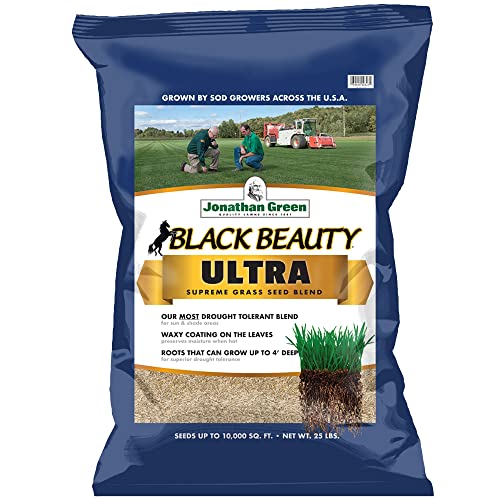
Jonathan Green Black Beauty Ultra
Jonathan Green · Cool Season · $28 (7 lbs) – $105 (25 lbs)
Why this seed for Wisconsin: BBU gives Wisconsin homeowners the best of both worlds — cold-tolerant KBG genetics plus deep-rooting fescue that handles Milwaukee's heavy clay. A reliable performer from Kenosha to Green Bay.
Best Grass Seed by Region in Wisconsin
Milwaukee Metro / Southeast Wisconsin
The Milwaukee metropolitan area — Milwaukee, Waukesha, Ozaukee, Washington, Racine, and Kenosha counties — is Zone 5a/5b and home to the majority of Wisconsin's lawn-focused homeowners. Wauwatosa, Brookfield, Whitefish Bay, Mequon, and the lakefront suburbs set the standard for residential turf care in the state. The soil is heavy glacial clay deposited by the same ice sheet that carved Lake Michigan, running pH 7.0 to 7.8 with poor drainage that creates standing water problems every spring thaw and after heavy summer rains. Compaction is severe on older lots where decades of foot traffic and mowing have compressed the clay further. The Lake Michigan moderating effect gives Milwaukee a slightly longer growing season and milder winter extremes than inland cities at the same latitude, though lake-effect snow can dump impressive totals on the near-north and near-south suburbs. Kentucky bluegrass is the overwhelming standard here — the dark, dense carpet look is the expectation in Tosa, Elm Grove, and Fox Point, and the clay soil actually holds moisture and nutrients well once you break through the compaction layer.
Top picks for this region:
- ✓Core aerate every fall without exception — Milwaukee glacial clay compacts so aggressively that skipping even one year visibly degrades drainage and root penetration
- ✓Salt damage along driveways, sidewalks, and the terrace strip is a major spring issue in every Milwaukee suburb — flush affected areas with heavy watering once the ground thaws and overseed with salt-tolerant fine fescue
- ✓Lake Michigan moderates Milwaukee's temperature extremes, giving you a slightly longer fall seeding window — target September 1 through September 25 versus the September 15 hard cutoff for inland areas
- ✓Topdress with compost after fall aeration to build organic matter in the heavy clay — this is the single best long-term investment for southeast Wisconsin lawns
- ✓Pre-emergent for crabgrass goes down when forsythia blooms, typically the last week of April to first week of May in the Milwaukee metro
Madison / South-Central Wisconsin
The Madison metro and surrounding Dane County — including Middleton, Fitchburg, Sun Prairie, Verona, and Oregon — sit in Zone 5a with conditions that produce some of the finest residential lawns in the Upper Midwest. Madison's isthmus location between Lakes Mendota and Monona provides modest temperature moderation, though inland suburbs lose that benefit. The soil is a mix of glacial clay and the beginning of the Driftless Area's better loam, with significant variation across the metro — east side lots toward Sun Prairie tend toward heavier clay, while the west side and Middleton increasingly show the better-structured loam of the unglaciated region. Madison is a university town with an educated, environmentally conscious population, which means organic lawn care practices, pollinator-friendly approaches, and reduced-input strategies have a larger following here than in most Wisconsin cities. The Dane County Extension office is one of the most active in the state. Madison's lawn culture is less about competition and more about doing it right — which often means doing less, more intelligently.
Top picks for this region:
- ✓Madison's west side and Middleton benefit from Driftless Area loam — if you're west of the beltline, your soil is likely better-structured than the heavy clay east of the isthmus, so adjust your amendment strategy accordingly
- ✓Dane County has active phosphorus runoff restrictions to protect the Yahara chain of lakes — use zero-phosphorus maintenance fertilizer unless a UW soil test shows deficiency
- ✓Spring flooding is common on low-lying properties near the Yahara River and lakes — avoid mowing or walking on saturated soil and wait until the ground firms up before any spring lawn work
- ✓UW-Madison's campus turf plots are visible evidence of what's possible in this climate — their cultivar trial data, available through UW Extension, is the most relevant research you'll find for southern Wisconsin lawn decisions
- ✓Madison's November to March snow cover makes snow mold prevention critical — short final mow, no nitrogen after mid-September, and complete leaf removal before the first lasting snowfall
Fox Valley / Green Bay
The Fox Valley corridor — Green Bay, Appleton, Oshkosh, Neenah, and Menasha — is Zone 4b to 5a territory and represents the transition from southern Wisconsin's relatively moderate conditions to the harsher climate of the north. Green Bay's famous winters average 50 inches of snow with January lows regularly dropping to -15F to -20F, and the wind chill off the Bay of Green Bay can make it feel significantly worse. The soil is predominantly glacial clay, similar to Milwaukee but with slightly more variation as you move west toward the Wisconsin River. The Fox Cities — Appleton, Menasha, Neenah, Kaukauna — have a strong suburban lawn culture driven by families in newer developments along the Highway 41 corridor. Kentucky bluegrass dominates, but the shorter growing season (roughly 125 days) and colder winters mean cultivar selection matters more than it does in Milwaukee. Not every bluegrass variety that thrives in Zone 5 performs equally in the Fox Valley's Zone 4b pockets. Snow mold is an annual certainty, and spring comes two to three weeks later than Milwaukee.
Top picks for this region:
- ✓Fall overseeding window in the Fox Valley is compressed — target August 20 through September 15, and don't wait for Labor Day weekend to start or you'll lose critical establishment time before the first hard freeze
- ✓Green Bay's wind exposure from the Bay makes winter desiccation a real concern — dormant turf on exposed north and west-facing areas takes a beating from cold wind, so prioritize hardy cultivars for those zones
- ✓New construction along the Highway 41 corridor in the Fox Cities has the same builder-grade compacted clay problem as anywhere — budget for three to five years of aggressive aeration and compost topdressing to rehabilitate the soil
- ✓Select Kentucky bluegrass cultivars specifically tested for Zone 4 hardiness — Midnight bluegrass has proven winter survival in the Fox Valley where less hardy varieties occasionally suffer winterkill after severe cold snaps
- ✓Grub damage from European chafer and Japanese beetle larvae is increasing in the Fox Valley — scout in late July and treat preventively with imidacloprid in June if you've had problems in previous years
Driftless Area / Southwest Wisconsin
The Driftless Area — La Crosse, Prairie du Chien, Mineral Point, Dodgeville, Richland Center, and Viroqua — is the geological outlier of Wisconsin: the region the glaciers never touched. Instead of the flat, clay-heavy terrain left by retreating ice sheets, the Driftless Area features steep, dissected valleys, limestone bluffs, and rich loam topsoil over bedrock that has been developing for millions of years rather than the 10,000 since glacial retreat. This soil is genuinely excellent for lawns — well-structured, good drainage, decent organic matter, and a depth that supports deep root systems. Zone 4b to 5a conditions mean the cold is serious but not as extreme as northern Wisconsin, and the sheltered valleys around La Crosse and Prairie du Chien can be noticeably warmer than the exposed ridgetops. The lawn care approach here is simpler than in the clay-heavy southeast: the soil works with you rather than against you, so the focus shifts from soil remediation to cultivar selection and timing.
Top picks for this region:
- ✓You're working with some of the best natural lawn soil in Wisconsin — deep Driftless loam that holds moisture and nutrients without the drainage problems of glacial clay, so focus spending on quality seed rather than soil amendments
- ✓Limestone bedrock influence can push soil pH above 7.5 in some Driftless Area valleys — test before assuming you need lime, and apply sulfur-based amendments if pH is above 7.0 to bring it into the 6.5 to 7.0 range
- ✓The steep terrain of Driftless valleys creates significant slope and erosion challenges — seed hillside areas with a blend that includes creeping red fescue for its strong lateral root structure and erosion resistance
- ✓La Crosse and Prairie du Chien sit in valley microclimates that run warmer than surrounding ridges — tall fescue cultivars with improved cold tolerance are viable in these sheltered locations where they'd struggle on exposed hilltops
- ✓Spring melt runoff in the steep Driftless terrain can wash out newly seeded areas — time seeding for late August to early September and use erosion blankets on slopes steeper than 3:1
Wisconsin Lawn Care Calendar
Spring
March - May
- •Assess snow mold damage as soon as snowmelt exposes the lawn — look for matted circular patches of gray or pink mycelium and lightly rake affected areas with a leaf rake to lift compressed blades and promote air drying. Do NOT aggressively rake while soil is still saturated.
- •Stay completely off the lawn while soil is saturated from spring thaw — this is especially critical on southeast Wisconsin glacial clay, where walking on waterlogged ground creates compaction damage that persists all season. Wait until the ground is firm enough that footprints don't leave impressions.
- •Flush salt-damaged areas along sidewalks, driveways, and terrace strips with heavy watering once the ground thaws — Wisconsin's heavy winter salt use means sodium accumulation is a major factor in spring lawn recovery, especially in Milwaukee, Madison, and Green Bay.
- •Apply pre-emergent crabgrass preventer when soil temperature at 2-inch depth reaches 55F for three consecutive days — typically the last week of April to first week of May in Milwaukee and Madison, and one to two weeks later in Green Bay and the Fox Valley.
- •Begin mowing when grass reaches 3.5 to 4 inches, typically mid-May in the south and late May in the north — set mower to 3 inches and never scalp, which stresses crowns still recovering from winter dormancy.
- •Repair severe snow mold damage and bare patches with overseeding once soil temperatures stabilize above 55F — spring seeding is always second-best to fall in Wisconsin, but necessary after harsh winters.
Summer
June - August
- •Mow at 3 to 3.5 inches throughout summer and never remove more than one-third of the blade length per cut — leave clippings on the lawn to recycle nitrogen. Wisconsin's cool nights keep summer growth manageable with weekly mowing for most lawns.
- •Water deeply and infrequently: deliver 1 to 1.5 inches per week in one or two early-morning sessions — Wisconsin's typical summer rainfall of 3 to 4 inches per month means supplemental irrigation is needed less often than you'd think in most years.
- •Apply a slow-release summer fertilizer at 0.5 lb N per 1,000 sq ft in early June — avoid nitrogen applications after July 1, as summer feeding pushes top growth at the expense of root development before the critical fall period.
- •Scout for white grubs in late July by cutting a one-foot-square section of turf in stressed areas — more than 5 grubs per square foot warrants treatment. European chafer and Japanese beetle grubs are increasingly common across southern Wisconsin.
- •Begin planning your fall overseeding by mid-July — order seed early, schedule aerator rental for mid to late August, and line up starter fertilizer. Popular cultivars like Midnight Kentucky Bluegrass sell out of preferred sizes by late summer.
- •Spot-treat broadleaf weeds (dandelions, creeping charlie, clover) with selective herbicide in June when weeds are actively growing — fall broadleaf treatment is more effective, but summer application catches the worst offenders.
Fall
September - November
- •Execute fall overseeding between August 20 and September 15 in southern Wisconsin, August 10 and September 1 in central and northern areas — core aerate first for best seed-to-soil contact, and keep seedbed consistently moist for 14 to 21 days.
- •Core aerate every fall on clay soils — this is non-negotiable in the Milwaukee metro, Fox Valley, and any area with glacial clay. Two perpendicular passes with a plug aerator, timed with overseeding, produce the best results.
- •Apply winterizer fertilizer in mid to late October — use a high-potassium, low-nitrogen formula that strengthens cell walls and cold hardiness rather than pushing late top growth. Late nitrogen increases snow mold risk.
- •The final mow of the season should bring the lawn down to 2 to 2.5 inches — shorter than summer height and critical for snow mold prevention. Tall grass mats under snow and creates the moist conditions that fungi thrive in.
- •Remove every leaf from the lawn before the first lasting snowfall — matted leaves under snow are the number one controllable factor in snow mold severity. In Wisconsin, this typically means complete leaf cleanup by mid to late November.
- •Blow out irrigation systems by mid-October in southern Wisconsin and early October in the north — a hard freeze with water in your lines will crack pipes, and repair costs far exceed the annual blowout fee.
Winter
December - February
- •Avoid piling shoveled snow onto lawn areas — concentrated snow piles take weeks longer to melt in spring and create severe snow mold hot spots. Direct snow onto driveways, patios, or garden beds instead.
- •Minimize rock salt use on sidewalks and driveways adjacent to lawn areas — sodium chloride runoff damages the terrace strip and first few feet of lawn. Calcium chloride, sand, or kitty litter are less damaging alternatives.
- •Stay off frozen lawns — foot traffic on frozen grass blades causes crown damage that doesn't become visible until spring green-up reveals dead footpath patterns across the yard.
- •Send soil samples to the UW Soil Testing Laboratory and use winter to review results and plan spring amendments — winter is planning season, and having a soil-test-based fertilizer plan ready to execute in May puts you ahead of the homeowners winging it.
- •Order grass seed in January or February for the best selection — popular Wisconsin-adapted cultivars sell out by spring, and buying early ensures you have seed in hand when the overseeding window opens in August.
Wisconsin Lawn Tips You Won't Find on the Seed Bag
Snow Mold Prevention Happens in October, Not April
By the time you see those matted gray or pink circles in spring, the damage was done months ago under the snowpack. Everything that determines snow mold severity is a fall activity: mow your final cut to 2 to 2.5 inches, stop all nitrogen by mid-September, rake every last leaf off the lawn, and never pile shoveled snow onto turf areas. UW Extension research shows these four steps reduce snow mold damage by 80 percent or more. Spring raking lifts the cosmetic damage, but the real battle is won in October and November.
Southeast Wisconsin Clay Needs Annual Aeration — No Exceptions
The glacial clay that blankets Milwaukee, Waukesha, Racine, and Kenosha counties is among the most compaction-prone soil in the Midwest. It sheds water like concrete when compacted, starves grass roots of oxygen, and turns into a muddy mess every spring thaw. Core aeration every September is the single most important maintenance practice for any lawn on southeast Wisconsin clay. Pull plugs 3 to 4 inches deep with two perpendicular passes, leave the plugs on the surface to break down, and topdress with a quarter-inch of compost. After three to five years of this, you'll see measurably improved water infiltration, deeper roots, and a lawn that handles both summer drought and spring saturation dramatically better.
The Fall Overseeding Window Is Ruthlessly Short
In states with longer growing seasons, fall overseeding has a six-week window. In Wisconsin, you get three to four weeks — and that's in the southern part of the state. Target August 20 through September 15 in Milwaukee and Madison, and August 10 through September 1 in Green Bay and points north. Soil temperatures need to be warm enough for germination (above 55F) but the shorter days reduce heat stress on seedlings and fall rains provide natural moisture. The mistake is waiting until Labor Day to start: by then, half your window is gone and every day of delay costs establishment time before the first hard freeze. Reserve your aerator for mid-August and execute immediately.
Salt Damage Is Wisconsin's Hidden Lawn Killer
Wisconsin spreads enormous quantities of road salt from November through March, and homeowners add to the load on their own driveways and sidewalks. The sodium accumulates in the terrace strip between the sidewalk and street, and in the first two to three feet of lawn along any salted surface. Sodium destroys soil structure — especially in the heavy glacial clay of southeast Wisconsin — making it even more compacted and water-resistant. The fix starts in spring: flush affected areas with 2 to 3 inches of water over a week to leach sodium below the root zone, then apply gypsum at 40 lbs per 1,000 sq ft to displace remaining sodium from clay particles. Overseed thinned areas with salt-tolerant fine fescue. And consider calcium chloride or sand for your own deicing.
Central Wisconsin Sand Requires a Different Playbook
If you're in the Stevens Point, Wisconsin Rapids, or Marshfield area, your sandy glacial outwash soil is the opposite of Milwaukee's clay. Water and nutrients drain straight through, a heavy rain is gone from the root zone in hours, and a single heavy fertilizer application leaches into the groundwater before the grass can use it. Switch to slow-release nitrogen in smaller, more frequent doses — four applications of 0.5 lb N per 1,000 sq ft rather than two heavy apps. Build organic matter with annual compost topdressing to create a moisture-holding sponge in the sand. And lean into fine fescues, which are naturally adapted to low-fertility, well-drained conditions and don't demand the constant feeding that bluegrass requires.
UW Extension Is Your Best Free Resource — And It's Wisconsin-Specific
The University of Wisconsin Extension operates county offices across the state and provides soil testing through the UW Soil Testing Laboratory that returns specific lime and fertilizer recommendations for Wisconsin conditions. Their turfgrass research at UW-Madison tests cultivars through real Wisconsin winters on real Wisconsin soil, which means when they recommend Midnight Kentucky Bluegrass for Zone 4, it's because it survived -25F in their plots — not because it performed well in a North Carolina trial and they're guessing it'll work up here. Their publications on snow mold, fall fertilization, and short-season management are essential reading. Find your county extension office and use their recommendations over national-brand advice that doesn't account for Wisconsin's specific challenges.
What Wisconsin Lawn Pros Actually Plant
Kentucky Bluegrass
Most PopularKentucky bluegrass is the standard for Wisconsin lawns and has been for as long as anyone can remember. Its rhizomatous growth habit is critical in a state where snow mold thins the lawn every spring — bluegrass fills in damaged areas on its own through underground runners, reducing or eliminating the need for annual overseeding. Improved cultivars like Midnight, Bewitched, and Award have been tested at UW-Madison research plots and demonstrate excellent cold hardiness through Zone 4 and into Zone 3 with adequate snow cover. The dense, dark blue-green carpet it produces is the standard that Wisconsin homeowners measure their lawns against, and the state's cool summer nights and reliable rainfall create near-ideal growing conditions during the active season. It demands consistent fertility and moisture to look its best, but southeastern Wisconsin's clay holds both well.
Fine Fescue (Creeping Red, Hard, Chewings)
Very PopularFine fescues are the essential supporting cast in Wisconsin lawn seed blends and the go-to choice for shaded properties, sandy central Wisconsin soils, and low-maintenance situations. Creeping red fescue is the most cold-hardy, surviving Zone 3 conditions without issue, and it thrives in the sandy, acidic soils around Stevens Point and Wisconsin Rapids where bluegrass struggles. Hard fescue and chewings fescue add texture and density to blends while requiring minimal fertilizer and irrigation. Under the mature oaks, maples, and elms that canopy older neighborhoods in Milwaukee, Madison, and Green Bay, fine fescue fills in where bluegrass thins from shade stress. Most quality Wisconsin lawn seed mixes include 20 to 30 percent fine fescue for exactly this reason — it covers the weaknesses bluegrass can't handle.
Northern Zone Blends
Growing in PopularityNorthern zone seed blends — like Outsidepride Combat Extreme Northern Zone — are increasingly popular among Wisconsin homeowners who want a diverse, resilient stand rather than a single-species lawn. These blends typically combine multiple Kentucky bluegrass cultivars with fine fescues and sometimes a small percentage of perennial ryegrass for quick establishment. The diversity is the point: different species and cultivars handle different stresses, so a blend is more likely to have something thriving in any given condition — deep shade, drought, extreme cold, or heavy traffic. In Wisconsin's climate, where lawns face -20F winters, snow mold, and then need to look great by June, a well-designed blend hedges against every seasonal challenge.
Tall Fescue (Newer Cultivars)
Growing in PopularityTall fescue was historically considered too marginal for Wisconsin, but newer turf-type cultivars with improved cold tolerance are gaining ground in the southern tier — Milwaukee, Madison, Kenosha, and Racine in Zone 5a/5b. Jonathan Green's Black Beauty Ultra and Scotts Thick'R Lawn Tall Fescue include cultivars bred for darker color and better winter survival. Tall fescue's deep root system gives it genuine drought advantages over bluegrass during the dry stretches that occasionally hit Wisconsin summers, and its bunch-type growth creates dense, wear-resistant turf. The risk is that a severe Zone 4 winter — the kind that drops below -20F with minimal snow cover — can thin tall fescue stands significantly. It's best used in southern Wisconsin or as a component in a diverse blend rather than a monoculture.
Perennial Ryegrass (in blends)
Niche ChoicePerennial ryegrass is never a standalone lawn grass in Wisconsin — its winter hardiness is too marginal for Zone 3 and 4 conditions, and a severe winter will kill large portions of a ryegrass-dominant lawn. But at 10 to 15 percent in a bluegrass blend, it's a valuable establishment component because it germinates in 5 to 7 days compared to bluegrass's 14 to 21 days. In Wisconsin's compressed fall seeding window, those extra days of establishment time are genuinely valuable. Just ensure any blend keeps ryegrass below 20 percent — too much in the mix becomes a liability when February brings a week of -20F nights with exposed soil and no snow cover to insulate.
Wisconsin Lawn Seeding Tips
Getting the best results from your grass seed in Wisconsin comes down to timing, soil prep, and choosing the right variety for your specific conditions. Here are our top tips:
- Test your soil first. A $15 soil test from your Wisconsin extension office tells you exact pH and nutrient levels. Most cool-season grasses prefer pH 6.0-7.0.
- Prep the seedbed properly. Rake or aerate to ensure good seed-to-soil contact. This single step improves germination rates more than any seed coating or starter fertilizer.
- Use a starter fertilizer. Apply a phosphorus-rich starter fertilizer at seeding time to promote root development. We recommend Scotts Starter Fertilizer or The Andersons Starter.
- Water correctly. Keep the seedbed consistently moist (not soaked) for the first 2-4 weeks. Light watering 2-3 times per day is better than one heavy soaking.
- Be patient. Kentucky Bluegrass takes 14-28 days to germinate. Tall Fescue is faster at 7-14 days. Don't panic if you don't see results immediately.
- Consider pre-germinating KBG. If you're planting Kentucky Bluegrass, you can cut germination time from 30 days to under a week using the bucket-and-bubble pre-germination method. This is especially valuable for late-season seeding in Wisconsin.
Frequently Asked Questions
When is the best time to plant grass seed in Wisconsin?
Mid-August through early September (fall) for the narrow ideal window; late May through mid-June for spring planting after soil warms above 55F
What type of grass grows best in Wisconsin?
Wisconsin is best suited for cool-season grasses like Kentucky Bluegrass, Tall Fescue, and Perennial Ryegrass. These grasses thrive in spring and fall, stay green longer into winter, and handle cold temperatures well.
What are the biggest lawn care challenges in Wisconsin?
The main challenges for Wisconsin lawns include extreme cold (zone 3 in north), short growing season, heavy clay soil in populated southeast, snow mold (gray and pink varieties). Choosing the right grass variety that is adapted to these specific conditions is the single most important decision you can make for your lawn.
Can I grow Kentucky Bluegrass in Wisconsin?
Absolutely — Kentucky Bluegrass is one of the best choices for Wisconsin. It thrives in the cool-season climate, produces a beautiful dense lawn, and self-repairs through rhizome spread. Midnight KBG is our top pick for the darkest, most premium-looking lawn.
How much does it cost to seed a lawn in Wisconsin?
For a typical 5,000 sq ft lawn, expect to spend $150-$400 on seed alone depending on the variety. Premium seeds like Midnight Kentucky Bluegrass or Zenith Zoysia cost more per pound but deliver better results. Add $50-$100 for starter fertilizer and $20-$50 for soil amendments. The seed is the smallest part of your total investment — proper soil prep and consistent watering matter more than saving $50 on cheaper seed.
More Lawn Care Resources
Not in Wisconsin?
We have state-specific grass seed guides for all 50 states.