
NC State Guide · Updated March 2026
Best Grass Seed for North Carolina
Top grass seeds for North Carolina's tricky transition zone, from mountain cool to coastal heat. Expert picks for Charlotte, Raleigh, Asheville, and the Outer Banks.
Disclosure: This article contains affiliate links. If you buy through our links, we may earn a commission at no extra cost to you. All opinions are our own. Learn more.
North Carolina is the transition zone's main event — the state where warm-season and cool-season grasses collide head-on, and the line between them isn't a line at all but a 100-mile-wide blur running through Charlotte, Greensboro, and Raleigh. What thrives in Asheville's mountain valleys at 2,200 feet will burn out in Wilmington's coastal humidity by July. What dominates in Fayetteville's sandy Sandhills won't survive a Boone winter. No other state in the eastern U.S. forces homeowners to make a harder choice at the seed bag: do you go warm or cool? And the honest answer for millions of Piedmont residents is that neither option is perfect.
The Piedmont is where the grass wars play out most intensely. From the Triad cities of Greensboro, Winston-Salem, and High Point down through Charlotte and across to the Triangle of Raleigh, Durham, and Chapel Hill, you'll find neighbors on the same street growing completely different species. One yard is thick tall fescue that looks immaculate from October through May but turns into a brown, disease-ridden mess by August. Next door, a bermuda lawn stays bulletproof all summer but goes dormant in November and doesn't green up until late April, looking dead for five straight months. The zoysia homeowners sit between them, quietly smug about their compromise — until their lawn takes three years to fill in and they're still fighting winter weeds in the thin spots.
If there's a state that takes turfgrass seriously at the academic level, it's North Carolina. NC State University's turfgrass program in Raleigh is one of the top three in the country, and their research plots at the Lake Wheeler Turfgrass Field Lab have shaped warm-season breeding for decades. The NCSU turfgrass extension service publishes some of the best free guidance available anywhere — their recommendations carry real weight because they're tested in the exact climate you're growing in. When NC State says tall fescue needs to be overseeded every fall in the Piedmont to survive, that's not generic advice. That's data from decades of trials on the same red clay you're dealing with.
Speaking of red clay — if you live anywhere in the Piedmont from the Virginia border down to the South Carolina line, your soil is some variant of Cecil, Appling, or Madison clay. It's red, it's heavy, it compacts into something approaching ceramic tile, and it has a pH that usually sits between 5.0 and 5.8 without regular liming. Every Piedmont lawn care conversation eventually comes back to the clay. You can build a gorgeous lawn on red clay, but you cannot skip the amendment work. Lime every year based on soil test results. Core aerate at least once annually. Topdress with compost to build organic matter in the top few inches. The homeowners who do this consistently have lawns that look like the NC State research plots. The ones who skip it wonder why their seed never takes.
The diversity of North Carolina's geography is genuinely remarkable for a state you can drive across in five hours. You go from Zone 6b in the high mountains near Grandfather Mountain and Banner Elk — where Kentucky bluegrass and fine fescue blends are viable — through Zone 7a/7b in the Piedmont, into Zone 8a in the Sandhills around Pinehurst and Southern Pines, and out to Zone 8a/8b on the Coastal Plain where bermuda and centipede rule and fescue is a fantasy. That's four distinct lawn care regions, each with different soil, rainfall, temperature profiles, and grass recommendations. Getting it right means knowing exactly which part of North Carolina you're in.
Quick Picks: Our Top 3 for North Carolina
Understanding North Carolina's Lawn Climate
A true transition zone state with three distinct regions. The mountains in the west (Asheville, Boone) have cool summers and cold winters similar to New England. The Piedmont (Charlotte, Raleigh, Greensboro) has hot, humid summers and mild winters — the toughest zone for choosing grass. The Coastal Plain (Wilmington) is subtropical with long summers and sandy soil. This diversity makes grass selection critical: warm-season grasses struggle in the mountains, cool-season grasses die in the Coastal Plain, and the Piedmont can go either way.
Key Challenges
Best Planting Time for North Carolina
September through mid-October for cool-season grasses in the Piedmont and mountains; May through June for warm-season grasses on the Coastal Plain and southern Piedmont
Our Top 3 Picks for North Carolina
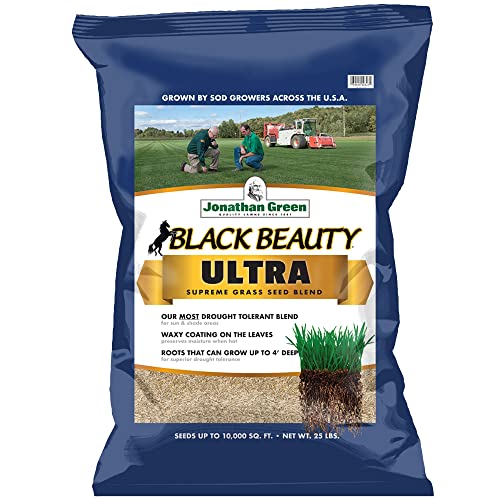
Jonathan Green Black Beauty Ultra
Jonathan Green · Cool Season · $28 (7 lbs) – $105 (25 lbs)
Why this seed for North Carolina: NC's Piedmont and mountains are prime tall fescue territory, and BBU is the best blend available. The deep roots handle the red clay, and the KBG component gives you self-repair capability.
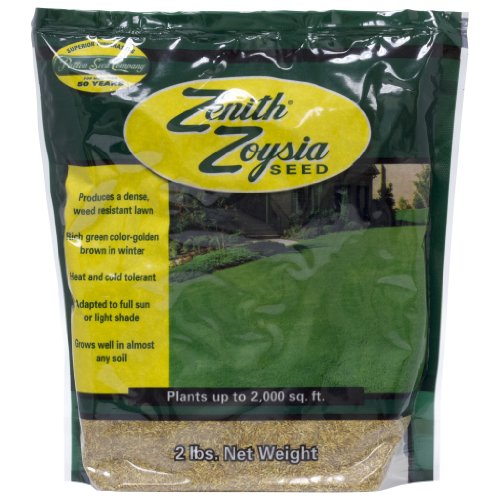
Pennington Zenith Zoysia Grass Seed & Mulch
Pennington · Warm Season · $25-35 for 2 lbs
Why this seed for North Carolina: Zoysia is the Goldilocks grass for NC's transition zone — it handles Raleigh's summer heat AND Asheville's winter cold. Creates a thick, carpet-like lawn that chokes out weeds naturally.
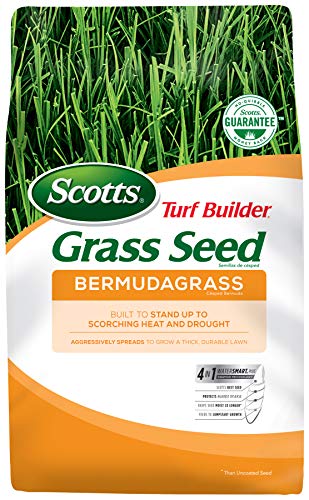
Scotts Turf Builder Bermudagrass
Scotts · Warm Season · $30-45 for 10 lbs
Why this seed for North Carolina: For the NC Coastal Plain and warmer Piedmont areas, bermuda is the heat-tolerant workhorse. It handles the sandy soil east of I-95 and the red clay of the Piedmont equally well.
Best Grass Seed by Region in North Carolina
Mountains / Western NC
The mountain region from Asheville and Hendersonville up through Boone, Blowing Rock, and Banner Elk sits in Zones 6b to 7a, with elevations from 2,000 to over 4,000 feet. This is legitimately cool-season territory — winters bring sustained cold, frost can arrive by mid-October, and snowfall accumulates at higher elevations. The soil tends toward rocky, acidic loam with decent organic content from decomposing hardwood leaf litter, though clay subsoil is common in valleys. Tall fescue is the dominant lawn grass and performs beautifully here without the summer stress it faces in the Piedmont. Kentucky bluegrass and fine fescue blends work at higher elevations where summer temperatures stay moderate. Bermuda is essentially non-viable above 2,500 feet — the winters are too long and too cold. Shade from mature hardwoods (oaks, maples, tulip poplars) is a significant factor in most mountain lots.
Top picks for this region:
- ✓Tall fescue thrives in the NC mountains — seed in September when soil temps drop below 75 degrees for rapid establishment before winter
- ✓Mountain soils tend acidic (pH 4.8-5.5) due to decomposing hardwood leaves — lime annually based on soil test results, typically 50-75 lbs per 1,000 sq ft
- ✓At elevations above 3,500 feet, consider a Kentucky bluegrass and fine fescue blend for better cold tolerance and shade performance than tall fescue alone
- ✓Mow tall fescue at 3.5 to 4 inches through summer to maximize root depth — mountain summers are mild enough that fescue rarely needs the survival mode it enters in the Piedmont
- ✓Leaf cleanup in fall is critical — mature hardwoods drop enormous volumes, and a wet leaf mat will smother fescue crowns and invite snow mold
Piedmont / Triangle / Triad
The Piedmont stretches from the foothills near Hickory and Morganton east through Charlotte, Greensboro, Winston-Salem, Raleigh, Durham, and Chapel Hill — encompassing the majority of North Carolina's population. This is the heart of the transition zone, sitting in Zones 7a and 7b where both warm-season and cool-season grasses can grow but neither is perfectly suited. The defining soil feature is heavy red clay — the Cecil and related series that dominates the region. It compacts ruthlessly, drains poorly when wet, and cracks when dry. The pH typically runs 5.0 to 5.8 without amendment. Summer heat regularly pushes into the mid-90s with brutal humidity, stressing cool-season grasses severely. Winters bring enough cold to send bermuda fully dormant for four to five months. This is where the warm-vs-cool debate is most heated, and increasingly, zoysia is emerging as the pragmatic middle ground.
Top picks for this region:
- ✓If you choose tall fescue in the Piedmont, commit to overseeding every single fall — summer heat and disease will thin it, and bare spots become weed highways by spring
- ✓Core aerate red clay soil every September before fall seeding — rent a hollow-tine aerator and make two passes in perpendicular directions for maximum compaction relief
- ✓Apply pelletized lime annually in fall — most Piedmont clay needs 40-60 lbs per 1,000 sq ft to maintain the 6.0-6.5 pH range that fescue and zoysia prefer
- ✓For bermuda lawns in the Charlotte and Raleigh areas, expect full dormancy from mid-November through late April — that's a long brown window, and you need to be okay with it
- ✓Zoysia is increasingly the smart Piedmont play: it handles summer heat better than fescue, stays green longer than bermuda into fall, and tolerates moderate shade from the oaks and pines that dominate Piedmont lots
Sandhills / Fayetteville / Southern Pines
The Sandhills region centered around Pinehurst, Southern Pines, and Fayetteville is a unique microregion where the red clay of the Piedmont gives way to deep, well-drained sandy soils. This is Zone 7b to 8a — warm enough that bermuda is the dominant turf and performs reliably, but still cool enough for the occasional hard freeze. The sandy soil is a double-edged sword: it drains beautifully (no standing water, no compaction issues) but holds almost no moisture or nutrients. You're essentially growing grass in a sandbox, and without consistent irrigation and frequent fertilizer applications, lawns thin out quickly. The longleaf pine forests that define the region create dappled shade and drop needles year-round, acidifying the already-acidic sandy soil. Fort Bragg (now Fort Liberty) and the golf courses around Pinehurst have demonstrated that bermuda thrives here with proper management, and centipede grass offers a lower-maintenance warm-season alternative for homeowners who don't want to fuss.
Top picks for this region:
- ✓Sandy Sandhills soil loses nutrients fast — fertilize bermuda with a slow-release nitrogen source every 6-8 weeks during the growing season rather than heavy single applications
- ✓Irrigation is non-negotiable in deep sand — without rain, sandy soil dries out completely in 3-4 days, and bermuda will go dormant fast in summer drought
- ✓Centipede grass is the low-input alternative for Sandhills homeowners — it needs less fertilizer and mowing than bermuda, thrives in acidic sandy soil, and tolerates partial shade from longleaf pines
- ✓Rake or blow pine straw off the lawn regularly — a thick layer smothers turf and drives soil pH below 5.0, which even acid-tolerant centipede can't handle long-term
- ✓The Pinehurst golf courses maintain bermuda at country-club levels, but they're spending $50,000+ per year on fertility and irrigation — set realistic expectations for a home lawn on a residential budget
Coastal Plain / Wilmington / Outer Banks
The Coastal Plain from Wilmington and Jacksonville up through New Bern, Greenville, and the Outer Banks is firmly warm-season territory in Zone 8a to 8b. Summers are long, hot, and oppressively humid, with nighttime temperatures that rarely drop below 70 from June through September — creating sustained fungal pressure on any grass type. The soil ranges from sandy loam near the coast to silty clay further inland, and salt spray is a real factor on barrier island properties. Bermuda is the workhorse grass here, handling the heat, humidity, and sandy conditions without complaint. Centipede is the laid-back alternative that thrives on neglect in the acidic coastal soils. Tall fescue is essentially nonviable — summer heat and humidity will destroy it by July of its first year. The Outer Banks present unique challenges with salt exposure, sandy substrate, wind, and the near-impossibility of establishing turf on lots directly facing the Atlantic.
Top picks for this region:
- ✓Bermuda is your primary option for full-sun coastal lawns — it handles the heat, humidity, and sandy soil better than any alternative
- ✓Brown patch and large patch fungus are endemic in Coastal Plain humidity — apply preventive fungicide (azoxystrobin or propiconazole) in April and again in October when conditions are prime
- ✓On Outer Banks and barrier island properties, bermuda is the only turfgrass with meaningful salt tolerance — even so, rinse the lawn with fresh water after major storm surge or heavy salt spray events
- ✓Centipede is ideal for inland Coastal Plain lots that get partial shade — it thrives in the acidic sandy-loam soils around Jacksonville, Greenville, and Kinston with minimal fertilizer input
- ✓Do not attempt cool-season grasses east of I-95 — the summer heat-humidity combination is simply too severe, and you will lose the lawn by mid-July every year
North Carolina Lawn Care Calendar
Spring
March - May
- •Cool-season lawns (Mountains/Piedmont fescue): Apply pre-emergent when soil temps reach 55 degrees at 4-inch depth — typically early to mid-March in the Piedmont, late March in the mountains. Do NOT apply pre-emergent if you plan to overseed in spring (fall is better for fescue seeding anyway).
- •Warm-season lawns (bermuda/zoysia): Watch for green-up, which starts in mid-April on the Coastal Plain and late April to early May in the Piedmont. Do not fertilize until the lawn is at least 50% green and actively growing.
- •Scalp bermuda lawns to 1 inch once consistent green-up is visible — in Wilmington that's mid-April, in Charlotte/Raleigh it's late April to early May. Bag clippings to remove dead thatch and expose soil to sunlight.
- •Seed new bermuda or zoysia areas once soil temperatures hold above 65 degrees for two weeks — typically late April on the coast, mid-May in the Piedmont. Warm-season seed needs warm soil to germinate.
- •Apply lime if your fall soil test indicated the need — spring is the second-best time (fall is preferred) and essential if you missed the fall window. Most Piedmont clay needs lime annually.
- •Begin mowing fescue at 3.5 to 4 inches and bermuda at 1.5 to 2 inches once consistent growth resumes — never remove more than one-third of the blade height in a single mowing.
Summer
June - August
- •Tall fescue survival mode: Raise mowing height to 4 inches, water deeply once per week (1 to 1.5 inches), and do NOT fertilize — summer nitrogen on fescue in the Piedmont fuels brown patch and pushes top growth the roots can't support in the heat.
- •Bermuda and zoysia peak season: Mow bermuda at 1.5 to 2 inches and zoysia at 2 to 2.5 inches on a regular schedule — these grasses are growing aggressively and may need mowing every 4-5 days in June and July.
- •Apply slow-release nitrogen to bermuda (0.5 to 1 lb N per 1,000 sq ft) in June — bermuda is a heavy nitrogen feeder during active growth. Hold off on zoysia fertilization after July 1 to avoid excessive thatch buildup.
- •Scout for brown patch on fescue lawns starting in June — circular brown patches 6 inches to several feet across with a dark 'smoke ring' border are the telltale sign. Treat with azoxystrobin or myclobutanil at first detection.
- •Monitor irrigation closely during July and August drought — Piedmont clay can crack and pull away from foundations while sandy Coastal Plain soil dries out in days. Water bermuda and zoysia 1 inch per week; fescue needs 1.5 inches to survive.
- •Accept some summer thinning on Piedmont fescue lawns — it's nearly unavoidable in Zone 7b summers with sustained 90-plus degree heat and high humidity. The recovery plan is fall overseeding, not summer panic.
Fall
September - November
- •CRITICAL WINDOW for fescue: Overseed tall fescue between September 15 and October 15 in the Piedmont, September 1 to October 1 in the mountains. This is the single most important lawn care event for cool-season grass in North Carolina. Core aerate first, seed at 6-8 lbs per 1,000 sq ft, and keep the seedbed moist for 14-21 days.
- •Apply a starter fertilizer (high phosphorus, like 18-24-12) with fall fescue seeding to promote root development before winter — new seedlings need established roots to survive their first Piedmont summer.
- •Bermuda and zoysia: Apply a winterizer fertilizer (high potassium, like 5-5-15) in early October to harden off the grass before dormancy. Potassium strengthens cell walls and improves cold tolerance.
- •Apply pre-emergent for winter annual weeds (Poa annua, henbit, chickweed) on bermuda and zoysia lawns in early September — but NOT on fescue lawns you plan to overseed, as pre-emergent will prevent fescue germination too.
- •Get a soil test through NC State's soil lab (NCDA&CS) — it's free for North Carolina residents and provides lime and fertilizer recommendations specific to your county. Submit samples in October for results before spring.
- •Continue mowing bermuda and zoysia at normal height until growth stops — do not scalp going into winter. Lower fescue mowing height slightly to 3 inches for the last two mowings of the season to reduce snow mold risk in the mountains.
Winter
December - February
- •Leave dormant bermuda and zoysia alone — no fertilizer, no mowing, minimal water unless you go 6-plus weeks without precipitation.
- •Spot-treat winter weeds on dormant warm-season lawns — henbit, chickweed, and annual bluegrass are actively growing while your bermuda sleeps. Apply 2,4-D or a three-way broadleaf herbicide on mild days (above 50 degrees) when weeds are growing.
- •Fescue stays green through NC winters and may need occasional mowing in the Piedmont during warm spells — set the mower at 3 inches and only mow when the grass is dry and not frozen.
- •Plan spring projects: get soil test results back from NCDA&CS, order seed for spring bermuda or zoysia establishment, schedule core aeration equipment rental.
- •Apply lime in January or February if soil test indicates the need — winter applications give lime time to react with the clay and raise pH before the spring growing season.
- •Service and sharpen mower blades — dull blades tear fescue tips and create brown, ragged edges that are entry points for fungal disease as soon as spring humidity arrives.
North Carolina Lawn Tips You Won't Find on the Seed Bag
Red Clay Is Not a Death Sentence — But You Can't Ignore It
Every Piedmont homeowner from Charlotte to Raleigh is growing grass on some version of Cecil or Appling red clay, and the complaints are universal: water pools on the surface after rain, the soil cracks in drought, and seed seems to wash away before it germinates. But red clay is actually mineral-rich soil that holds nutrients well — the problem is compaction and low pH, both of which are fixable. Core aerate every fall before overseeding fescue. Apply pelletized lime annually based on your NCDA&CS soil test (most Piedmont clay needs 40 to 60 lbs per 1,000 sq ft to maintain pH 6.0 to 6.5). Topdress with a quarter-inch of quality compost after aeration. Do this for three consecutive years and you'll have transformed the top few inches of your soil from brick-hard clay into a workable growing medium. Skip it and you'll keep wasting money on seed that never establishes.
The Warm vs. Cool Decision in the Piedmont — How to Actually Choose
The Triangle and Triad sit in the dead center of the transition zone, and the warm-vs-cool grass decision is the most consequential choice you'll make for your lawn. Here's the honest breakdown: Tall fescue gives you a green lawn 10 to 11 months per year but requires annual fall overseeding, heavy watering in summer, and constant brown patch management — it's a high-input grass in this climate. Bermuda is bulletproof from May through October but goes completely dormant (straw-brown) for four to five months — if you can't stomach a brown winter lawn, bermuda is not for you. Zoysia splits the difference: it greens up earlier than bermuda, stays green later into fall, tolerates moderate shade, and handles summer heat well, but it's slow to establish from seed (plan on two full growing seasons to fill in). Your lot's sun exposure is the tiebreaker. Less than 6 hours of direct sun? Fescue or zoysia. Full blazing sun all day? Bermuda. Most Piedmont subdivisions with mature pines and oaks? Zoysia is probably your best bet.
Pine Straw and Soil Acidity — The Quiet Problem Under Every Pine Canopy
North Carolina is pine country — loblolly, longleaf, and Virginia pines dominate landscapes from the Sandhills through the Coastal Plain and show up throughout the Piedmont. As pine needles accumulate and decompose on your lawn, they slowly acidify the soil, driving pH down below 5.0 in severe cases. At that pH, most grasses can't access essential nutrients even if they're present in the soil, and you'll see thin, yellowish turf that doesn't respond to fertilizer. The fix is straightforward but requires consistency: rake or blow heavy pine straw accumulations off the lawn (a light scatter is fine, a thick mat is not), test your soil pH annually through NCDA&CS, and lime accordingly. Under heavy pine canopy, you may need 75 to 100 lbs of pelletized lime per 1,000 sq ft annually to maintain pH 5.5 to 6.0 — significantly more than open areas. Centipede grass is the exception: it actually prefers acidic soil down to pH 5.0 and is an excellent choice for shaded, pine-heavy lots on the Coastal Plain.
Keeping Tall Fescue Alive Through a Piedmont Summer
Tall fescue in the NC Piedmont is essentially running a survival gauntlet from mid-June through early September. Daytime highs in the 90s, nighttime lows that barely drop below 72, and humidity that keeps leaf surfaces wet long enough to breed brown patch fungus — it's the worst-case scenario for a cool-season grass. The homeowners who keep fescue looking decent through Piedmont summers follow a specific protocol: mow high (4 inches minimum, never lower), water deeply once a week in the early morning (never at night — wet blades overnight are a fungal invitation), apply zero nitrogen after May 1, and treat preventively for brown patch with azoxystrobin in early June before symptoms appear. Even with perfect management, expect some thinning. The real recovery happens in September when soil temperatures drop below 75 and you overseed. Treat fall overseeding not as damage repair but as routine annual maintenance — fescue in the Piedmont is a replanting-required grass, and anyone who tells you otherwise hasn't grown it here long enough.
Zoysia as the Piedmont Compromise Grass — Expectations vs. Reality
Zoysia has become the darling of NC Piedmont lawn forums, and the appeal is obvious: it handles heat like a warm-season grass, tolerates moderate shade unlike bermuda, and creates a dense, weed-choking turf that looks manicured with less mowing. Zenith zoysia from seed is the most accessible option, and it genuinely performs well across Zone 7a/7b. But zoysia comes with tradeoffs that the enthusiasts don't always mention. Establishment from seed takes 60 to 90 days for initial coverage and a full two growing seasons to reach mature density — you need patience and aggressive weed control during that vulnerable period. Zoysia builds thatch faster than bermuda and needs annual dethatching or core aeration by year three. It still goes dormant in winter (late November through mid-April in the Triangle), so you don't fully escape the brown-lawn months. And it's not a full-shade grass despite the marketing — it needs 4 to 5 hours of filtered sunlight minimum. All that said, for a Piedmont homeowner with a mix of sun and partial shade who doesn't want to reseed every fall, zoysia is genuinely the smartest available option.
Use NC State's Free Soil Testing — Seriously, It's Free
North Carolina residents have access to one of the best deals in lawn care: free soil testing through the NC Department of Agriculture and Consumer Services (NCDA&CS) soil lab in Raleigh. You pick up a sample box from your county Cooperative Extension office (or request one online), collect soil from your lawn following their instructions, mail it in, and get back a detailed report with pH, nutrient levels, and specific lime and fertilizer recommendations for your grass type and region. The turnaround is typically 2 to 3 weeks outside of peak season (avoid submitting in March and April when every farmer in the state sends samples and wait times stretch to 6-plus weeks). Submit in October or November for results you can act on in late winter. Most Piedmont homeowners who test for the first time are shocked at how acidic their clay is and how much lime they actually need — the test eliminates guessing and saves you money on unnecessary fertilizer. There is no reason to skip this step when it costs you nothing.
What North Carolina Lawn Pros Actually Plant
Tall Fescue
Most Popular (Mountains & Piedmont)Tall fescue is the most widely planted grass in North Carolina's Piedmont and mountain regions, and it's the default recommendation from NC State extension for Zones 6b through 7b. Turf-type tall fescue varieties like those in Jonathan Green Black Beauty Ultra create a deep green, fine-bladed lawn that stays green from September through June — a major appeal in a state where warm-season grasses go brown for nearly half the year. The catch is summer survival: in the Piedmont, fescue is a high-maintenance grass that needs annual fall overseeding, careful irrigation, and proactive fungicide management to look good year-round. In the mountains, fescue is genuinely low-maintenance and performs beautifully. The species' deep root system helps it handle Piedmont drought better than bluegrass, and improved varieties offer better heat tolerance than the K-31 fescue your grandparents planted, but it's still a cool-season grass fighting a warm-season climate below the foothills.
Bermuda Grass
Most Popular (Coastal Plain & Sandhills)Bermuda dominates from the Sandhills through the Coastal Plain and is the go-to warm-season grass for full-sun lawns in Charlotte and the southern Piedmont. It shrugs off North Carolina's worst summer heat and humidity, fills in bare spots aggressively through stolons and rhizomes, and handles foot traffic better than any other option — which is why it's standard on every athletic field from Kenan Stadium in Chapel Hill to high school football fields across the Coastal Plain. Improved seeded varieties like Scotts Bermudagrass offer better density and color than the common bermuda that builders install. The downside is winter dormancy: bermuda turns completely brown from November through April in the Piedmont, and many Triangle and Triad homeowners find five months of brown lawn unacceptable. It also needs full sun — 8 hours minimum — making it a poor fit for the shaded, tree-heavy lots common in older Piedmont neighborhoods.
Zoysia Grass
Growing Fast (Piedmont)Zoysia has surged in popularity across the NC Piedmont over the past decade as homeowners look for a grass that handles both summer heat and partial shade — something neither bermuda nor fescue does well. Zenith zoysia is the leading seeded variety, producing a dense, medium-textured turf that creates a genuine carpet effect once mature. It tolerates 4 to 5 hours of filtered sunlight, which makes it viable under the loblolly pines and water oaks that shade most Piedmont subdivision lots. Zoysia's growing season runs about a month longer than bermuda on both ends, greening up in mid-April and holding color into mid-November in the Triangle. NC State research has shown Zenith zoysia performing well across the entire Piedmont, and it's increasingly being recommended as the best single grass for the transition zone. The establishment period is the main hurdle — plan on two full growing seasons from seed to a mature, filled-in lawn.
Centipede Grass
Popular (Coastal Plain)Centipede is the low-maintenance warm-season option for the Coastal Plain and Sandhills, and it's genuinely the easiest grass to maintain in eastern North Carolina. It thrives in acidic, sandy soils (pH 5.0 to 6.0) without heavy fertilization — in fact, over-fertilizing centipede is the fastest way to kill it, causing a condition called centipede decline. It tolerates partial shade from pine canopies, needs mowing only every 10 to 14 days during peak growth, and creates an attractive apple-green lawn that looks good with minimal effort. Centipede doesn't handle heavy traffic, cold winters, or alkaline soil, which limits it to the Coastal Plain and lower Sandhills. It's the dominant residential grass in Wilmington, Jacksonville, and Greenville, where homeowners appreciate a lawn that thrives on relative neglect.
Kentucky Bluegrass / Fine Fescue Blends
Niche (Mountain Region)In the NC mountains above 3,000 feet, Kentucky bluegrass and fine fescue blends find conditions closer to their cool-climate comfort zone. These species produce a fine-textured, dense turf with excellent cold tolerance and good shade performance under the hardwood canopy that dominates mountain landscapes. You'll see bluegrass-fescue blends on lawns in Boone, Blowing Rock, Banner Elk, and the higher elevations around Asheville. They stay green well into November and green up early in spring, and they don't face the brutal summer stress that makes them impractical in the Piedmont. The trade-off is higher water and fertilizer requirements compared to tall fescue, and they need well-drained soil — the clay subsoil in mountain valleys can be a problem if drainage isn't addressed. This is a niche choice limited to the mountain region, but for homeowners at elevation, it produces the most attractive cool-season lawn available.
North Carolina Lawn Seeding Tips
Getting the best results from your grass seed in North Carolina comes down to timing, soil prep, and choosing the right variety for your specific conditions. Here are our top tips:
- Test your soil first. A $15 soil test from your North Carolina extension office tells you exact pH and nutrient levels. Most warm-season grasses prefer pH 6.0-6.5.
- Prep the seedbed properly. Rake or aerate to ensure good seed-to-soil contact. This single step improves germination rates more than any seed coating or starter fertilizer.
- Use a starter fertilizer. Apply a phosphorus-rich starter fertilizer at seeding time to promote root development. We recommend Scotts Starter Fertilizer or The Andersons Starter.
- Water correctly. Keep the seedbed consistently moist (not soaked) for the first 2-4 weeks. Light watering 2-3 times per day is better than one heavy soaking.
- Be patient. Warm-season grasses are slower to establish. Bermuda takes 7-14 days, but Zoysia and Centipede can take 3-4 weeks. Don't panic if you don't see results immediately.
- Consider pre-germinating KBG. If you're planting Kentucky Bluegrass, you can cut germination time from 30 days to under a week using the bucket-and-bubble pre-germination method. This is especially valuable for late-season seeding in North Carolina.
Frequently Asked Questions
When is the best time to plant grass seed in North Carolina?
September through mid-October for cool-season grasses in the Piedmont and mountains; May through June for warm-season grasses on the Coastal Plain and southern Piedmont
What type of grass grows best in North Carolina?
North Carolina sits in the transition zone, making it one of the trickiest states for lawn care. Both cool-season grasses (Tall Fescue, KBG) and warm-season grasses (Bermuda, Zoysia) can work depending on your specific location and microclimate.
What are the biggest lawn care challenges in North Carolina?
The main challenges for North Carolina lawns include true transition zone stress, red clay soil in the piedmont, high humidity and fungal pressure, diverse regions requiring different grass types. Choosing the right grass variety that is adapted to these specific conditions is the single most important decision you can make for your lawn.
Can I grow Kentucky Bluegrass in North Carolina?
It depends on where you are in North Carolina. In the cooler northern regions, KBG can work well. In the warmer southern areas, it may struggle during peak summer heat. Tall Fescue is often a safer bet for transition zone lawns because it handles both heat and cold better than pure KBG.
How much does it cost to seed a lawn in North Carolina?
For a typical 5,000 sq ft lawn, expect to spend $150-$400 on seed alone depending on the variety. Premium seeds like Midnight Kentucky Bluegrass or Zenith Zoysia cost more per pound but deliver better results. Add $50-$100 for starter fertilizer and $20-$50 for soil amendments. The seed is the smallest part of your total investment — proper soil prep and consistent watering matter more than saving $50 on cheaper seed.
More Lawn Care Resources
Not in North Carolina?
We have state-specific grass seed guides for all 50 states.