
MD State Guide · Updated March 2026
Best Grass Seed for Maryland
Top grass seeds for Maryland's transition zone lawns. Expert picks for Baltimore, Bethesda, Annapolis, Frederick, and the Eastern Shore.
Disclosure: This article contains affiliate links. If you buy through our links, we may earn a commission at no extra cost to you. All opinions are our own. Learn more.
Maryland is a transition zone state that packs an absurd amount of geographic and climatic diversity into a footprint smaller than most western counties. From the Allegheny Plateau in Garrett County where Zone 6a winters regularly drop below zero, through the Piedmont clay belt running from Frederick to Baltimore, down to the sandy Coastal Plain of the Eastern Shore where Ocean City bakes in Zone 7b summers — Maryland forces you to make grass decisions that vary dramatically depending on which side of the Chesapeake Bay you're standing on. The state's unofficial dividing line is Interstate 95: west of it, you're dealing with heavy red clay, mature hardwood canopy, and cool-season conditions where tall fescue dominates. East of it, sandy soils, open farmland, and warmer microclimates push the calculus toward transition zone blends that can handle both summer heat and winter cold without flinching.
The DC suburbs of Montgomery and Prince George's counties are ground zero for Maryland's lawn obsession. Bethesda, Chevy Chase, Potomac, Silver Spring, and College Park represent some of the most competitive residential lawn culture in the mid-Atlantic — HOA standards, government professionals who expect precision in everything including their yards, and a demographic that will invest serious money in turf care. The Piedmont clay here is the same Cecil series red clay that plagues Northern Virginia across the river, compacted by decades of suburban development and running a native pH of 5.0 to 5.8 that will starve grass without annual liming. Drive through Potomac or Bethesda in early October and the lawn care trucks are bumper to bumper — fall overseeding season is an industry event in this part of Maryland.
Baltimore and the central Maryland corridor from Towson through Columbia to Ellicott City sit squarely in the Zone 7a transition zone, where summers are just hot enough to punish cool-season grasses and winters are just cold enough to send warm-season species dormant for five months. Baltimore's row-house neighborhoods don't have much lawn to speak of, but the county suburbs — Pikesville, Timonium, Catonsville, and the sprawling developments along the I-695 beltway — are a different story. These are classic Piedmont clay lots with mature tulip poplars, oaks, and maples providing 40 to 60 percent canopy coverage, making shade management as critical as grass selection. The combination of clay soil, summer humidity, and shade creates prime brown patch territory, and any fescue lawn in central Maryland that doesn't get fall overseeding is on a one-way trajectory toward bare dirt.
What makes Maryland uniquely complicated is the Chesapeake Bay and the nutrient management regulations that come with it. Maryland's Lawn Fertilizer Law — one of the most restrictive in the nation — prohibits phosphorus application to established lawns unless a soil test shows deficiency, bans fertilizer application between November 15 and March 1, and restricts nitrogen to no more than 0.9 lbs per 1,000 sq ft per application with at least 20 percent slow-release. These aren't suggestions — they're enforceable law, and they exist because lawn fertilizer runoff into the Bay watershed is a major contributor to the algal blooms and dead zones that have degraded the Chesapeake for decades. Every Maryland homeowner needs to know these rules, and frankly, they represent good agronomic practice regardless of the legal requirement.
The University of Maryland Extension's turfgrass program is your most valuable free resource, and their recommendations carry weight because they're tested in Maryland conditions — not extrapolated from research plots in Georgia or Michigan. UMD Extension offers soil testing through their labs, publishes region-specific lawn care calendars, and their turf specialists have decades of data from plots across the Piedmont, Coastal Plain, and western highlands. Their transition zone management publications are essential reading for anyone trying to maintain a lawn in the Baltimore-Washington corridor, and their guidance on nutrient management helps you comply with Bay regulations while still growing quality turf. Use them before you take advice from a bag of fertilizer designed for the entire eastern seaboard.
Quick Picks: Our Top 3 for Maryland
Understanding Maryland's Lawn Climate
Humid subtropical in the eastern lowlands transitioning to humid continental in the western mountains. Maryland is a transition zone state with remarkable climate diversity packed into a small area. The DC suburbs and Baltimore metro bake in 95F summer heat with suffocating humidity, while western Maryland in the Appalachians sees heavy snow and temperatures below zero. The Eastern Shore has a milder, more maritime climate with sandy soil. Chesapeake Bay influences create microclimates along its extensive shoreline.
Key Challenges
Best Planting Time for Maryland
Late August through September (fall) is critical — the transition zone's narrow ideal window; mid-April as spring backup
Our Top 3 Picks for Maryland
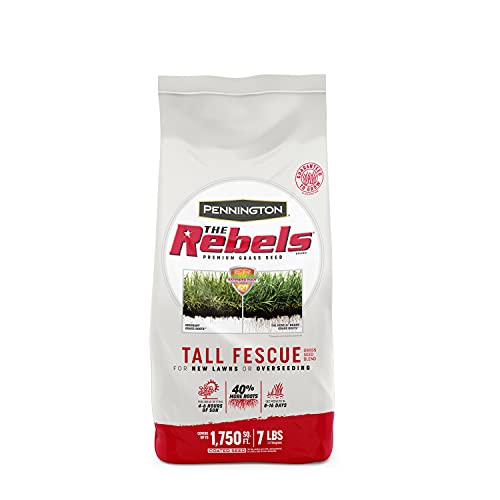
Pennington The Rebels Tall Fescue Mix
Pennington · Cool Season · $30-50 for 7 lbs
Why this seed for Maryland: Maryland's transition zone climate demands the toughest fescue genetics available. The Rebels handles DC-suburb heat in summer and western MD cold in winter, with deep roots that penetrate Piedmont clay.

Barenbrug RTF Water Saver
Barenbrug · Cool Season · $40-55 for 5 lbs
Why this seed for Maryland: RTF's self-repairing rhizomes are invaluable for Maryland lawns where summer heat stress thins standard fescue. The deep roots handle clay soil and the RTF genetics survive the state's temperature extremes.

Outsidepride Combat Extreme Transition Zone
Outsidepride · Cool Season · $35-50 for 5 lbs
Why this seed for Maryland: The fescue/KBG blend gives Maryland homeowners self-repair capability in the transition zone. The KBG fills in thin spots naturally — no more annual overseeding every fall to maintain your Bethesda or Columbia lawn.
Best Grass Seed by Region in Maryland
DC Suburbs / Montgomery & Prince George's Counties
Montgomery and Prince George's counties — Bethesda, Silver Spring, Chevy Chase, Potomac, College Park, Bowie, and Laurel — make up the Maryland side of the DC metro and represent the state's highest-density lawn market. Zone 7a with heavy Piedmont clay soil, mature hardwood canopy, and a population that demands immaculate turf. The soil is Cecil and Manor series clay — iron-rich, acidic (pH 5.0 to 5.8), and compacted to near-concrete consistency on any lot developed in the last 40 years. Summer humidity is suffocating, with the Potomac River corridor trapping moisture and creating conditions where brown patch and dollar spot thrive on fescue lawns from June through September. Shade is a defining factor on most lots, with tulip poplars, red oaks, and American beeches providing dense canopy that eliminates bermuda from consideration and challenges even shade-tolerant fescue varieties. Tall fescue remains the overwhelming default, but the annual overseeding requirement makes it a high-input commitment that surprises transplants from cooler climates.
Top picks for this region:
- ✓Montgomery County clay is brutally compacted on post-1990 construction lots — core aerate every September and topdress with compost to build organic matter over the clay hardpan that builders left behind
- ✓Shade from mature Potomac-corridor hardwoods eliminates warm-season options on most DC suburb lots — improved shade-tolerant fescue like Rebels or RTF Water Saver is your realistic path forward
- ✓Pre-emergent timing in the DC suburbs is typically the first week of March — forsythia bloom is the traditional indicator, and soil temps hit 55 degrees earlier here than homeowners from further north expect
- ✓Maryland's fertilizer law prohibits phosphorus on established lawns without a soil test showing deficiency — use a zero-phosphorus maintenance fertilizer and save the starter fertilizer for overseeding areas only
- ✓Water restrictions during summer drought are common in the WSSC service area — budget for deep weekly irrigation on fescue from June through August, or accept summer thinning and plan for aggressive fall overseeding
Baltimore Metro / Central Maryland
The Baltimore metropolitan area — Baltimore County, Howard County, Harford County, and Anne Arundel County — encompasses Towson, Pikesville, Columbia, Ellicott City, Catonsville, Bel Air, and Annapolis. This is the heart of Maryland's Zone 7a transition zone, with Piedmont clay transitioning to Coastal Plain soils as you move east toward the Bay. Howard County's planned community of Columbia, with its village neighborhoods surrounded by mature tree buffers, presents a unique lawn challenge: deep shade, clay soil, and HOA expectations for year-round green. Annapolis and Anne Arundel County shift toward sandier soils and slightly milder winters moderated by the Chesapeake Bay. The Baltimore beltway suburbs — Pikesville, Timonium, Lutherville, Towson — have some of the oldest and most established residential lawns in the state, many on lots with 60-plus year old trees that create challenging shade-to-sun mosaics requiring different grass strategies on the same property.
Top picks for this region:
- ✓Columbia's village neighborhoods have aggressive tree canopy — accept that areas under dense hardwood cover need shade-tolerant fescue blends and even then may only support thin turf, not the dense carpet of a full-sun lawn
- ✓Annapolis and eastern Anne Arundel County soil shifts from clay to sandy loam — if you're near the Bay, your soil drains faster and may actually need more frequent watering than the Piedmont clay lots further west
- ✓Brown patch pressure in the Baltimore corridor peaks in July when nighttime temperatures refuse to drop below 70 — preventive azoxystrobin application in early June saves the frustration of chasing the disease after it's already cratered your lawn
- ✓Harford County's rolling Piedmont terrain means your lawn may have dramatically different sun exposure and drainage on north vs. south-facing slopes — treat them as separate zones with different management strategies
- ✓Annual lime application is essential on Baltimore-area clay — most Piedmont soils test between 5.0 and 5.8 without amendment, and fescue performs best at 6.0 to 6.5
Eastern Shore / Coastal Plain
Maryland's Eastern Shore — Salisbury, Easton, Cambridge, Ocean City, and the farming communities of Kent, Queen Anne's, Talbot, and Dorchester counties — is a different world from the Piedmont. Sandy to sandy loam soils, flat terrain, Zone 7a to 7b conditions moderated by the Chesapeake Bay on one side and the Atlantic on the other, and a longer, warmer growing season that nudges the grass selection calculus toward the warm-season end of the transition zone spectrum. The Eastern Shore's agricultural heritage means many residential lots sit on former farmland with decent topsoil, but coastal properties near Ocean City and the barrier islands deal with pure sand and salt spray. Nutrient management is especially critical here — the Shore's flat topography and high water table mean fertilizer runoff reaches the Bay and its tributaries with minimal filtration. Tall fescue still works on the Shore but requires more summer irrigation than Piedmont clay lots, and bermuda is increasingly viable in the warmer southern counties.
Top picks for this region:
- ✓Sandy Eastern Shore soil drains fast and leaches nutrients quickly — use slow-release fertilizers and apply lighter amounts more frequently rather than heavy single applications
- ✓Ocean City and coastal Worcester County properties face salt spray damage — bermuda has the best salt tolerance and is increasingly the practical choice within a mile of the ocean
- ✓The Eastern Shore's flat terrain and high water table mean standing water after heavy rain is common — ensure positive drainage away from lawn areas and consider raised beds or French drains for persistent wet spots
- ✓Nutrient management regulations are strictly enforced on the Eastern Shore due to Bay proximity — keep detailed records of fertilizer applications and never apply within 15 feet of any waterway
- ✓Southern Dorchester and Somerset counties are warm enough for bermuda as a primary lawn grass — Zone 7b conditions with Bay-moderated winters make this the only part of Maryland where warm-season grass is a reliable standalone option
Western Maryland / Allegany & Garrett Counties
Western Maryland — Cumberland, Frostburg, Oakland, Deep Creek Lake, and the Allegheny highlands of Garrett and Allegany counties — is Maryland's cool-season sanctuary. Zone 6a at the highest elevations and 6b in the valleys, this region has genuine winters with sustained cold, moderate summers that rarely push above 90 degrees, and growing conditions where tall fescue thrives without the annual survival drama of the Piedmont. Garrett County sits above 2,500 feet at its highest points and gets legitimate snowfall — 100-plus inches in some years — with a growing season 30 days shorter than Baltimore. The soil varies from rocky clay and shale-derived soils in the mountain ridges to better loam in the valley floors around Cumberland. Deep Creek Lake's vacation home market drives significant seasonal lawn care demand, with property owners wanting attractive turf for the summer months without year-round maintenance commitment. Kentucky bluegrass and fine fescue blends are viable here in ways that would be impossible in the Piedmont.
Top picks for this region:
- ✓Tall fescue in western Maryland is genuinely low-maintenance — summers rarely sustain the heat that makes it a struggle in the Piedmont, and brown patch pressure is minimal at elevation
- ✓Garrett County's shorter growing season means your fall seeding window is August 25 through September 20 — frost can arrive by mid-October and new seedlings need 6 to 8 weeks of growth before dormancy
- ✓Deep Creek Lake property owners: if the lawn only needs to look good from Memorial Day through Labor Day, a fine fescue blend requires far less attention than a bluegrass lawn and tolerates the irregular mowing schedule of a vacation home
- ✓Western Maryland soil pH varies widely — valley floors near Cumberland can run neutral to slightly alkaline from limestone influence, while mountain ridge soil is often acidic from sandstone parent material and conifer needle drop
- ✓Snow mold becomes a real factor in Garrett County with 100-plus inches of annual snowfall — mow to 2.5 inches for the final cut and clear all leaves before lasting snow cover arrives
Maryland Lawn Care Calendar
Spring
March - May
- •Apply pre-emergent crabgrass prevention when soil temps reach 55 degrees at 4-inch depth — typically early March in the Eastern Shore and DC suburbs, mid-March in the Baltimore corridor, and late March to early April in western Maryland. Forsythia bloom is the traditional Maryland indicator.
- •Apply pelletized lime based on fall soil test results — the Maryland fertilizer window opens March 1, and most Piedmont clay soils need 40 to 50 lbs per 1,000 sq ft annually to maintain pH 6.0 to 6.5. Remember: no fertilizer application is legal before March 1 in Maryland.
- •Repair winter damage and thin spots with overseeding in late April to early May — spring seeding is second-best to fall in Maryland, but addresses bare areas from snow mold, salt damage, or winter desiccation before weeds colonize them.
- •Begin regular mowing when growth reaches 3.5 to 4 inches — set fescue mowing height at 3.5 inches minimum and never remove more than one-third of the blade in a single cut. First mow in the DC suburbs typically falls in mid to late March.
- •Submit soil samples to the University of Maryland Extension soil testing lab if you missed the fall window — results include pH, nutrient levels, and fertilizer recommendations specific to Maryland soils and compliant with state nutrient management law.
Summer
June - August
- •Tall fescue survival protocol: Raise mowing height to 4 inches, water deeply once per week (1 to 1.5 inches in a single early-morning session), and apply zero nitrogen after May — summer nitrogen on fescue in Maryland's Piedmont is a direct invitation for brown patch disease and violates good nutrient management practice.
- •Scout for brown patch starting in early June — circular brown patches with a dark smoke-ring border are the signature. Apply azoxystrobin or propiconazole preventively in late May before the humidity peaks, especially in the Baltimore-Washington corridor where nighttime temps stay above 70 for weeks.
- •Monitor for Japanese beetle activity in June and July and grub damage in late July through August — brown patches that lift like carpet indicate root-feeding grubs beneath. Preventive grub treatments should go down in June before egg-laying peaks.
- •Accept some fescue thinning in the Piedmont and DC suburbs — it is nearly unavoidable when daily highs exceed 90 with 80 percent humidity for extended stretches. The real recovery plan is always fall overseeding.
- •Maryland's fertilizer law limits nitrogen to 0.9 lbs per 1,000 sq ft per application with at least 20 percent slow-release — if you fertilize in summer at all, use a light slow-release application in early June and nothing after that until fall.
Fall
September - November
- •CRITICAL WINDOW for fescue overseeding: September 10 through October 15 in the DC suburbs and Baltimore corridor, September 1 through October 1 in western Maryland. Core aerate first with two perpendicular passes, seed at 6 to 8 lbs per 1,000 sq ft, and keep the seedbed consistently moist for 14 to 21 days. This is the single most important lawn care event of the year.
- •Apply starter fertilizer with fall seeding — this is the one time phosphorus application is justified on an established lawn under Maryland law, as new seedlings need it for root development. Use an 18-24-12 or similar high-phosphorus starter.
- •Submit soil samples to the UMD Extension soil testing lab by mid-October — results take 2 to 3 weeks and provide lime and fertilizer recommendations calibrated to your region. Free or low-cost through your county extension office.
- •Apply fall fertilizer (the most important application of the year) in late October to early November — use a slow-release nitrogen product at 0.7 to 0.9 lbs N per 1,000 sq ft. Remember the November 15 cutoff: no fertilizer of any kind after that date in Maryland.
- •Continue mowing fescue at 3 to 3.5 inches through fall and lower the final mow of the season to 3 inches to reduce matting and disease risk over winter. Remove all leaves promptly — wet leaf mats smother new fall seedlings in days.
Winter
December - February
- •No fertilizer applications of any kind are legal in Maryland between November 15 and March 1 — this is state law, not a suggestion, and it applies to all residential and commercial properties.
- •Fescue stays green through Maryland winters and may need mowing during warm spells in January and February — set the mower at 3 inches and only cut when the ground is firm and blades are dry, never on frozen or saturated soil.
- •Minimize salt use on walkways and driveways adjacent to lawn areas — sodium damage to turf along hardscapes is cumulative and one of the most common causes of spring bare spots in Maryland suburbs. Use calcium chloride or sand as alternatives.
- •Plan spring projects: review UMD Extension soil test results, order seed early (popular transition zone varieties sell out by March), and schedule equipment rental for fall aeration.
- •Sharpen mower blades and service equipment — dull blades tear fescue tips, creating ragged edges that invite fungal disease as soon as spring humidity arrives.
Maryland Lawn Tips You Won't Find on the Seed Bag
Maryland's Fertilizer Law Is Real — Know It Before You Spread Anything
Maryland has one of the strictest lawn fertilizer laws in the country, enacted specifically to protect the Chesapeake Bay watershed. No phosphorus on established lawns without a soil test showing deficiency. No fertilizer at all between November 15 and March 1. No more than 0.9 lbs of nitrogen per 1,000 sq ft per application, with at least 20 percent in slow-release form. No application within 15 feet of waterways or on impervious surfaces. Fines range from $250 to $1,000 per violation. Every Maryland homeowner needs to know these rules, and the easiest way to comply is to get a UMD Extension soil test that tells you exactly what your lawn needs — nothing more, nothing less.
Piedmont Clay Is the Defining Soil Challenge from Frederick to Baltimore
The Cecil series red clay that dominates central Maryland from Frederick through the DC suburbs and Baltimore corridor is some of the most difficult lawn soil on the East Coast. It compacts into hardpan when dry, turns into a waterlogged mess after rain, and runs an acidic pH of 5.0 to 5.8 that starves grass of nutrients. Annual core aeration in September is non-negotiable — not optional, not every-other-year, but every single fall without exception. Follow aeration with a quarter-inch of quality compost and pelletized lime based on your soil test. After three to five years of this regimen, you'll have fundamentally changed the top few inches of soil from clay hardpan to something grass roots can actually penetrate.
The Transition Zone Dilemma: Why Maryland Lawns Are Harder Than Most
Maryland sits in the transition zone where cool-season and warm-season grasses overlap, and neither type is perfectly suited. Tall fescue — the default choice — thrives from September through June but suffers through July and August humidity with brown patch and heat stress. Bermuda handles summer beautifully but goes dormant from November through April, giving you five months of brown lawn that most Maryland homeowners find unacceptable. Zoysia is the compromise candidate, but it's slow to establish from seed and still goes dormant for four months. The honest answer for most Maryland Piedmont homeowners is that tall fescue remains the best option, but you need to accept annual fall overseeding as routine maintenance — not an emergency — and budget accordingly.
Japanese Beetles Are a Maryland Plague — And Their Grubs Destroy Lawns
Maryland's Japanese beetle population is among the worst in the country, and the real damage isn't the adults eating your roses — it's the C-shaped white grubs feeding on grass roots from July through October. A grub-infested lawn will feel spongy underfoot in late summer and pull up like carpet in patches. Skunks and raccoons digging up the lawn to eat grubs add insult to injury. Preventive treatment with imidacloprid in June, before peak egg-laying, is far more effective than curative treatments after damage appears. UMD Extension recommends scouting by cutting a one-foot-square section of turf and checking for grubs — more than 10 per square foot warrants treatment.
The Eastern Shore Plays by Different Rules
If you're on Maryland's Eastern Shore, forget everything your cousin in Bethesda told you about lawn care. Your sandy soil drains in hours where their clay holds water for days. Your growing season runs two to three weeks longer on both ends. Your soil likely has adequate or even excessive phosphorus from decades of agricultural use. And your proximity to the Bay means nutrient management isn't just law — it's visibly connected to the water quality in the creek behind your house. Use slow-release nitrogen in smaller, more frequent applications to prevent leaching through sand, get a soil test before applying any phosphorus, and seriously consider bermuda for full-sun areas in the warmer southern counties where it's now reliably winter-hardy.
UMD Extension Soil Testing Is Your Starting Point — Not Your Neighbor's Advice
The University of Maryland Extension operates through offices in every county and provides soil testing that returns specific lime and fertilizer recommendations for your soil type, grass species, and region. The test costs a nominal fee, takes two to three weeks, and eliminates the guesswork that leads most Maryland homeowners to over-apply lime and nitrogen while ignoring actual deficiencies. Given that Maryland law restricts what you can apply and when, a UMD soil test is essentially your compliance roadmap. It tells you exactly what your lawn needs, in what quantities, keeping you within legal limits while actually feeding the grass. Find your county extension office online and submit samples in September for results before fall application deadlines.
What Maryland Lawn Pros Actually Plant
Tall Fescue (Turf-Type)
Most PopularTall fescue is the dominant lawn grass across Maryland from the DC suburbs through Baltimore and into the Piedmont, and it's the default recommendation from UMD Extension for Zones 6b through 7a. Improved turf-type varieties like those in Pennington Rebels and Barenbrug RTF Water Saver produce deep green, fine-bladed lawns that stay green from September through June — nine months of green in a state where warm-season grasses are dormant nearly half the year. The deep root system handles Maryland's periodic summer droughts better than Kentucky bluegrass, and modern disease-resistant cultivars stand up to brown patch pressure better than the old K-31 that was standard a generation ago. The catch is annual fall overseeding in the Piedmont: expect 10 to 30 percent summer thinning in a typical year, and treat September reseeding as routine maintenance rather than an emergency.
Transition Zone Blends
Growing in PopularityTransition zone seed blends — like Outsidepride Combat Extreme Transition Zone — are gaining traction among Maryland homeowners who want a more resilient lawn without committing to a single species. These blends typically combine improved tall fescue cultivars with small percentages of Kentucky bluegrass and sometimes perennial ryegrass, creating a diverse stand where different species handle different stress periods. The fescue components carry the lawn through summer heat, the bluegrass fills in via rhizomes where fescue thins, and the ryegrass germinates quickly to establish ground cover. Maryland's transition zone conditions make diversity a genuine advantage: no single grass species handles every month of the year perfectly, so a well-designed blend hedges against the extremes of both summer and winter.
RTF / Water-Saver Fescue
Very PopularRhizomatous tall fescue varieties like Barenbrug RTF Water Saver have developed a dedicated following among Maryland homeowners tired of the annual overseeding cycle. Traditional fescue is a bunch-type grass that can't spread to fill bare spots — every thin area requires reseeding. RTF varieties produce rhizomes that allow the lawn to slowly self-repair, which in Maryland's Piedmont means less annual overseeding and a more resilient stand that recovers from summer damage on its own. The reduced water requirement — roughly 30 percent less irrigation than standard fescue — is a genuine benefit when Montgomery County water restrictions kick in during summer drought. RTF isn't immune to brown patch or summer thinning, but it reduces the maintenance gap meaningfully.
Bermuda Grass
Niche ChoiceBermuda is a niche choice in Maryland, limited almost entirely to the warmer southern Eastern Shore counties — Worcester, Somerset, Dorchester — and full-sun properties in southern Anne Arundel and Calvert counties where Zone 7b conditions provide enough winter warmth for reliable survival. It handles Maryland's summer heat and humidity without complaint and creates a dense, wear-resistant turf that chokes out crabgrass. The barrier is dormancy: bermuda goes brown from early November through mid-April in most of Maryland, which is five-plus months of brown lawn that the average Maryland homeowner won't accept. For Eastern Shore properties in full sun where the homeowner values a maintenance-free summer over winter green, bermuda is increasingly viable as winters trend milder.
Kentucky Bluegrass / Fine Fescue Blends
Niche ChoiceIn western Maryland's Garrett and Allegany counties, above 2,000 feet in elevation, Kentucky bluegrass and fine fescue blends find conditions close to their cool-climate sweet spot. These species produce fine-textured, dense turf with excellent cold tolerance that handles western Maryland's Zone 6a winters and moderate summers without the heat stress that eliminates them from Piedmont consideration. Bluegrass's rhizomatous growth habit provides self-repair capability that fescue lacks, and fine fescue components handle the shade under the hardwood canopy that blankets western Maryland's mountain landscapes. This is a regional choice — don't attempt a straight bluegrass lawn in the Baltimore-Washington corridor, where summer heat will destroy it — but for Deep Creek Lake homeowners and the Cumberland-Frostburg area, it's the premium option.
Maryland Lawn Seeding Tips
Getting the best results from your grass seed in Maryland comes down to timing, soil prep, and choosing the right variety for your specific conditions. Here are our top tips:
- Test your soil first. A $15 soil test from your Maryland extension office tells you exact pH and nutrient levels. Most warm-season grasses prefer pH 6.0-6.5.
- Prep the seedbed properly. Rake or aerate to ensure good seed-to-soil contact. This single step improves germination rates more than any seed coating or starter fertilizer.
- Use a starter fertilizer. Apply a phosphorus-rich starter fertilizer at seeding time to promote root development. We recommend Scotts Starter Fertilizer or The Andersons Starter.
- Water correctly. Keep the seedbed consistently moist (not soaked) for the first 2-4 weeks. Light watering 2-3 times per day is better than one heavy soaking.
- Be patient. Warm-season grasses are slower to establish. Bermuda takes 7-14 days, but Zoysia and Centipede can take 3-4 weeks. Don't panic if you don't see results immediately.
- Consider pre-germinating KBG. If you're planting Kentucky Bluegrass, you can cut germination time from 30 days to under a week using the bucket-and-bubble pre-germination method. This is especially valuable for late-season seeding in Maryland.
Frequently Asked Questions
When is the best time to plant grass seed in Maryland?
Late August through September (fall) is critical — the transition zone's narrow ideal window; mid-April as spring backup
What type of grass grows best in Maryland?
Maryland sits in the transition zone, making it one of the trickiest states for lawn care. Both cool-season grasses (Tall Fescue, KBG) and warm-season grasses (Bermuda, Zoysia) can work depending on your specific location and microclimate.
What are the biggest lawn care challenges in Maryland?
The main challenges for Maryland lawns include transition zone climate, heavy piedmont clay soil, chesapeake bay nutrient runoff regulations (phosphorus bans), hot humid summers with fungal pressure. Choosing the right grass variety that is adapted to these specific conditions is the single most important decision you can make for your lawn.
Can I grow Kentucky Bluegrass in Maryland?
It depends on where you are in Maryland. In the cooler northern regions, KBG can work well. In the warmer southern areas, it may struggle during peak summer heat. Tall Fescue is often a safer bet for transition zone lawns because it handles both heat and cold better than pure KBG.
How much does it cost to seed a lawn in Maryland?
For a typical 5,000 sq ft lawn, expect to spend $150-$400 on seed alone depending on the variety. Premium seeds like Midnight Kentucky Bluegrass or Zenith Zoysia cost more per pound but deliver better results. Add $50-$100 for starter fertilizer and $20-$50 for soil amendments. The seed is the smallest part of your total investment — proper soil prep and consistent watering matter more than saving $50 on cheaper seed.
More Lawn Care Resources
Not in Maryland?
We have state-specific grass seed guides for all 50 states.