
DE State Guide · Updated March 2026
Best Grass Seed for Delaware
Top grass seeds for Delaware lawns that handle the transition zone challenge, humidity, and coastal conditions. Expert picks for Wilmington, Dover, and the Delaware beaches.
Disclosure: This article contains affiliate links. If you buy through our links, we may earn a commission at no extra cost to you. All opinions are our own. Learn more.
Delaware is the second-smallest state in America, just 96 miles long and as narrow as 9 miles in places, but it straddles one of the most consequential lawn care boundaries on the continent: the transition zone. The entire state falls within USDA Zone 7, with the northern Piedmont around Wilmington sitting at the cool edge (Zone 7a) and the southern coastal plain near Rehoboth Beach and Georgetown at the warm edge (Zone 7b). This means Delaware homeowners face the classic transition-zone dilemma — cool-season grasses like tall fescue and Kentucky bluegrass survive the winters but struggle through humid 95-degree summers, while warm-season grasses like bermuda and zoysia love the heat but risk winter kill during cold snaps that push into the single digits. The University of Delaware Cooperative Extension in Newark has spent decades testing cultivars for this exact climate, and their consistent recommendation is turf-type tall fescue as the safest default choice — it handles both extremes better than any single species, even if it does not excel at either one.
The geological story of Delaware is remarkably simple for such a consequential lawn care state. A single line — the Fall Line — divides the state into two entirely different soil worlds. North of the Chesapeake and Delaware Canal, the Piedmont Plateau underlies Wilmington, Newark, and Hockessin with heavy red clay soil that is high in iron, slow to drain, and compacts into something resembling pottery when walked on during wet conditions. South of the canal, the Atlantic Coastal Plain takes over with sandy loam that drains almost too fast, holds almost no nutrients, and runs all the way to the beach communities of Rehoboth, Bethany, and Fenwick Island. A Wilmington homeowner dealing with clay that stays muddy for three days after rain and a Rehoboth homeowner dealing with sand that dries out six hours after irrigation might as well be gardening in different states. UD Extension soil testing — available through their Newark lab for about $15 — is the first step any Delaware homeowner should take, because the amendment strategy for these two soil types is completely opposite.
Delaware's humidity is the silent stressor that separates its lawn care from drier transition-zone states like Tennessee or Kentucky. The Chesapeake Bay to the west and the Atlantic Ocean to the east create a moisture sandwich that keeps relative humidity above 70 percent for much of the summer. Dover, sitting in the middle of the Delmarva Peninsula, regularly records dewpoints above 70 degrees from June through August — muggy, tropical-feeling conditions that are perfect for fungal disease and miserable for cool-season grass. Brown patch (Rhizoctonia solani) is the dominant summer lawn disease in Delaware, and it hits tall fescue lawns with devastating reliability every July and August when nighttime temperatures stay above 68 degrees and the grass never fully dries between evening humidity and morning dew. Disease-resistant tall fescue cultivars, proper nitrogen timing (avoid summer feeding), and morning-only irrigation are the management triad that every Delaware lawn owner needs to master.
Water management in Delaware is a tale of two extremes driven entirely by geography. In New Castle County around Wilmington, the Piedmont clay holds water so effectively that drainage is the primary challenge — after summer thunderstorms, water pools on compacted clay for hours, drowning grass roots and creating anaerobic soil conditions that favor disease. Core aeration twice per year is essentially mandatory on Wilmington clay to maintain any semblance of soil structure. In Sussex County's coastal plain, the opposite problem prevails — the sandy soil drains so rapidly that nutrients and water pass through the root zone within hours of application. Irrigation is necessary from June through August to keep grass alive, and fertilizer must be applied in light, frequent doses to prevent leaching into the shallow water table that feeds Delaware's coastal wetlands. The Delaware Department of Natural Resources and Environmental Control has nutrient management regulations that affect commercial applicators, and homeowners in Sussex County should follow the same principles to protect the Inland Bays and Rehoboth Bay from nitrogen runoff.
Despite its small size, Delaware has a surprisingly robust lawn culture. The state's suburban communities — from the Chateau Country estates northwest of Wilmington to the tidy developments of Middletown and Smyrna in central Delaware to the vacation-home communities along the coast — take pride in their turf. The UD Extension Master Gardener program is active and accessible, with clinics held throughout the state during growing season. Local suppliers like Fisher's Hardware in Dover, Pleasant Hill Nursery near Newark, and the various Ace and independent hardware stores across the state carry region-appropriate seed and fertilizer products. Delaware's compact geography means that a homeowner in Dover is never more than 45 minutes from the UD campus in Newark, where the College of Agriculture and Natural Resources maintains research plots and a Cooperative Extension office with staff who understand the specific challenges of growing grass on the Delmarva Peninsula. This small-state advantage in knowledge accessibility is something Delaware homeowners should use relentlessly.
Quick Picks: Our Top 3 for Delaware
Understanding Delaware's Lawn Climate
Mid-Atlantic transition zone climate with hot, humid summers and mild winters. The state splits neatly into two soil worlds: the Piedmont clay of northern Delaware (Wilmington) and the Coastal Plain sand of central and southern Delaware (Dover, Sussex County beaches). Zone 7a throughout, with maritime influence increasing southward toward the beaches. The growing season is 180-200 days. Humidity drives fungal disease pressure from June through September. Despite its tiny size, Delaware's north-south soil divide creates genuinely different lawn care realities.
Key Challenges
Best Planting Time for Delaware
Late August through September for cool-season grasses; late April through May for warm-season options in southern Delaware
Our Top 3 Picks for Delaware
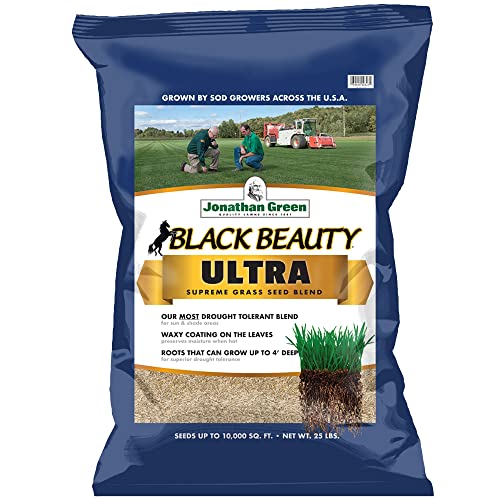
Jonathan Green Black Beauty Ultra
Jonathan Green · Cool Season · $28 (7 lbs) – $105 (25 lbs)
Why this seed for Delaware: Black Beauty Ultra is the premier tall fescue for Delaware's transition zone — handles the hot humid summers, adapts to both northern clay and southern sand, and tolerates partial shade.
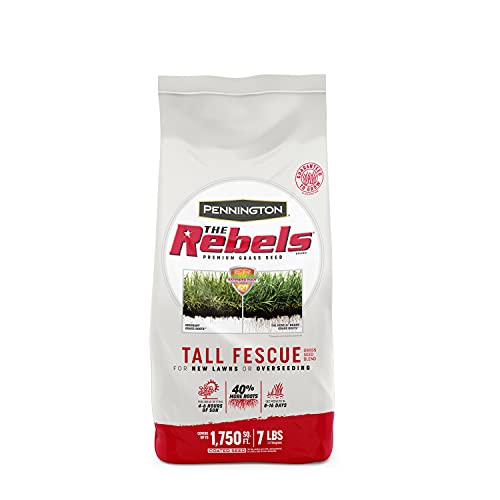
Pennington The Rebels Tall Fescue Mix
Pennington · Cool Season · $30-50 for 7 lbs
Why this seed for Delaware: The Rebels blend's deep root system is built for Delaware's summer drought stress. Performs equally well in Wilmington's Piedmont clay and Dover's Coastal Plain sand.
Outsidepride Combat Extreme Transition Zone
Outsidepride · Cool Season · $35-50 for 5 lbs
Why this seed for Delaware: For Delaware homeowners who want the best of both worlds, this transition zone blend combines cool-season reliability with heat tolerance for the state's increasingly warm summers.
Best Grass Seed by Region in Delaware
Northern Delaware / Wilmington
Northern Delaware — Wilmington, Newark, Hockessin, Pike Creek, and the Brandywine Valley — sits on the Piedmont Plateau with heavy red clay soil that defines every aspect of lawn care in New Castle County. Zone 7a conditions bring winter lows between 0 and 10 degrees, which is cold enough to winter-kill bermuda in most years but comfortable for cool-season grasses. The Piedmont clay is iron-rich, poorly drained, and naturally acidic (pH 5.5 to 6.5), with a tendency to compact into a surface crust that sheds water during summer storms rather than absorbing it. Mature hardwoods — oaks, tulip poplars, and beeches — shade many of the established neighborhoods in Greenville, Alapocas, and along the Brandywine. The combination of clay soil, shade, and summer humidity makes northern Delaware a brown patch hotspot, and tall fescue cultivars with documented disease resistance are strongly preferred over susceptible varieties. Wilmington city water and Artesian Water Company supply are reliable and affordable for supplemental irrigation.
Top picks for this region:
- ✓Core aerate Wilmington clay twice per year — once in spring (April) and once in fall (September) — the Piedmont red clay compacts so severely that water pools on the surface after any significant rainfall
- ✓Add 2 to 3 inches of compost to the top 6 inches of soil during any renovation project — raw Piedmont clay has almost no organic matter and needs amendment to support healthy root growth
- ✓Choose brown patch-resistant tall fescue varieties for northern Delaware — standard tall fescue will develop brown patch every July in the humid Brandywine Valley without fail
- ✓Lime every 2 to 3 years based on UD Extension soil test results — Piedmont clay is naturally acidic and needs regular correction to maintain the pH 6.0 to 6.8 range where fescue performs best
Central Delaware / Dover
Central Delaware — Dover, Smyrna, Middletown, and the rapidly growing communities along Route 1 — sits right on the transition between the Piedmont clay of the north and the Coastal Plain sand of the south. Dover itself is on the upper Coastal Plain with sandy loam soil that drains moderately well, has pH values around 5.5 to 6.5, and contains slightly more organic matter than the pure sand further south. Zone 7a to 7b conditions make this the heart of Delaware's transition zone — summer temperatures regularly hit 95 with high humidity, and winter lows can dip to 10 degrees during polar vortex events. The flat topography of the Dover area means air drainage is poor, trapping cold air in low spots during winter and creating frost pockets that can be a full zone colder than surrounding areas. Tall fescue dominates residential lawns, with some homeowners in the warmest microclimates experimenting with zoysia as a warm-season alternative. Middletown and Smyrna are among the fastest-growing communities in Delaware, and the new construction in these areas often comes with builder-grade lawns that need renovation within two to three years.
Top picks for this region:
- ✓In Dover's sandy loam, apply fertilizer in smaller, more frequent doses — 0.5 lb N per 1,000 square feet every 6 weeks during growing season rather than heavy applications that leach through the soil
- ✓Watch for frost pockets in the flat terrain around Dover and Smyrna — low-lying areas can be 5 to 10 degrees colder than slight rises, affecting both winter hardiness and spring green-up timing
- ✓If your Middletown or Smyrna home came with builder-grade sod, plan a full renovation within 2 years — builders typically install the cheapest tall fescue available, which is often disease-susceptible and thin-bladed
- ✓Central Delaware's mix of soil types means your neighbor's soil may differ from yours — invest $15 in a UD Extension soil test before buying amendments; do not assume your soil matches anyone else's
Southern Delaware / Sussex County Beach
Sussex County — Rehoboth Beach, Bethany Beach, Lewes, Georgetown, and Millsboro — is Delaware's coastal playground and the most challenging lawn environment in the state. The soil is Atlantic Coastal Plain sand: fast-draining, nutrient-poor, acidic (pH 4.5 to 5.5 in many areas), with almost no organic matter or water-holding capacity. Zone 7b conditions bring milder winters than northern Delaware (lows rarely below 15 degrees), but the coastal influence adds salt spray from nor'easters, persistent wind off the ocean, and higher humidity that feeds fungal disease. Beach community lawns within a mile of the ocean face direct salt deposition on turf during winter storms, and the sandy soil provides zero buffer against sodium accumulation. Water is also a concern — Sussex County relies on groundwater from shallow wells, and the coastal aquifer is shared with the Inland Bays and Rehoboth Bay ecosystems that are sensitive to nitrogen runoff. Delaware's Nutrient Management Act requires commercial applicators to follow strict guidelines in Sussex County, and homeowners should apply the same restraint.
Top picks for this region:
- ✓Build soil organic matter aggressively in Sussex County sand — topdress with half an inch of compost twice per year (spring and fall) to create a root zone that actually holds water and nutrients
- ✓Within a mile of the beach, apply gypsum at 40 lbs per 1,000 square feet every spring to flush accumulated salt from the root zone — nor'easter salt spray deposits sodium directly onto lawns multiple times per winter
- ✓Irrigate sandy soil in short, frequent cycles — 0.3 inches four times per week rather than one deep soak that passes through the sand and into the groundwater taking your fertilizer with it
- ✓Choose salt-tolerant tall fescue varieties for coastal Sussex County lawns — standard bluegrass and fine fescue lack the salt tolerance to thrive within the coastal spray zone
Delaware Lawn Care Calendar
Spring
March - May
- •Apply pre-emergent crabgrass control when forsythia blooms — in Wilmington this is typically late March to early April, in Dover mid-April, and in Rehoboth Beach late March thanks to the milder coastal climate
- •Begin mowing when grass reaches 3.5 to 4 inches, usually early to mid-April — set mower at 3 inches for the first cut and raise to 3.5 inches by May as temperatures climb
- •Core aerate Piedmont clay soil in northern Delaware in April once the ground is dry enough to walk on without leaving footprints — this is the most important single maintenance task for Wilmington-area lawns
- •Apply pelletized limestone if fall soil tests indicated pH below 6.0 — spring rain will work the lime into the soil naturally over 6 to 8 weeks
- •Spot-seed bare areas from winter damage in late April using the same fescue blend as your existing lawn — press seed into soil contact with a roller and keep consistently moist for 2 weeks
- •Apply slow-release nitrogen fertilizer at 0.75 lb N per 1,000 square feet in early May — avoid fertilizing before late April, as pushing growth during cool wet spring conditions promotes disease
Summer
June - August
- •Raise mowing height to 3.5 to 4 inches through summer — this is critical in Delaware's transition zone where tall fescue needs every advantage to survive 95-degree days with 75-degree dewpoints
- •Water deeply in the early morning only, delivering 1 to 1.5 inches per week — evening watering in Delaware's humid summer leaves grass wet overnight, which is an open invitation for brown patch fungus
- •Monitor for brown patch disease starting in mid-June — look for irregular dark rings or patches of wilted grass, especially in areas with poor air circulation and heavy nitrogen fertilization
- •Do not apply nitrogen fertilizer from June through August — summer nitrogen feeds fungal disease rather than grass growth in Delaware's humid transition-zone conditions
- •Apply potassium (0-0-50) in June at 1 lb per 1,000 square feet to strengthen cell walls and improve heat and drought tolerance without the disease risk that comes with summer nitrogen
- •Accept some summer dormancy browning in tall fescue during extended hot periods — the grass is alive at the crown and will recover with fall rain; overwatering to keep it green promotes root rot
Fall
September - November
- •September 1 through October 15 is the prime overseeding and renovation window in Delaware — soil temperatures are warm, humidity drops, and fall rain provides free irrigation for new seedlings
- •Core aerate in early September before overseeding — this is especially critical on northern Delaware Piedmont clay, where summer foot traffic has compacted the soil back to brick-like density
- •Apply starter fertilizer (high phosphorus) at seeding time, then follow with a balanced slow-release fertilizer in mid-October to fuel root development before winter dormancy
- •Overseed tall fescue lawns at 5 to 8 lbs per 1,000 square feet — tall fescue does not spread via runners, so annual overseeding is the only way to maintain density and fill in summer-damaged areas
- •Apply a winterizer fertilizer with high potassium in late October to early November — this final application promotes root growth and cold hardiness for the transition-zone winter ahead
- •Continue mowing until growth stops in late November, gradually reducing height to 2.5 to 3 inches for the last cut — leaving grass too tall invites snow mold during occasional Delaware snow events
Winter
December - February
- •Delaware lawns are semi-dormant through winter — cool-season grasses may show some green during mild spells, especially in Sussex County's coastal areas where Zone 7b conditions keep soil warmer
- •Minimize rock salt use on driveways and walkways — Delaware's freeze-thaw cycles through winter can require frequent applications, and sodium runoff is the number one cause of spring lawn edge die-back
- •Watch for winter annual weeds like henbit, chickweed, and annual bluegrass (Poa annua) that germinate in fall and grow through mild Delaware winters — spot-treat in February if infestations are severe
- •Plan fall renovation projects during winter downtime — order seed early, as popular tall fescue varieties sell out by August at Delaware garden centers
- •Submit soil samples to UD Extension for testing in January or February — results come back in time to plan spring lime and fertilizer applications before the growing season begins
- •Service mower equipment and sharpen blades — Delaware's first mow can come as early as late March in southern Sussex County, and mid-April statewide in a typical year
Delaware Lawn Tips You Won't Find on the Seed Bag
The Fall Line — Understanding Delaware's Two-Soil State
Delaware is divided by the Fall Line, a geological boundary that runs roughly along the Chesapeake and Delaware Canal. North of the canal, Piedmont red clay dominates — heavy, iron-rich, poorly drained, and compacted. South of the canal, the Atlantic Coastal Plain takes over with sandy loam that drains almost instantly and holds almost no nutrients. The lawn care implications are enormous. Northern Delaware homeowners need to aerate religiously, amend with compost to improve drainage, and deal with waterlogging after every summer thunderstorm. Southern Delaware homeowners need to irrigate frequently, apply fertilizer in small doses to prevent leaching, and build organic matter to create a root zone that actually retains water. A product that works perfectly on Wilmington clay may be completely wrong for Georgetown sand. This is why UD Extension soil testing is not optional in Delaware — for $15 you get specific pH, nutrient, and texture analysis that tells you exactly what your soil needs, rather than guessing based on what your neighbor in a different county does.
Brown Patch Disease — Delaware's Summer Lawn Epidemic
Brown patch (Rhizoctonia solani) is so common in Delaware that it should be considered a normal summer event rather than an unusual problem. The fungus activates when nighttime temperatures stay above 68 degrees and humidity remains above 80 percent — conditions that describe every July and August night in central and southern Delaware. Brown patch appears as irregular circles of wilted, dark-ringed grass that can expand from 6 inches to 3 feet in diameter overnight. The good news is that brown patch rarely kills tall fescue outright — it damages leaf tissue but usually spares the crown, meaning grass recovers when temperatures cool in September. Management focuses on avoidance: water only in early morning so grass dries before nightfall, do not apply nitrogen between June and September, improve air circulation by pruning overhanging branches, and mow at 3.5 to 4 inches to maintain healthy leaf surface. Fungicide applications are an option for severe cases, but most Delaware lawn professionals consider them unnecessary for residential lawns — the disease resolves itself every fall without permanent damage.
Transition Zone Strategy — Why Tall Fescue Wins in Delaware
Delaware sits squarely in the transition zone, and homeowners are constantly tempted by warm-season alternatives — bermuda promises summer beauty, zoysia offers low maintenance, and the marketing makes both sound ideal. The reality is less glamorous. Bermuda survives most Delaware winters but suffers visible cold damage in Zone 7a territory around Wilmington, goes completely brown for five months, and looks rough during the April green-up period. Zoysia is more cold-hardy but is painfully slow to establish from seed, goes dormant even earlier than bermuda, and creates a thatch layer that requires power raking. Turf-type tall fescue is the Goldilocks grass for Delaware — it stays green 9 to 10 months of the year, handles the summer heat (with some stress browning in the worst weeks), tolerates the winter cold without damage, and establishes quickly from seed. The key is selecting improved cultivars bred for disease resistance and heat tolerance rather than the old Kentucky-31 pasture fescue that was the only option 20 years ago. Jonathan Green Black Beauty Ultra and Pennington Rebels represent the current generation of tall fescue that makes Delaware's transition zone genuinely manageable.
Delaware's Nutrient Management Reality — Protecting the Inland Bays
Sussex County, Delaware sits atop a shallow groundwater table that feeds directly into the Inland Bays — Rehoboth Bay, Indian River Bay, and Little Assawoman Bay — and ultimately into the Delaware Coastal Zone Estuary system. Excess nitrogen and phosphorus from lawns, farms, and septic systems have contributed to algal blooms and water quality degradation in these sensitive coastal waters. Delaware's Nutrient Management Act requires commercial lawn applicators to follow strict application rates and timing, but homeowners are on the honor system. The responsible approach in Sussex County is to apply no more than 3.5 to 4 lbs of total nitrogen per 1,000 square feet per year, split across 4 to 5 light applications from April through November. Never apply fertilizer before a forecasted heavy rain event — on Sussex County sand, a 2-inch downpour can flush an entire fertilizer application below the root zone and into the aquifer within hours. Use slow-release nitrogen sources that meter out nutrients over 8 to 12 weeks rather than quick-release synthetics that dump everything at once.
Overseeding Is Not Optional — Why Delaware Fescue Lawns Need Annual Reinforcement
Tall fescue is a bunch-type grass. Unlike Kentucky bluegrass, it does not spread via underground rhizomes or surface stolons. When a fescue plant dies — from summer heat stress, brown patch disease, winter desiccation, or grub damage — the spot it occupied stays bare until you put seed in it. This biological reality means that tall fescue lawns in Delaware's stressful transition zone thin out every single year. Summer disease kills some plants. Winter cold claims a few more. By the following spring, a lawn that looked great last September has noticeable bare patches and reduced density. Annual fall overseeding is the antidote, and it is the single most important maintenance practice for Delaware tall fescue lawns. Every September, core aerate to create seed pockets in the soil, broadcast 4 to 6 pounds of quality tall fescue seed per 1,000 square feet, and topdress with a thin layer of compost. This annual reinforcement keeps the lawn thick enough to crowd out weeds and maintain the visual density that makes tall fescue attractive.
UD Cooperative Extension — Delaware's Best-Kept Lawn Resource
The University of Delaware Cooperative Extension in Newark operates one of the most accessible and practical turfgrass advisory programs on the East Coast. Their soil testing lab processes samples for approximately $15 and returns results with specific lime, fertilizer, and amendment recommendations calibrated to Delaware's unique Piedmont and Coastal Plain soil types. The UD Carvel Research and Education Center in Georgetown focuses specifically on Delmarva Peninsula agriculture and turf management, providing research data that is directly applicable to southern Delaware conditions. UD Extension Master Gardener volunteers staff clinics throughout the state during growing season and can diagnose disease, insect, and cultural problems from samples or photographs. Their publication library includes fact sheets on brown patch management, transition zone grass selection, and nutrient management that are written specifically for Delaware homeowners rather than generic national advice. The state is small enough that no Delaware homeowner is more than 90 minutes from the Newark campus — take advantage of this proximity.
What Delaware Lawn Pros Actually Plant
Turf-Type Tall Fescue
Most PopularTall fescue is the dominant lawn grass across all three Delaware counties, and for good reason — it is the only cool-season species that reliably survives the state's humid transition-zone summers without catastrophic decline. Improved turf-type varieties like Jonathan Green Black Beauty Ultra and Pennington Rebels produce fine-textured, dense, dark green turf that stays green from March through December in most years. The deep root system (12 to 18 inches in well-prepared soil) provides drought tolerance on both northern clay and southern sand, and the better cultivars carry genetic resistance to brown patch that reduces (though does not eliminate) summer disease pressure. Tall fescue's only significant weakness is its inability to self-repair — as a bunch-type grass, it requires annual overseeding to maintain density through Delaware's stressful climate. This trade-off is universally accepted by Delaware lawn professionals as the cost of doing business in the transition zone.
Kentucky Bluegrass
Common (As Blend Component)Kentucky bluegrass is used in Delaware primarily as a minority component in fescue-bluegrass blends rather than as a standalone lawn grass. A blend containing 10 to 20 percent Kentucky bluegrass by seed weight provides the self-repairing rhizomatous growth that tall fescue lacks — bluegrass runners creep into bare spots and thin areas, reducing the severity of the annual thinning cycle. Midnight Kentucky Bluegrass and other improved cultivars handle Delaware's Zone 7 winters easily, but pure bluegrass lawns struggle badly during summer. The shallow root system, high water demand, and susceptibility to summer patch disease make standalone bluegrass a risky proposition south of the Fall Line. In northern Delaware's cooler microclimates — north-facing slopes in Greenville, shaded Brandywine Valley properties — bluegrass-heavy blends can work, but even there, most professionals recommend at least 50 percent tall fescue as insurance against summer stress.
Perennial Ryegrass
Supporting Role (Quick Establishment)Perennial ryegrass is valued in Delaware for quick repairs and as a nurse crop in new seedings. Its 5-to-7-day germination gives immediate ground cover and visual green-up while slower-establishing fescue and bluegrass fill in over the following weeks. Delaware's climate is well within ryegrass's comfort zone — winters are mild enough for reliable survival and summers, while stressful, do not typically kill improved ryegrass varieties. Athletic fields, park lawns, and commercial properties across Delaware use ryegrass-heavy blends for their wear tolerance and rapid recovery from damage. For residential lawns, ryegrass is best used as 10 to 15 percent of a fescue-based blend or as a quick patch product for filling bare spots in spring while planning a proper fall overseeding. Greenview Fairway Formula Perennial Ryegrass is commonly available at Delaware garden centers and hardware stores.
Zoysia Grass
Niche (Growing in Southern Delaware)Zoysia is the warm-season grass that tempts Delaware homeowners who are tired of fighting tall fescue through summer. Zenith Zoysia, the most widely available seeded variety, can survive Zone 7a winters in northern Delaware and produces a dense, low-maintenance turf that thrives in the summer heat that stresses cool-season grasses. The appeal is real — zoysia needs less mowing, less watering, and less fertilizer than fescue during its active growing season. The downsides are equally real: zoysia goes dormant and turns straw-brown from November through April (five full months of brown lawn in Delaware), establishes painfully slowly from seed (two full growing seasons to fill in), builds heavy thatch that requires annual power raking, and creates a stark visual mismatch with neighboring fescue lawns. A growing number of Sussex County and Dover homeowners are planting zoysia, but it remains a minority choice statewide.
Fine Fescue
Common (Shade Component in Blends)Fine fescue varieties fill the shade niche in Delaware's heavily wooded older neighborhoods. Under the oak and beech canopy in Wilmington's Brandywine Valley, Hockessin, and the shaded lots of Camden and Milford, fine fescues maintain ground cover where tall fescue and bluegrass thin to nothing below 3 to 4 hours of direct sunlight. Creeping red fescue is the most commonly planted for its spreading habit, while hard fescue is valued for low-input situations where minimal mowing and fertilization is the goal. Fine fescues are rarely planted as standalone lawns in Delaware — the humid summer conditions promote disease in pure fine fescue stands. Instead, they are used as components in shade-blend mixes, typically combined with shade-tolerant tall fescue and a small percentage of bluegrass, creating a multi-species lawn that adapts to varying light conditions across a single Delaware property.
Delaware Lawn Seeding Tips
Getting the best results from your grass seed in Delaware comes down to timing, soil prep, and choosing the right variety for your specific conditions. Here are our top tips:
- Test your soil first. A $15 soil test from your Delaware extension office tells you exact pH and nutrient levels. Most warm-season grasses prefer pH 6.0-6.5.
- Prep the seedbed properly. Rake or aerate to ensure good seed-to-soil contact. This single step improves germination rates more than any seed coating or starter fertilizer.
- Use a starter fertilizer. Apply a phosphorus-rich starter fertilizer at seeding time to promote root development. We recommend Scotts Starter Fertilizer or The Andersons Starter.
- Water correctly. Keep the seedbed consistently moist (not soaked) for the first 2-4 weeks. Light watering 2-3 times per day is better than one heavy soaking.
- Be patient. Warm-season grasses are slower to establish. Bermuda takes 7-14 days, but Zoysia and Centipede can take 3-4 weeks. Don't panic if you don't see results immediately.
- Consider pre-germinating KBG. If you're planting Kentucky Bluegrass, you can cut germination time from 30 days to under a week using the bucket-and-bubble pre-germination method. This is especially valuable for late-season seeding in Delaware.
Frequently Asked Questions
When is the best time to plant grass seed in Delaware?
Late August through September for cool-season grasses; late April through May for warm-season options in southern Delaware
What type of grass grows best in Delaware?
Delaware sits in the transition zone, making it one of the trickiest states for lawn care. Both cool-season grasses (Tall Fescue, KBG) and warm-season grasses (Bermuda, Zoysia) can work depending on your specific location and microclimate.
What are the biggest lawn care challenges in Delaware?
The main challenges for Delaware lawns include transition zone grass selection dilemma, hot humid summers drive fungal disease, sandy coastal soil drains too fast in south, clay compaction in northern piedmont. Choosing the right grass variety that is adapted to these specific conditions is the single most important decision you can make for your lawn.
Can I grow Kentucky Bluegrass in Delaware?
It depends on where you are in Delaware. In the cooler northern regions, KBG can work well. In the warmer southern areas, it may struggle during peak summer heat. Tall Fescue is often a safer bet for transition zone lawns because it handles both heat and cold better than pure KBG.
How much does it cost to seed a lawn in Delaware?
For a typical 5,000 sq ft lawn, expect to spend $150-$400 on seed alone depending on the variety. Premium seeds like Midnight Kentucky Bluegrass or Zenith Zoysia cost more per pound but deliver better results. Add $50-$100 for starter fertilizer and $20-$50 for soil amendments. The seed is the smallest part of your total investment — proper soil prep and consistent watering matter more than saving $50 on cheaper seed.
More Lawn Care Resources
Not in Delaware?
We have state-specific grass seed guides for all 50 states.