
ND State Guide · Updated March 2026
Best Grass Seed for North Dakota
Top grass seeds for North Dakota lawns that survive extreme cold, brutal wind, and short growing seasons. Expert picks for Fargo, Bismarck, Grand Forks, and Minot.
Disclosure: This article contains affiliate links. If you buy through our links, we may earn a commission at no extra cost to you. All opinions are our own. Learn more.
North Dakota is, by any honest measure, one of the two or three hardest places in the continental United States to grow a lawn. Fargo sits in Zone 4a, Bismarck in Zone 4a, and the northwest corner around Williston and Crosby dips into Zone 3b where January temperatures of -30F are a routine occurrence rather than a headline event. The state's latitude — Fargo is further north than Minneapolis, and Minot sits at the same latitude as southern Manitoba — means the growing season is compressed into roughly 110 to 130 days depending on your location. Every grass variety you plant here needs to survive not just cold, but the kind of sustained, dry, wind-driven cold that separates genuine Zone 3 survivors from cultivars that merely tolerate a few cold nights. There are no warm-season options, no transition zone workarounds, no fudging the zones. This is pure cool-season territory pushed to its absolute limits.
NDSU in Fargo operates one of the most respected turfgrass research programs in the northern Great Plains, and if you maintain a lawn in North Dakota, their publications should be your bible. The NDSU turfgrass science program, housed within the Department of Plant Sciences, has been evaluating Kentucky bluegrass, fine fescue, and perennial ryegrass cultivars under North Dakota conditions for decades. Their research plots at the main campus in Fargo and at the Williston Research Extension Center in the far northwest endure the exact same winters your lawn does. When NDSU recommends a KBG cultivar for North Dakota, that recommendation is backed by data from plots that survived -35F, recovered from snow mold, handled spring flooding, and still maintained acceptable density the following summer. Their annual turfgrass variety trial reports are freely available online and are the single most valuable resource for North Dakota homeowners choosing grass seed.
The Red River Valley that defines eastern North Dakota is a geological gift and a lawn care paradox. The valley floor — stretching from Fargo and Grand Forks south to Wahpeton — is the bed of ancient Glacial Lake Agassiz, and the soil is some of the richest, darkest, heaviest clay-loam on the continent. This is the soil that makes the valley one of the world's great agricultural regions, producing world-class wheat, sugar beets, and sunflowers. For lawns, it means your topsoil is deep, nutrient-rich, and moisture-retentive — ideal for Kentucky bluegrass once you deal with the compaction and drainage challenges that come with heavy clay. The flat terrain means poor surface drainage, and spring snowmelt combined with Red River flooding can leave lawns underwater for days or weeks. Fargo, Grand Forks, and Valley City homeowners know the spring routine: watch the river, hope the dikes hold, and wait for the lawn to drain before doing anything.
Western North Dakota is a fundamentally different landscape. From Bismarck west through Dickinson and into the Badlands, the terrain shifts from flat valley to rolling mixed-grass prairie, and the soil transitions from Red River Valley clay to alkaline Pierre shale and Cretaceous-era formations with pH values of 7.5 to 8.5. Annual precipitation drops from 20 to 22 inches in Fargo to 14 to 16 inches in the far west. The Bakken oil boom brought thousands of new residents to Williston and Watford City, many from regions with completely different lawn care expectations, and the gap between what they expect and what the western North Dakota climate delivers is enormous. Alkaline soil, limited water, constant wind, and a growing season under 120 days mean that a lush bluegrass lawn in western ND requires irrigation, iron supplementation, and a cultivar specifically selected for cold and drought tolerance. Many western ND homeowners are wisely shifting toward native grass buffers and reduced-maintenance approaches for anything beyond the front yard.
Wind is the ever-present companion to North Dakota life, and it shapes your lawn in ways that are easy to underestimate. The state averages 12 to 14 mph sustained wind speeds, with spring gusts regularly exceeding 50 mph. Winter wind strips snow cover from exposed lawns, removing the insulating blanket that protects grass crowns from the worst of the cold. A lawn with consistent snow cover through winter might experience crown temperatures of 15 to 20F even when the air is -25F, but a wind-scoured lawn with bare soil exposure subjects those same crowns to the full air temperature. The difference is often the difference between a lawn that greens up in May and one that needs major renovation. Summer wind increases evapotranspiration dramatically, meaning your lawn dries out 30 to 50 percent faster than the same grass in a sheltered location. NDSU Extension recommends shelterbelt plantings — they're not just a rural tradition, they're a turfgrass survival strategy. A well-placed row of spruce or juniper on the north and west sides of your property pays dividends in lawn health for decades.
Quick Picks: Our Top 3 for North Dakota
Understanding North Dakota's Lawn Climate
One of the coldest and most wind-exposed states in the lower 48. Fargo in the Red River Valley gets arctic air masses pushing temperatures to -30F or colder, while summers can hit 105F — a 135-degree annual temperature swing. The Red River Valley in the east has extraordinarily rich alluvial soil, while western North Dakota is semi-arid Badlands and prairie with less than 16 inches of annual precipitation. NDSU's turfgrass program is nationally recognized and is the go-to resource for cold-climate grass research. Wind chill is a turf concern — exposed crowns without snow cover suffer desiccation injury.
Key Challenges
Best Planting Time for North Dakota
Mid-August through early September — the fall window is extremely tight and seeding after September 10 risks winter kill of immature turf
Our Top 3 Picks for North Dakota

Outsidepride Combat Extreme Northern Zone
Outsidepride · Cool Season · $25-35 for 5 lbs
Why this seed for North Dakota: North Dakota tests grass seed like few places on earth — -35F winters, 100F summers, and relentless wind. Combat Extreme's cold-hardy blend is one of the few mixes rated for these extremes.

Outsidepride Midnight Kentucky Bluegrass Seed
Outsidepride · Cool Season · $35 (5 lbs) – $300 (50 lbs)
Why this seed for North Dakota: NDSU turfgrass research consistently ranks Midnight among the top KBG performers for the northern Great Plains. Handles the Red River Valley's rich soil and extreme temperature swings.
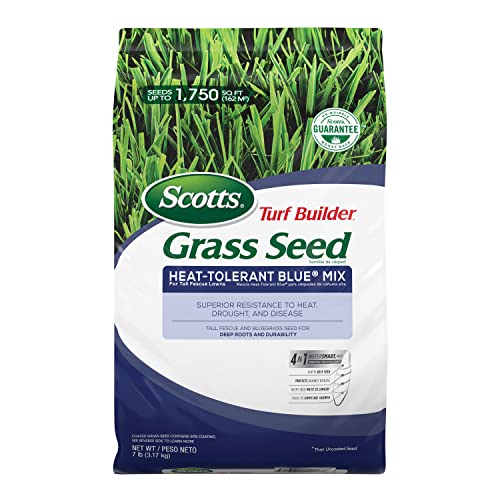
Scotts Turf Builder Heat-Tolerant Blue Mix
Scotts · Cool Season · $30-55 for 7 lbs
Why this seed for North Dakota: The heat-tolerant KBG blend helps North Dakota lawns survive the increasingly brutal July-August heat waves without going dormant, while still handling the legendary winter cold.
Best Grass Seed by Region in North Dakota
Fargo / Red River Valley
The Fargo-Moorhead metro and the Red River Valley corridor stretching north through Grand Forks to the Canadian border is North Dakota's population center and its most favorable lawn-growing region. Zone 4a conditions give a growing season of 125 to 135 days, and the deep, black Glacial Lake Agassiz clay-loam soil is extraordinarily fertile — the same soil that supports the valley's world-class agriculture. Annual precipitation of 20 to 22 inches is adequate for Kentucky bluegrass in most years, though July and August dry spells can stress unirrigated turf. The defining challenge is drainage: the valley is pancake-flat, the soil is heavy clay that drains slowly, and spring snowmelt routinely floods low-lying lawns for days or weeks. The Red River flood cycle — from the devastating 1997 and 2009 floods to the annual minor events — is a fact of life for valley homeowners. Fargo's south and southwest neighborhoods, West Fargo, and the new developments in Horace and Davies County have the best-maintained lawns in the state, with Kentucky bluegrass dominating the landscape.
Top picks for this region:
- ✓Red River Valley clay compacts aggressively — core aerate every fall without exception, and topdress with compost to build organic matter that improves drainage in the heavy Agassiz clay
- ✓Spring flooding is not optional to prepare for — if your property is in a flood-prone zone, avoid any lawn work until the soil dries enough that footprints don't leave impressions deeper than half an inch
- ✓Pre-emergent crabgrass control goes down when soil at 2 inches hits 55F — typically the first week of May in Fargo, which is two to three weeks later than what national lawn care timelines suggest
- ✓Salt damage along sidewalks and driveways accumulates over North Dakota's long winter — flush affected strips with 2 to 3 inches of water in early spring and overseed with salt-tolerant fine fescue blends
Bismarck-Minot / Central North Dakota
Central North Dakota — the Bismarck-Mandan metro, Minot, and the corridor between them — is the transition zone between the fertile Red River Valley and the arid western plains. Zone 4a in Bismarck and Zone 3b in Minot, with growing seasons of 115 to 130 days and annual precipitation of 16 to 18 inches. The soil shifts from valley clay to a mix of glacial till and Pierre shale-derived clay, with pH values rising to 7.5 to 8.0 in many areas. Bismarck, as the state capital, has a lawn-conscious population that maintains solid bluegrass lawns in established neighborhoods south of the Interstate and in the newer developments of north Bismarck and Lincoln. Minot, further north and more exposed, faces harsher winters and more wind. The Missouri River corridor through Bismarck provides some topographic relief and microclimate benefits, but step away from the river bluffs and you're on open prairie with full wind exposure. Irrigation becomes much more important here than in the valley, and iron chlorosis from alkaline soil is a persistent cosmetic issue.
Top picks for this region:
- ✓Alkaline soil with pH 7.5 to 8.0 is common in the Bismarck-Minot corridor — apply chelated iron (EDDHA form) for green-up rather than excess nitrogen, which worsens iron chlorosis in high-pH conditions
- ✓Irrigation is borderline mandatory for quality bluegrass in central ND — 16 to 18 inches of annual precipitation leaves a 6 to 8 inch deficit during the peak growing months of June through August
- ✓Minot homeowners face Zone 3b conditions with extreme wind exposure — select only the most cold-hardy KBG cultivars and establish shelterbelts on north and west property lines as your first landscape investment
- ✓The Missouri River bluffs in south Bismarck create favorable microclimates — properties sheltered by the bluffs can grow bluegrass varieties that would struggle on the exposed prairie north of town
Western North Dakota / Badlands
Western North Dakota from Dickinson through Williston and up to the Badlands is the most challenging lawn territory in the state and one of the toughest in the lower 48. Zone 3b to 4a conditions with growing seasons of 100 to 120 days, annual precipitation of 14 to 16 inches, sustained prairie wind averaging 13 to 15 mph, and alkaline soil with pH values of 7.8 to 8.5 create an environment that actively resists conventional lawn establishment. The Bakken oil boom transformed Williston and Watford City from small agricultural towns into boomtowns, and many new residents arrived from regions where green lawns happen almost by default. The reality in western ND is that a quality bluegrass lawn requires irrigation, alkaline soil management, wind protection, and cultivar selection based on NDSU's harshest-condition trial data. Dickinson, at the gateway to the Badlands, combines altitude (2,500 feet), wind exposure, and alkaline soil that locks up iron and creates the persistent yellow-green chlorosis that frustrates homeowners across the western tier. Native grass approaches and reduced-input landscaping are increasingly practical and popular here.
Top picks for this region:
- ✓Irrigation is absolutely essential for any conventional lawn in western ND — 14 to 16 inches of annual precipitation cannot sustain even the most drought-tolerant bluegrass cultivars through summer
- ✓Consider the hybrid landscape approach: maintained bluegrass or tall fescue in the front yard and high-traffic areas with native prairie mix for side and back yards — this reduces water use by 50 to 60 percent
- ✓Iron chlorosis is endemic on western ND alkaline soil — budget for three to four chelated iron applications per growing season as a baseline maintenance cost, not an optional extra
- ✓Williston and Watford City newcomers: reset your lawn expectations to match Zone 3b reality — the bluegrass lawn you had in Texas or Ohio is not achievable here without massive irrigation and amendment investment
North Dakota Lawn Care Calendar
Spring
March - May
- •Assess snow mold damage as snowmelt exposes the lawn — gray and pink snow mold patches are nearly universal after North Dakota's four to five months of snow cover, so rake matted areas lightly with a leaf rake to promote air circulation and drying
- •Do not walk on or work saturated soil — Red River Valley clay is especially vulnerable to compaction in spring, and western ND gumbo clay is even worse when waterlogged
- •Apply pre-emergent crabgrass preventer when soil temperature at 2 inches reaches 55F — typically first week of May in Fargo and Bismarck, second week of May in Minot and western ND
- •Flush salt-damaged areas along sidewalks and driveways with heavy watering once ground thaws — North Dakota's long winter means heavy salt accumulation that must be leached out before grass can recover
- •Begin mowing when grass reaches 3.5 to 4 inches, usually mid to late May — set mower to 3 inches and do not scalp, which stresses crowns still recovering from five months of dormancy
- •Apply chelated iron to chlorotic lawns on alkaline soil once active growth begins — first green-up is the ideal time for foliar iron applications that address yellowing without stimulating excessive growth
Summer
June - August
- •Mow at 3 to 3.5 inches throughout summer — taller grass shades soil and reduces the moisture loss that North Dakota's constant wind and intense summer sun accelerate
- •Water deeply and infrequently: deliver 1 to 1.5 inches per week in early-morning sessions before wind picks up — typical prairie wind increases evaporation losses by 30 to 50 percent during midday irrigation
- •Apply slow-release fertilizer at 0.5 lb N per 1,000 sq ft in early June — avoid nitrogen after July 1st to prevent shallow root development during the hottest, driest period
- •Scout for white grubs in late July — pull back turf sections in stressed areas and treat if you find more than 5 grubs per square foot
- •Allow unirrigated lawns to go dormant during drought rather than applying light, frequent watering — dormant bluegrass recovers when fall moisture returns, but shallow-rooted grass from light watering often dies
- •Plan fall overseeding by mid-July: order seed, reserve aerator equipment, and purchase starter fertilizer before the compressed fall window arrives
Fall
September - November
- •Execute fall overseeding between August 10 and September 5 in the Red River Valley and August 1 through August 25 in western ND — these windows are earlier and shorter than national recommendations due to North Dakota's early freeze dates
- •Core aerate annually without exception — valley clay and western gumbo both compact severely and restrict root growth without consistent mechanical relief
- •Apply winterizer fertilizer in early to mid-October using a high-potassium, low-nitrogen formula that builds cold hardiness rather than pushing vulnerable late-season growth
- •Final mow to 2 to 2.5 inches before the first lasting snowfall — this shorter cut is critical for snow mold prevention and reduces wind-matting of tall grass under snow cover
- •Remove every leaf and debris pile from the lawn before snow covers it — matted organic material under snow is the primary controllable factor in snow mold severity
- •Winterize irrigation systems by early October — North Dakota's hard freezes arrive earlier and more aggressively than most homeowners from other states expect
Winter
December - February
- •Do not pile shoveled snow onto lawn areas — concentrated snow piles create severe snow mold hot spots and take weeks longer to melt in spring, saturating soil underneath
- •Use sand or calcium chloride for sidewalk traction instead of rock salt — sodium chloride worsens the alkaline soil conditions that already challenge most North Dakota lawns
- •Stay completely off frozen lawns — crown damage from foot traffic on frozen grass is invisible until spring reveals dead pathway patterns across the turf
- •Monitor for ice crusting after thaw-freeze cycles — ice sheets suffocate turf and promote disease, but breaking ice mechanically causes more damage than letting it melt naturally
- •Review NDSU Extension turfgrass publications and their annual cultivar trial results — winter is the time to plan variety selections and amendment strategies for the coming season
- •Order grass seed in January or February — cold-hardy cultivars recommended by NDSU trials sell out of preferred lot sizes by late spring as demand across the northern Plains peaks
North Dakota Lawn Tips You Won't Find on the Seed Bag
NDSU Turfgrass Trials Are Your Best Friend
North Dakota State University operates one of the most rigorous turfgrass evaluation programs in the northern Great Plains, and ignoring their data is the single biggest mistake North Dakota homeowners make when choosing grass seed. Their annual variety trial reports rank dozens of Kentucky bluegrass, fine fescue, and perennial ryegrass cultivars based on performance under actual North Dakota conditions — not Maryland, not Oregon, not Virginia. A cultivar that scores well at NDSU's Fargo plots survived -30F winters, recovered from snow mold, maintained density through summer drought stress, and still looked acceptable the following season. These reports are free, published online, and updated annually. Before you buy any bag of grass seed, check whether the cultivars in the blend appear in NDSU's recommended list. If they don't, you're gambling with your lawn and your money.
Snow Mold Is Inevitable — But Its Severity Is Controllable
With four to five months of continuous snow cover across most of North Dakota, gray snow mold (Typhula blight) is an annual certainty rather than an occasional problem. You will see those matted, grayish-white circular patches every spring. The question is whether they're cosmetic annoyances that rake out in 10 minutes or lawn-devastating dead zones that require full renovation. The difference is entirely determined by what you do in October and November. Mow your final cut to 2 to 2.5 inches — tall grass mats under snow and holds moisture against the crowns. Apply zero nitrogen after Labor Day — late nitrogen pushes succulent growth that fungi feast on. Remove every single leaf from the lawn before the first lasting snow. And never pile shoveled snow onto the lawn. These four steps, done every fall without fail, reduce snow mold damage by 80 percent or more.
The Red River Valley Drainage Problem Is Real
If you live in Fargo, Grand Forks, or anywhere in the Red River Valley, your lawn sits on some of the richest soil in North America — and some of the worst-draining. The ancient Lake Agassiz clay is extraordinarily fertile but it holds water tenaciously, and the valley's pancake-flat terrain provides nowhere for surface water to go. Spring snowmelt can leave low spots in your lawn underwater for days or weeks, suffocating grass roots and creating dead zones that require reseeding every year. The fix is a multi-year investment: core aerate twice annually (fall and spring), topdress with coarse compost to build organic matter and improve soil structure, and consider installing French drains or regrading persistent low spots. Do not over-water in summer — valley clay holds moisture far longer than you think, and supplemental irrigation on top of recent rainfall creates the same waterlogging conditions that plague your lawn in spring.
Wind Protection Is the Highest-ROI Lawn Investment in North Dakota
North Dakota homeowners spend hundreds of dollars on premium seed, fertilizer programs, and irrigation systems while ignoring the single factor that undermines all of those investments: wind. A sustained 15 mph wind — which is a calm day by North Dakota standards — increases evapotranspiration by 30 percent. Winter wind strips snow cover, exposing dormant crowns to the full brutality of -25F air rather than the relatively mild 15 to 20F temperatures under an insulating snow blanket. Spring wind desiccates new seedlings before they can root. The solution is shelterbelt planting: a row of Colorado blue spruce, Black Hills spruce, or eastern red cedar on the north and west sides of your property. NDSU Extension's shelterbelt design publications are the definitive resource. A properly designed windbreak protects a zone 8 to 10 times its height downwind, and the improvement in lawn health is visible within the first growing season.
Western ND Alkaline Soil Demands a Different Playbook
If you live west of Bismarck, your soil pH is almost certainly above 7.5 and may exceed 8.5. At those levels, iron becomes chemically locked up in forms that grass roots cannot absorb, causing the persistent yellow-green chlorosis that plagues lawns from Dickinson to Williston. The instinct is to fertilize more — if the lawn is yellow, it must need nitrogen. Wrong. Excess nitrogen on chlorotic turf makes the problem worse by stimulating growth the plant cannot support without adequate iron. The correct approach is chelated iron applications using the EDDHA chelate form, which remains plant-available even at pH 8.5. Apply as a foliar spray every 4 to 6 weeks during the growing season and as a granular soil application in spring. Acidifying the soil with elemental sulfur can help over the long term, but the quantities required for western ND alkaline clay are massive and the pH reduction is slow and temporary.
Adjust Your Calendar — National Timelines Don't Apply Here
Most lawn care guides, YouTube channels, and product labels are written for Zone 6 and 7 conditions with growing seasons of 180 to 200 days. North Dakota's 110 to 130 day season means every national recommendation needs to be recalibrated. Pre-emergent goes down two to three weeks later than the dates on the bag. Fall overseeding starts two to three weeks earlier. Winterizer fertilizer goes down in early October, not late October. The last mow happens in mid-October, not November. Your entire annual lawn care program is compressed into fewer weeks with tighter windows and less margin for error. NDSU Extension publishes a North Dakota-specific lawn care calendar that accounts for these timing differences. Print it out, put it on your refrigerator, and follow it instead of whatever Scott's seasonal marketing email lands in your inbox.
What North Dakota Lawn Pros Actually Plant
Kentucky Bluegrass
Most PopularKentucky bluegrass dominates North Dakota lawns from Fargo to Bismarck and everywhere the soil and water supply can support it. Its rhizomatous growth habit is critical in North Dakota because it allows the lawn to self-repair from the inevitable winter damage — snow mold patches, desiccation injury, and ice damage fill in during the growing season without reseeding. NDSU turfgrass trials have identified cultivars with superior cold hardiness for Zone 3b and 4a conditions, including Midnight, Award, and Bewitched, which consistently rank among the top performers in their Fargo and Williston test plots. KBG demands consistent moisture and moderate fertility to look its best, which is achievable in the Red River Valley's rich soil but requires irrigation investment in central and western ND. The dark blue-green color and dense texture of a well-maintained KBG lawn remains the standard that North Dakota homeowners aspire to.
Fine Fescue Blends
Very PopularFine fescues — creeping red fescue, hard fescue, and chewings fescue — are the survival grasses of North Dakota. They handle the extreme cold of Zone 3b better than any other option, tolerate low fertility and sandy soil, require less water than bluegrass, and perform well in shade. In the Red River Valley, they're the go-to choice for shaded yards under mature elms and ash trees. In western ND, they fill the role of low-input turf that survives on minimal irrigation. Hard fescue in particular has shown exceptional persistence in NDSU trials under low-maintenance conditions. The trade-off is that fine fescues don't provide the manicured, dark-green density of Kentucky bluegrass, and they don't self-repair through rhizomes. Most North Dakota lawn seed blends include 20 to 30 percent fine fescue as insurance against the inevitable stress that every lawn faces during the state's extreme winters.
Tall Fescue (Turf-Type)
Limited but GrowingTurf-type tall fescue occupies a small but growing niche in North Dakota, primarily in the Zone 4a areas around Fargo and Bismarck where winter temperatures are slightly less brutal. Newer cultivars offer improved cold tolerance and deeper root systems that handle summer drought better than straight bluegrass. Scotts Heat-Tolerant Blue Mix, which blends tall fescue with heat-tolerant bluegrass cultivars, provides a compromise approach for homeowners who want the drought resistance of fescue with some bluegrass density. However, tall fescue remains a risky choice in Zone 3b areas — a winter that drops to -30F with exposed soil can devastate a fescue-dominant lawn. NDSU trials show tall fescue performing acceptably in Fargo but inconsistently at the Williston site, which tells you everything about its limitations in the western half of the state.
Native Prairie Grasses
Growing in Western NDNative grass mixes featuring buffalo grass, blue grama, western wheatgrass, and sideoats grama are gaining practical adoption in western North Dakota where conventional lawn maintenance is expensive and water-intensive. These grasses evolved on the northern Great Plains and handle everything North Dakota throws at them: -30F winters, 14 inches of annual precipitation, alkaline soil, and relentless wind. They require no irrigation once established, minimal to no fertilizer, and mowing only two to three times per season. The Bakken boom communities of Williston and Watford City are seeing increasing adoption of native plantings for property buffers, commercial landscapes, and homeowners who want a sustainable alternative to fighting the climate with irrigation and chemicals. Full native lawns look different from conventional turf — they're taller, textured, and brown in early spring and late fall — but they represent an honest response to western North Dakota's environment.
Perennial Ryegrass (in blends)
Common in BlendsPerennial ryegrass serves as a nurse grass in North Dakota lawn seed blends, germinating in 5 to 7 days to provide quick ground cover while Kentucky bluegrass takes its typical 14 to 21 days to emerge. This fast establishment is especially valuable during North Dakota's brutally compressed fall seeding window, where new grass has only 6 to 8 weeks to establish before the ground freezes. Ryegrass also provides immediate erosion control on the Red River Valley's flat terrain where spring runoff can wash away exposed topsoil. However, perennial ryegrass winter hardiness is marginal for North Dakota conditions. NDSU trials show significant stand loss in Zone 3b winters, and even in Fargo's Zone 4a, a severe open winter with minimal snow cover can kill ryegrass components. Keep it below 15 to 20 percent in blends and consider it temporary cover rather than a permanent lawn component.
North Dakota Lawn Seeding Tips
Getting the best results from your grass seed in North Dakota comes down to timing, soil prep, and choosing the right variety for your specific conditions. Here are our top tips:
- Test your soil first. A $15 soil test from your North Dakota extension office tells you exact pH and nutrient levels. Most cool-season grasses prefer pH 6.0-7.0.
- Prep the seedbed properly. Rake or aerate to ensure good seed-to-soil contact. This single step improves germination rates more than any seed coating or starter fertilizer.
- Use a starter fertilizer. Apply a phosphorus-rich starter fertilizer at seeding time to promote root development. We recommend Scotts Starter Fertilizer or The Andersons Starter.
- Water correctly. Keep the seedbed consistently moist (not soaked) for the first 2-4 weeks. Light watering 2-3 times per day is better than one heavy soaking.
- Be patient. Kentucky Bluegrass takes 14-28 days to germinate. Tall Fescue is faster at 7-14 days. Don't panic if you don't see results immediately.
- Consider pre-germinating KBG. If you're planting Kentucky Bluegrass, you can cut germination time from 30 days to under a week using the bucket-and-bubble pre-germination method. This is especially valuable for late-season seeding in North Dakota.
Frequently Asked Questions
When is the best time to plant grass seed in North Dakota?
Mid-August through early September — the fall window is extremely tight and seeding after September 10 risks winter kill of immature turf
What type of grass grows best in North Dakota?
North Dakota is best suited for cool-season grasses like Kentucky Bluegrass, Tall Fescue, and Perennial Ryegrass. These grasses thrive in spring and fall, stay green longer into winter, and handle cold temperatures well.
What are the biggest lawn care challenges in North Dakota?
The main challenges for North Dakota lawns include extreme cold (-35f and colder regularly), among the windiest states in the us, semi-arid conditions in western nd, growing season as short as 100 days. Choosing the right grass variety that is adapted to these specific conditions is the single most important decision you can make for your lawn.
Can I grow Kentucky Bluegrass in North Dakota?
Absolutely — Kentucky Bluegrass is one of the best choices for North Dakota. It thrives in the cool-season climate, produces a beautiful dense lawn, and self-repairs through rhizome spread. Midnight KBG is our top pick for the darkest, most premium-looking lawn.
How much does it cost to seed a lawn in North Dakota?
For a typical 5,000 sq ft lawn, expect to spend $150-$400 on seed alone depending on the variety. Premium seeds like Midnight Kentucky Bluegrass or Zenith Zoysia cost more per pound but deliver better results. Add $50-$100 for starter fertilizer and $20-$50 for soil amendments. The seed is the smallest part of your total investment — proper soil prep and consistent watering matter more than saving $50 on cheaper seed.
More Lawn Care Resources
Not in North Dakota?
We have state-specific grass seed guides for all 50 states.