
IL State Guide · Updated March 2026
Best Grass Seed for Illinois
The best grass seeds for Illinois lawns that survive harsh winters, humid summers, and clay soil. Expert picks for Chicago, Springfield, Naperville, and the suburbs.
Disclosure: This article contains affiliate links. If you buy through our links, we may earn a commission at no extra cost to you. All opinions are our own. Learn more.
Illinois is a cool-season grass state through and through, but the lawn experience varies wildly depending on whether you're fighting compacted clay in a Naperville subdivision, working the deep black prairie loam outside Champaign, or navigating the transition zone fringe down near Carbondale. The common thread is that Illinoisans — especially in the collar counties around Chicago — take their lawns dead seriously. There's a competitive culture in Chicagoland suburbs where neighbors quietly judge each other's turf from Memorial Day through Labor Day, and Kentucky Bluegrass is the gold standard that everyone chases. Drive through Hinsdale, Lake Forest, or any established North Shore community in June and you'll see lawns that rival golf course fairways, maintained by homeowners who can tell you their exact NPK ratio and mowing height without blinking.
The soil situation in Illinois is a tale of two states. Central Illinois — roughly the band from Bloomington-Normal down through Springfield to Decatur — sits on some of the deepest, richest prairie loam on the planet. The Drummer silty clay loam series and its relatives formed under thousands of years of tallgrass prairie, and the resulting topsoil is 3 to 5 feet deep with organic matter content that farmers in other states can only dream about. If you live in McLean, Sangamon, or Macon County, you have a built-in advantage that makes growing grass almost unfairly easy. Seed germinates faster, roots go deeper, and the soil holds moisture without waterlogging. It's the Midwest equivalent of winning the soil lottery.
Chicagoland is a different story entirely. The glacial till underlying Cook, DuPage, Will, and Lake counties is heavy clay to begin with, and decades of suburban development have made it worse. Builders strip the topsoil during construction, compact the subsoil with heavy equipment, then spread an inch or two of black dirt over the top and call it a lawn. The result is a thin veneer of decent soil over what is essentially a clay parking lot. Water pools on the surface after every rain, roots can't penetrate more than a few inches, and the grass thins out within two or three years of the builder's sod install. If you bought a home built after 1990 in any Chicago suburb, you're almost certainly dealing with this exact problem — and fixing it requires years of core aeration, compost topdressing, and patience.
Southern Illinois adds another layer of complexity. Once you get south of I-70 into the Metro East (Belleville, O'Fallon, Edwardsville) and down toward Carbondale, you're creeping into the transition zone where cool-season grasses struggle through increasingly brutal summers and warm-season species can't quite survive the winters. Summers in Marion or Harrisburg regularly hit the mid-90s with oppressive humidity, and tall fescue becomes a better bet than pure KBG, which will melt in those conditions. The soil shifts too — the deep prairie loam gives way to silty clay with a tendency toward poor drainage and acidic pH in the Shawnee Hills region.
And then there's the crabgrass problem that unites the entire state. Illinois springs are notoriously unpredictable — you can have a 75-degree week in mid-March followed by a snowstorm in April, and that whiplash makes pre-emergent timing a genuine challenge. Apply too early and the barrier breaks down before crabgrass actually germinates. Apply too late and you've already lost the battle. The magic number is 55 degrees at 4-inch soil depth for three consecutive days, and in most of Illinois that window falls somewhere between mid-April and early May — but it shifts by two to three weeks depending on whether spring decides to cooperate. Seasoned Illinois lawn people check soil temperature religiously starting in early April and pull the trigger the moment conditions are right.
Quick Picks: Our Top 3 for Illinois
Understanding Illinois's Lawn Climate
Humid continental with harsh winters and hot, humid summers. Chicago and northern Illinois endure wind chills well below zero and heavy lake-effect snow, while southern Illinois near St. Louis has milder winters but even hotter summers. Spring is unpredictable with late frosts possible into May. Summer heat indices regularly exceed 100F with high humidity, creating ideal conditions for fungal diseases. The state sits on rich prairie soil but suburban lots are often stripped during construction.
Key Challenges
Best Planting Time for Illinois
Late August through mid-September (fall) for best results; late April through mid-May for spring seeding
Our Top 3 Picks for Illinois

Outsidepride Midnight Kentucky Bluegrass Seed
Outsidepride · Cool Season · $35 (5 lbs) – $300 (50 lbs)
Why this seed for Illinois: KBG is king in Illinois, and Midnight is the best variety you can grow. It handles Chicago's brutal winters, hot summers, and heavy clay soil while producing that iconic deep green color.
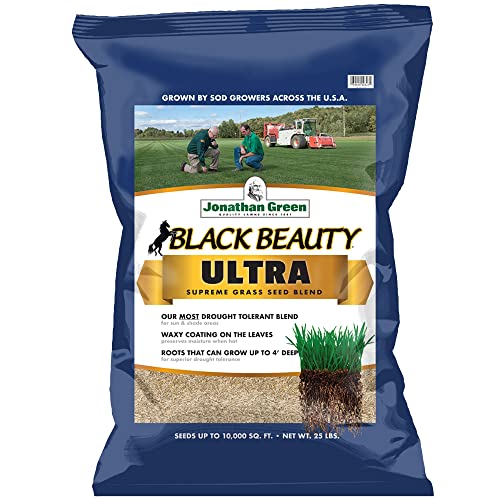
Jonathan Green Black Beauty Ultra
Jonathan Green · Cool Season · $28 (7 lbs) – $105 (25 lbs)
Why this seed for Illinois: BBU's deep roots are ideal for Illinois clay — they penetrate below the compacted layer to access moisture during summer dry spells. The fescue/KBG blend handles both sun and partial shade.
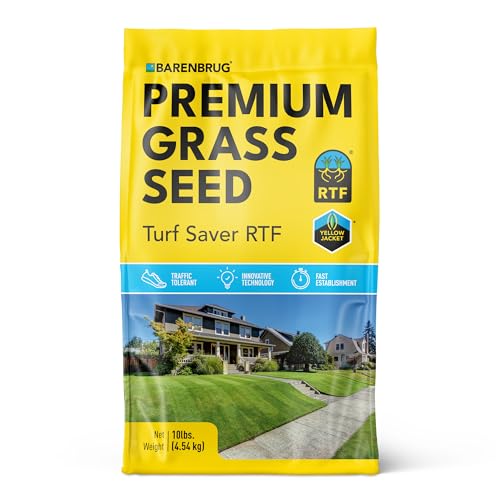
Barenbrug RTF Water Saver
Barenbrug · Cool Season · $40-55 for 5 lbs
Why this seed for Illinois: RTF's self-repairing rhizomes are invaluable for Illinois lawns that take heavy foot traffic. The deep roots handle clay soil and the RTF genetics survive the Midwest's temperature extremes.
Best Grass Seed by Region in Illinois
Chicagoland / Northeast Illinois
The six-county Chicago metro area (Cook, DuPage, Lake, Will, Kane, McHenry) is Zone 5b, with brutal winters that routinely drop below zero and lake-effect moisture that keeps snow on the ground from December through March. The growing season is compressed — you're realistically working from late April through mid-October. Soil across the suburbs is predominantly glacial clay, compacted further by decades of residential construction. Lake-effect weather off Lake Michigan creates a microclimate in the North Shore communities and lakefront neighborhoods where spring arrives two to three weeks later than the western suburbs, which matters enormously for pre-emergent timing and overseeding windows. Kentucky Bluegrass dominates established neighborhoods, but the shade from mature oaks, maples, and elms in communities like Oak Park, Evanston, and Wilmette pushes many homeowners toward fescue blends or fine fescue mixes. This is the most competitive lawn care market in the Midwest — landscape companies are booked solid from April through November.
Top picks for this region:
- ✓Core aerate every fall in September — the clay soil in post-1980 subdivisions is so compacted that roots rarely penetrate beyond 2 to 3 inches without intervention
- ✓Lake-effect moisture keeps North Shore soils cooler in spring — delay pre-emergent applications by 10 to 14 days compared to the I-88 corridor or western suburbs like Naperville and Aurora
- ✓Overseed with Kentucky Bluegrass by Labor Day weekend at the latest — Chicago's first frost averages October 15 to 20, and KBG needs a full 6 weeks of growing weather to establish before dormancy
- ✓Shade from mature neighborhood trees is the number one lawn challenge in older suburbs — switch to a sun-and-shade mix or fine fescue blend rather than fighting a losing battle with pure KBG under heavy canopy
- ✓Salt damage from winter road treatment browns out grass along parkways and driveways every spring — flush these areas with heavy watering in early April and overseed with a salt-tolerant KBG variety
Central Illinois / Springfield / Champaign
Central Illinois from Peoria through Bloomington-Normal, Champaign-Urbana, Springfield, and Decatur is the agricultural heart of the state and home to the legendary prairie loam soils that make this region a grass-growing paradise. Zone 5b to 6a, with winters that are cold but slightly less punishing than Chicago and summers that get genuinely hot — Springfield regularly hits the low-to-mid 90s in July and August. The Drummer and Flanagan soil series here have 4 to 6 percent organic matter and topsoil measured in feet, not inches. If you can't grow grass in central Illinois, you're doing something fundamentally wrong. Kentucky Bluegrass thrives, tall fescue performs beautifully, and even perennial ryegrass establishes with remarkable speed in these soils. The main challenges are summer heat stress on pure KBG stands, the ever-present crabgrass pressure, and the Japanese beetle grub populations that flourish in the rich, moist soil.
Top picks for this region:
- ✓Your prairie loam soil is your greatest asset — don't over-amend it, just maintain organic matter with annual fall compost topdressing at a quarter to half inch
- ✓Japanese beetle grubs love this rich soil — apply preventive grub control (chlorantraniliprole or imidacloprid) in June before egg-laying peaks in July
- ✓Pure KBG can struggle through July heat in Springfield and Decatur where temps push into the 90s for extended stretches — consider a KBG-fescue blend for more heat resilience
- ✓The growing season is 2 to 3 weeks longer than Chicago, giving you an overseeding window that extends through mid-September — take advantage of the extra time
- ✓Central IL well water often runs hard with high calcium content — this actually benefits your lawn by keeping soil pH in the ideal 6.5 to 7.0 range for cool-season grasses
Southern Illinois / Metro East
Southern Illinois encompasses the Metro East region across the river from St. Louis (Belleville, O'Fallon, Edwardsville, Collinsville) down through Mount Vernon, Marion, and Carbondale. This area straddles Zone 6a and 6b, putting it squarely in the transition zone fringe where cool-season grasses face real summer stress and warm-season species flirt with winter viability. Summers here are hotter and more humid than anywhere else in Illinois — Carbondale and Marion regularly see heat indices above 100 degrees in July and August, and the humidity rivals anything south of the Mason-Dixon line. The soil transitions from productive loam in the north to heavier silty clay around the Shawnee Hills, with some areas running slightly acidic. Tall fescue is the dominant grass species in the Metro East, and for good reason — it handles the summer heat far better than KBG while still surviving southern Illinois winters without issue. Turf-type tall fescue blends are what the local sod farms grow, and they're what the smart homeowners plant.
Top picks for this region:
- ✓Tall fescue outperforms Kentucky Bluegrass in southern IL — the summer heat and humidity will thin out pure KBG stands by mid-July in most years
- ✓Raise your mowing height to 3.5 to 4 inches during summer to shade the soil and reduce moisture loss during the worst heat
- ✓Brown patch fungus thrives in the Metro East's humid summers — avoid evening watering and apply preventive fungicide (azoxystrobin) when nighttime temps consistently stay above 68 degrees
- ✓The I-64 corridor from Belleville to Mount Vernon is the southern limit for reliable Kentucky Bluegrass — south of there, commit to tall fescue as your primary species
- ✓Soil in the Shawnee Hills area often runs acidic at pH 5.5 to 6.0 — test annually and apply pelletized lime if needed to bring pH up to the 6.2 to 6.8 range
Northwest Illinois / Rockford
The Rockford metro area and surrounding northwest Illinois including Freeport, Dixon, Sterling, and the Galena region sit in Zone 5a to 5b — the coldest part of the state. Winters are fierce, with lows regularly dipping to minus 10 and wind chills plunging far below that. The growing season is the shortest in Illinois, running from late April or early May through late September. The soil here is a mix of glacial till clay and loess (windblown silt) that varies considerably over short distances — you can have heavy clay on one side of a Rockford neighborhood and decent loam on the other. The Rock River valley communities have generally better-drained soil than the upland areas. Kentucky Bluegrass is the standard lawn grass throughout the region, and its cold hardiness makes it the obvious choice for a zone where winter survival is the first filter. The main seasonal challenges are the compressed overseeding window (you essentially have August 15 through September 15) and the persistent broadleaf weed pressure from dandelions and clover that thrives in the cooler, shorter growing season.
Top picks for this region:
- ✓Your overseeding window is tight — seed must be down by September 10 at the absolute latest to establish before Rockford's average first frost around October 1 to 5
- ✓Winter desiccation is a real risk on exposed south-facing slopes — maintain a 3-inch mowing height going into November to protect crowns from freeze-thaw cycles and drying winter winds
- ✓The loess soil in the Galena and Jo Daviess County area is some of the best in the region for lawns — it drains well and holds nutrients, so don't over-fertilize
- ✓Snow mold (both gray and pink) is common after heavy, prolonged snow cover — avoid late-fall nitrogen applications after October 15 that push tender growth vulnerable to snow mold infection
- ✓Dandelion pressure is relentless in NW Illinois — a fall broadleaf application in mid-October (triclopyr plus 2,4-D) is more effective than spring treatment because the weeds are actively moving nutrients to their roots
Illinois Lawn Care Calendar
Spring
March - May
- •Begin monitoring soil temperature at 4-inch depth starting in early April — your pre-emergent window opens when soil hits 55 degrees for 3 consecutive days, which typically falls between April 15 and May 1 in Chicagoland, a week earlier in central and southern IL
- •Apply split-application pre-emergent (prodiamine or dithiopyr) — first app at the 55-degree soil temp trigger, second app 6 to 8 weeks later for season-long crabgrass control
- •Rake out any remaining leaves and debris from winter to prevent snow mold from spreading and to let sunlight reach the turf — especially critical in NW Illinois where snow cover persists into March
- •Perform a soil test if you haven't in the past 3 years — University of Illinois Extension offers affordable testing through county offices statewide
- •Begin mowing when grass reaches 3.5 to 4 inches, cutting to 3 inches — never remove more than one-third of the blade height in a single mowing
- •Address bare spots from winter salt damage along driveways and parkways — rough up the soil, add a thin layer of compost, seed with KBG or a sun-shade blend, and keep moist through germination
Summer
June - August
- •Raise mowing height to 3.5 to 4 inches across all cool-season grass types — taller grass shades the soil, reduces moisture loss, and naturally suppresses crabgrass that snuck past your pre-emergent
- •Water deeply and infrequently — deliver 1 to 1.5 inches per week in one or two early-morning sessions rather than daily light watering that encourages shallow roots
- •Apply preventive grub control (chlorantraniliprole is the gold standard) in mid-June before Japanese beetles and masked chafers lay eggs — this is especially critical in central IL's rich loam soils where grub populations are highest
- •Scout for grub damage starting in late July — irregular brown patches that peel back like carpet indicate an active infestation, and you'll need curative treatment (trichlorfon) if counts exceed 8 to 10 grubs per square foot
- •Avoid fertilizing cool-season grasses during summer heat stress — nitrogen in July and August pushes top growth at the expense of roots and increases disease susceptibility
- •Spot-treat any crabgrass breakthroughs with quinclorac before they set seed in August — a single mature crabgrass plant can produce 150,000 seeds
Fall
September - November
- •Overseed thin or damaged areas during the Labor Day window — the last week of August through mid-September is the single best time to seed cool-season grass in Illinois, with warm soil temps, cooler air, and fall rains on the way
- •Core aerate before or simultaneously with overseeding — this is mandatory for Chicagoland clay soils and beneficial everywhere in the state, pulling 2 to 3-inch plugs that open the soil for seed, water, and air
- •Apply starter fertilizer (high phosphorus, like 18-24-12) at seeding time to promote root establishment — new seedlings need phosphorus more than nitrogen in their first 6 weeks
- •Begin your fall fertilizer program in mid-September with a balanced feed (20-0-10 or similar), followed by a winterizer application (high potassium) in late October to early November — this is the most important fertilizer application of the year for Illinois lawns
- •Continue mowing at 3 to 3.5 inches through fall and mulch-mow fallen leaves rather than bagging — shredded leaves decompose over winter and add organic matter to the soil
- •Apply a fall broadleaf weed treatment in mid-to-late October when dandelions and clover are actively pulling nutrients to their roots — herbicide translocates more effectively during this period than in spring
Winter
December - February
- •Leave the lawn alone — cool-season grass is dormant and does not need water, fertilizer, or mowing during Illinois winters
- •Minimize foot traffic on frozen turf, which can crush dormant grass crowns and leave visible damage that shows up as dead patches in spring
- •If you use de-icing salt on walkways and driveways, use calcium chloride or potassium chloride instead of sodium chloride (rock salt) — sodium destroys soil structure in the clay soils common across Chicagoland
- •Sharpen mower blades, service equipment, and plan spring projects — order grass seed by February so you have it on hand for early fall planning and any spring patch repairs
- •Review your soil test results and calculate lime or sulfur amendments needed — apply pelletized lime on frozen ground in February if pH is below 6.2 (it will work into the soil with spring thaw)
- •Scout for vole damage after snow melts — the runways and trails are visible in March and damaged areas should be raked, loosened, and overseeded in April
Illinois Lawn Tips You Won't Find on the Seed Bag
Fixing Builder-Grade Clay in New Construction Subdivisions
If you bought a home in any Chicagoland subdivision built after 1985, your lawn is almost certainly sitting on compacted clay subsoil with a cosmetic inch or two of topsoil on top. The builders strip the original topsoil to sell it, run heavy equipment over the subgrade for months, then lay sod on top of what amounts to a clay parking lot. The grass looks great for one to two years while the sod's original root system sustains it, then rapidly declines as roots hit the impenetrable clay layer. The fix is a multi-year commitment: core aerate aggressively every fall (double-pass in perpendicular directions), topdress with a quarter inch of quality compost after each aeration, and let earthworms and freeze-thaw cycles do the rest. After three to four years of this program, you'll have a genuine topsoil layer developing. There is no shortcut — rototilling disrupts the existing root system, and simply adding topsoil on top creates a perched water table at the soil interface. Aerate and topdress is the only sustainable path forward.
Nailing Pre-Emergent Timing With Illinois's Unpredictable Springs
Illinois spring weather is wildly inconsistent. A 78-degree day in late March can be followed by a late April snow, and that whiplash makes crabgrass pre-emergent timing the single most debated topic in Illinois lawn care. Forget calendar dates — they're unreliable by two to three weeks in either direction. Instead, monitor soil temperature at 4-inch depth using a probe thermometer or the GreenCast soil temperature map for your zip code. When soil hits 55 degrees Fahrenheit for three consecutive days, your window is open. In a typical year, that falls around April 15 to 20 in the Chicago suburbs, April 10 to 15 in central Illinois, and April 1 to 10 in the Metro East. A split application — half rate at the 55-degree trigger, second half 6 to 8 weeks later — provides far more reliable season-long control than a single heavy application that may degrade before late-germinating crabgrass emerges in June.
The Grub Problem in Illinois Prairie Soils
Central Illinois's deep, organic-rich prairie loam is paradise for grass — and for the Japanese beetle and masked chafer grubs that feed on grass roots. The same soil qualities that make your lawn lush (moisture retention, high organic matter, dense root systems) also create ideal grub habitat. Populations of 15 to 20 grubs per square foot are not uncommon in untreated central IL lawns, and at those levels you'll see entire sections of turf lift off the ground like a loose carpet. Prevention is vastly easier than cure. Apply chlorantraniliprole (sold as GrubEx or Scotts GrubEx) in mid-June before adult beetles start laying eggs. It works preventively for up to four months. If you miss the window and find active damage in August, curative products like trichlorfon (Dylox) work fast but only kill existing grubs — they won't prevent reinfestation. Skunks and raccoons tearing up the lawn at night is often the first sign of a serious grub population, sometimes before you notice the turf damage yourself.
Overseeding Timing Around Chicago's First Frost
The Labor Day overseeding window is practically a holiday in Chicagoland lawn care circles, and there's a reason everyone targets the same two to three week period. Chicago's average first frost falls between October 10 and October 20, and Kentucky Bluegrass needs a minimum of 6 weeks of active growing conditions (soil temps above 50 degrees) after germination to develop enough root mass to survive its first winter. Since KBG takes 14 to 21 days just to germinate, that means seed needs to be in the ground by September 5 to 10 at the absolute latest for the Chicago area. The sweet spot is August 25 through September 7 — soil is still warm from summer (speeding germination), air temperatures are cooling (reducing heat stress on seedlings), and fall rains typically increase in mid-September. If you miss this window, don't force it. Seed planted after September 15 in Zone 5b has a poor survival rate through winter. Wait until the following fall rather than wasting seed and effort on a bad timeline.
Managing Shade From Mature Neighborhood Trees
Older Illinois communities — think Oak Park, Evanston, Elmhurst, older sections of Springfield and Peoria — are lined with mature oaks, maples, and elms that create heavy shade over front and side yards. Pure Kentucky Bluegrass needs 6 or more hours of direct sunlight per day and simply will not maintain density under a heavy canopy, no matter how much you fertilize or water. The honest answer in moderate shade (4 to 5 hours of filtered light) is a shade-tolerant blend that includes fine fescues — creeping red fescue and chewings fescue thrive in conditions that starve KBG. For heavier shade (less than 4 hours of light), raise your mowing height to 4 inches to maximize each blade's photosynthetic surface, thin the tree canopy by pruning lower limbs up to 10 to 12 feet, and accept that you may need to transition the densest shade areas to mulch or shade-tolerant ground cover. Fighting nature by reseeding pure KBG under heavy shade every single fall is expensive and futile.
Why the Fall Winterizer Is the Most Important Fertilizer Application in Illinois
Many Illinois homeowners focus their fertilizer efforts on spring green-up, but the late-fall winterizer application — typically late October to mid-November, after the last mow but while roots are still active — is by far the most impactful feeding of the year. Cool-season grasses continue root growth well after top growth stops, and a high-potassium winterizer (something like 10-0-20 or 12-0-15) hardens cell walls, improves cold tolerance, and fuels root development that pays dividends the following spring. A well-timed winterizer is the reason some lawns green up two weeks earlier than their neighbors in April — those roots spent all fall and early winter building reserves. Apply when daytime temperatures are consistently in the 40s to low 50s and you've done your final mow. Don't use high-nitrogen formulas this late — they push tender leaf growth that's vulnerable to freeze damage and snow mold.
What Illinois Lawn Pros Actually Plant
Kentucky Bluegrass
Most PopularKBG is the aspirational lawn grass of Illinois and the dominant species across Chicagoland, central Illinois, and the northern half of the state. Its self-repairing growth habit (it spreads via underground rhizomes, filling in thin spots on its own) and rich dark green color make it the gold standard for homeowners who want a show-quality lawn. Improved varieties like Midnight Kentucky Bluegrass offer even darker color, better disease resistance, and improved heat tolerance compared to the common KBG in builder-grade sod. The trade-offs are real — KBG is slow to germinate (14 to 21 days), needs consistent moisture during establishment, goes semi-dormant in summer heat without irrigation, and struggles badly in shade. But for full-sun lawns in Zone 5 and 6 Illinois, nothing else delivers the same dense, carpet-like turf that KBG does, and the self-repair capability means a well-maintained KBG lawn actually improves with age.
Turf-Type Tall Fescue
Rising FastTall fescue has surged in popularity across Illinois over the past decade, particularly in central and southern regions where summer heat pushes KBG to its limits. Modern turf-type tall fescue varieties like those in Jonathan Green Black Beauty Ultra are a completely different grass from the coarse, clumpy K-31 fescue that farmers planted decades ago — they're fine-bladed, dark green, and dense enough to rival KBG in appearance. Tall fescue's deep root system (roots can reach 4 to 6 inches in decent soil) gives it superior drought tolerance and heat resilience compared to KBG's shallow root network. The main drawback is that tall fescue is a bunch-type grass — it doesn't spread via rhizomes, so damaged areas won't self-repair. Annual overseeding in September is essential to maintain density. For Illinois homeowners south of I-80 who don't want to irrigate all summer, tall fescue is increasingly the smart choice.
Fine Fescue (Creeping Red, Chewings, Hard)
Popular in Shaded AreasFine fescues are the unsung heroes of Illinois lawns, prized for their exceptional shade tolerance and low-maintenance characteristics. Creeping red fescue in particular thrives under the mature tree canopies that define older neighborhoods across the state — it needs only 3 to 4 hours of filtered sunlight, roughly half of what KBG demands. Fine fescues are typically sold in blends or mixed with KBG and perennial ryegrass in sun-and-shade formulations. They germinate quickly (7 to 14 days), establish with minimal fuss, and require less fertilizer and water than KBG or tall fescue. The downsides are poor traffic tolerance (fine fescue thins quickly in high-use areas) and a lighter green color that looks different from the dark emerald of KBG. But for shaded yards in Evanston, Oak Park, or any tree-lined Illinois community, fine fescue is the only species that will actually thrive rather than just survive.
Perennial Ryegrass
Common in BlendsPerennial ryegrass is the quick-germination workhorse that shows up in nearly every Illinois seed blend but is rarely planted as a standalone lawn. It germinates in 5 to 7 days — three to four times faster than KBG — which makes it invaluable as a nurse crop in overseeding mixes. When you seed a KBG blend in September, the ryegrass comes up first and provides quick ground cover while the slower KBG germinates underneath. Ryegrass has a fine texture, excellent wear tolerance, and a bright medium-green color. Its Achilles' heel in Illinois is winterkill — perennial ryegrass is the least cold-hardy of the common cool-season grasses, and severe Zone 5 winters (extended sub-zero stretches, ice sheets, poor snow cover) can kill it outright. This is why it works best as 10 to 20 percent of a blend rather than the primary species. In southern Illinois Zone 6, it persists more reliably and can make up a larger percentage of the lawn.
KBG-Fescue Blends
Increasingly PopularThe Illinois sweet spot for most homeowners is not a single species but a blend of Kentucky Bluegrass and turf-type tall fescue, sometimes with a small percentage of perennial ryegrass mixed in. This combination gives you the self-repairing rhizome network of KBG plus the deep roots and heat tolerance of tall fescue, creating a lawn that handles sun, partial shade, drought stress, and traffic better than either species alone. Products like Barenbrug RTF Water Saver are specifically engineered for this approach, combining rhizomatous tall fescue with KBG to create a turf that spreads and self-repairs while maintaining fescue's toughness. These blends are particularly well-suited to the unpredictable Illinois climate, where you need grass that can survive a minus-10 January and a 95-degree July with equal resilience. If you're not sure what to plant and your yard gets a mix of sun and shade, a quality KBG-fescue blend is the safest and most forgiving choice.
Illinois Lawn Seeding Tips
Getting the best results from your grass seed in Illinois comes down to timing, soil prep, and choosing the right variety for your specific conditions. Here are our top tips:
- Test your soil first. A $15 soil test from your Illinois extension office tells you exact pH and nutrient levels. Most cool-season grasses prefer pH 6.0-7.0.
- Prep the seedbed properly. Rake or aerate to ensure good seed-to-soil contact. This single step improves germination rates more than any seed coating or starter fertilizer.
- Use a starter fertilizer. Apply a phosphorus-rich starter fertilizer at seeding time to promote root development. We recommend Scotts Starter Fertilizer or The Andersons Starter.
- Water correctly. Keep the seedbed consistently moist (not soaked) for the first 2-4 weeks. Light watering 2-3 times per day is better than one heavy soaking.
- Be patient. Kentucky Bluegrass takes 14-28 days to germinate. Tall Fescue is faster at 7-14 days. Don't panic if you don't see results immediately.
- Consider pre-germinating KBG. If you're planting Kentucky Bluegrass, you can cut germination time from 30 days to under a week using the bucket-and-bubble pre-germination method. This is especially valuable for late-season seeding in Illinois.
Frequently Asked Questions
When is the best time to plant grass seed in Illinois?
Late August through mid-September (fall) for best results; late April through mid-May for spring seeding
What type of grass grows best in Illinois?
Illinois is best suited for cool-season grasses like Kentucky Bluegrass, Tall Fescue, and Perennial Ryegrass. These grasses thrive in spring and fall, stay green longer into winter, and handle cold temperatures well.
What are the biggest lawn care challenges in Illinois?
The main challenges for Illinois lawns include harsh winters with extended sub-zero cold, hot humid summers, heavy clay soil in suburbs, grub infestations. Choosing the right grass variety that is adapted to these specific conditions is the single most important decision you can make for your lawn.
Can I grow Kentucky Bluegrass in Illinois?
Absolutely — Kentucky Bluegrass is one of the best choices for Illinois. It thrives in the cool-season climate, produces a beautiful dense lawn, and self-repairs through rhizome spread. Midnight KBG is our top pick for the darkest, most premium-looking lawn.
How much does it cost to seed a lawn in Illinois?
For a typical 5,000 sq ft lawn, expect to spend $150-$400 on seed alone depending on the variety. Premium seeds like Midnight Kentucky Bluegrass or Zenith Zoysia cost more per pound but deliver better results. Add $50-$100 for starter fertilizer and $20-$50 for soil amendments. The seed is the smallest part of your total investment — proper soil prep and consistent watering matter more than saving $50 on cheaper seed.
More Lawn Care Resources
Not in Illinois?
We have state-specific grass seed guides for all 50 states.