
NH State Guide · Updated March 2026
Best Grass Seed for New Hampshire
Top grass seeds for New Hampshire lawns that handle harsh winters, acidic soil, and short growing seasons. Expert picks for Manchester, Nashua, Concord, and the Lakes Region.
Disclosure: This article contains affiliate links. If you buy through our links, we may earn a commission at no extra cost to you. All opinions are our own. Learn more.
New Hampshire is the Granite State in every sense that matters for lawn care — literally and figuratively. The bedrock that gives the state its nickname sits frustratingly close to the surface across much of the state, and the thin, rocky, acidic soil that has developed over it is one of the most challenging lawn-growing mediums in the eastern United States. Drive through the older neighborhoods of Manchester, Nashua, or Concord and you'll see mature lawns that took decades to build, maintained by homeowners who've learned through hard experience that success in New Hampshire turf means fighting the soil as much as the climate. The glaciers that retreated 12,000 years ago left behind a landscape strewn with granite boulders, gravelly till, and poorly sorted deposits that vary from dense hardpan clay to excessively drained sand within the same yard. The University of New Hampshire Cooperative Extension runs a soil testing lab in Durham that processes thousands of residential samples each year, and the results tell a consistent story: pH values of 4.5 to 5.5, low organic matter, and phosphorus levels that range from deficient to nonexistent. If you're starting a lawn from scratch in New Hampshire, your first investment should be a UNH soil test, not seed.
The climate across New Hampshire creates a compressed and demanding lawn care calendar. The growing season runs roughly 120 to 150 days in southern New Hampshire — from late April through mid-October — and shrinks to just 90 to 110 days in the North Country above the White Mountains. First frost arrives between September 15th in the mountains and October 10th in the seacoast, and last frost doesn't clear until mid-May in the south and early June in the north. That leaves a narrow window for seeding, establishment, and the fertilization cycles that build a healthy lawn. Winter is long and harsh: Manchester averages 60 inches of snow, and the North Country regularly exceeds 100 inches. The freeze-thaw cycles of late February and March are particularly destructive, heaving soil, cracking root systems, and creating bare patches that look devastating when the snow finally melts in April. Ice storms — the kind that coat every surface in a half-inch of glaze — are a New Hampshire specialty and can damage turf crowns when heavy ice sits on the lawn for days. The homeowners who maintain great lawns here have learned patience and timing above all else.
Shade is the defining aesthetic challenge for New Hampshire lawns, and it's getting worse as the state's forests continue to mature. Sugar maples, red oaks, white pines, and hemlocks create dense canopy over residential lots across the state, and the shade intensifies each decade as trees grow larger. In Concord's older neighborhoods along the Merrimack River, mature sugar maples create near-total canopy closure by mid-June that persists until leaf drop in October — that's four months of heavy shade that even shade-tolerant grass varieties struggle with. The southern tier cities of Nashua, Manchester, and Keene have similar shade challenges from both native and planted trees. The practical reality is that most New Hampshire lawns need a two-grass strategy: sun-tolerant Kentucky bluegrass or tall fescue blends for open areas, and fine fescue or dense shade blends for under-canopy zones. Jonathan Green's Black Beauty Ultra has become popular precisely because its tall fescue base handles moderate shade while tolerating New Hampshire's variable conditions. In the deepest shade, even shade-tolerant grasses struggle, and homeowners are often better off establishing shade-loving ground covers or moss gardens rather than fighting a losing battle with turf.
The seacoast region — a narrow strip from Seabrook north through Hampton, Rye, and Portsmouth to the Maine border — is New Hampshire's mildest microclimate and best lawn-growing territory. Zone 6a conditions, maritime temperature moderation, and sandy loam soils that drain well create conditions where a wider range of grass varieties succeed. Portsmouth's colonial-era neighborhoods have lawns that benefit from centuries of soil improvement — generations of homeowners adding compost, lime, and organic matter have transformed the naturally acidic coastal soil into workable lawn substrate. But even here, salt exposure is a factor: coastal properties deal with both ocean salt spray and the road salt that New Hampshire applies liberally from November through March. The state uses more road salt per lane-mile than almost any other state, and the runoff accumulates in roadside soils, killing grass along driveways, sidewalks, and street frontages in a predictable annual pattern. Salt-tolerant varieties like tall fescue handle this better than Kentucky bluegrass, and rinsing salt-damaged areas with fresh water in early spring can accelerate recovery.
The New Hampshire lawn care community is tight-knit, practical, and deeply skeptical of advice that originates south of Massachusetts. UNH Cooperative Extension is the trusted authority, and their recommendations — calibrated for New Hampshire's specific combination of acidic soil, cold winters, and short growing season — diverge significantly from national lawn care guides written for Zone 6 or 7 conditions. They recommend lime applications that would seem excessive in the mid-Atlantic, nitrogen rates lower than what Scotts prints on their bags, and overseeding timelines that are compressed into a 3-week window in late August and early September. Local garden centers like Millican Nurseries in Chichester, Rolling Green Nursery in Greenland, and Wentworth Greenhouses in Rollinsford stock seed blends formulated for New England conditions that outperform national brands in UNH trials. The homeowners who grow the best lawns in New Hampshire have accepted that their state demands a different approach: lime first, seed second, patience always. The granite underneath your lawn isn't going anywhere, and neither should your expectations for overnight results.
Quick Picks: Our Top 3 for New Hampshire
Understanding New Hampshire's Lawn Climate
Northern New England climate with cold, snowy winters and short, warm summers. Southern tier around Nashua and Manchester is Zone 5b, while the White Mountains and North Country drop to Zone 3b. Growing season ranges from 120 days in the south to barely 90 days in the mountains. Granite bedrock (the Granite State) creates thin, rocky, acidic soil across much of the state. Snowfall provides winter insulation for turf but spring thaw creates extended mud season.
Key Challenges
Best Planting Time for New Hampshire
Mid-August through mid-September in southern NH; early-to-mid August in northern NH and White Mountains region
Our Top 3 Picks for New Hampshire

Outsidepride Combat Extreme Northern Zone
Outsidepride · Cool Season · $25-35 for 5 lbs
Why this seed for New Hampshire: Combat Extreme was designed for exactly this climate — Zone 3 to 5 cold, short growing seasons, and the freeze-thaw cycles that destroy lesser seed mixes in the Granite State.

Outsidepride Midnight Kentucky Bluegrass Seed
Outsidepride · Cool Season · $35 (5 lbs) – $300 (50 lbs)
Why this seed for New Hampshire: Midnight KBG delivers the darkest green color in southern NH and the Lakes Region. Self-repairing via rhizomes, it fills in the bare spots that winter ice damage creates every spring.
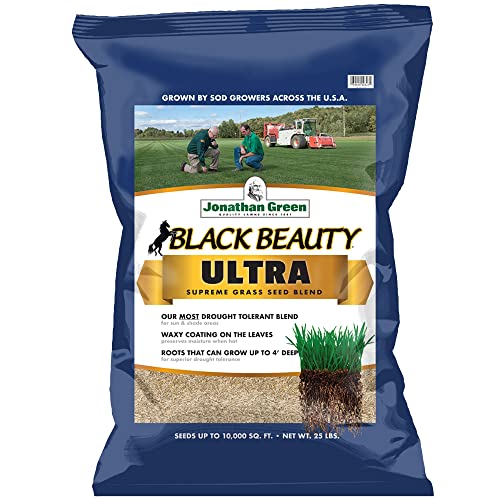
Jonathan Green Black Beauty Ultra
Jonathan Green · Cool Season · $28 (7 lbs) – $105 (25 lbs)
Why this seed for New Hampshire: For shaded New Hampshire lots under maple and oak canopy, Black Beauty Ultra's tall fescue blend handles low light while its deep roots navigate the rocky glacial soil.
Best Grass Seed by Region in New Hampshire
Southern NH / Nashua - Manchester
Southern New Hampshire — encompassing Nashua, Manchester, Concord, Keene, and the surrounding communities — is the state's population center and most active lawn care market. Zone 5b to 6a conditions provide a growing season of roughly 140 to 150 days, the longest in the state, with 40 to 45 inches of well-distributed annual precipitation. The soil is glacial till: a poorly sorted mix of clay, sand, gravel, and granite cobbles that varies block by block. Manchester's west side along the Merrimack River has deep alluvial deposits with better soil, while the neighborhoods east of Mammoth Road sit on hardpan glacial till that drains poorly and compacts into concrete-like density. Nashua's subdivisions south of the Daniel Webster Highway were often built on former agricultural land with decent topsoil, while the newer developments in Bedford and Londonderry frequently have thin, rocky soil over glacial till. Shade from mature sugar maples and red oaks is pervasive in older neighborhoods, creating heavy canopy from June through October. Road salt damage along major corridors is an annual frustration, and the I-93 and Route 3 corridors see particularly heavy salt application that degrades roadside lawns within 10 to 15 feet of pavement.
Top picks for this region:
- ✓Get a UNH soil test before doing anything else — southern NH soils consistently test at pH 4.8 to 5.5, requiring 75 to 100 lbs of pelletized lime per 1,000 sq ft to reach the target range of 6.0 to 6.5
- ✓The fall overseeding window in southern NH is tight: seed between August 20th and September 10th — any later and seedlings won't establish before the first hard frost, typically around October 5th to 15th
- ✓Road salt damage along driveways and sidewalks is predictable and annual — flush affected areas with 2 inches of water in early April to leach accumulated sodium from the root zone before spring green-up
- ✓In Manchester and Nashua neighborhoods with heavy maple canopy, accept that under-tree areas need fine fescue or shade blends — forcing Kentucky bluegrass in deep shade leads to thin, weedy, frustrating turf
Seacoast / Portsmouth
New Hampshire's seacoast — just 18 miles of Atlantic coastline from Seabrook to Portsmouth — plus the adjacent towns of Exeter, Newmarket, Durham, and Dover comprise the state's mildest growing region. Zone 6a maritime influence keeps winter lows above minus 10 (compared to minus 20 to minus 30 in the North Country), moderates summer heat, and extends the growing season to 150 to 160 days. Sandy loam soils along the immediate coast drain well but need organic matter to hold moisture and nutrients. Inland from the coast, the soil transitions to the typical New Hampshire glacial till mix. Portsmouth's historic South End and older neighborhoods in Hampton and Rye have the advantage of centuries of soil improvement — these lawns sit on substrate that generations of homeowners have amended with compost, manure, and lime. Salt is a dual threat: ocean salt spray affects properties within a quarter mile of the coast, while road salt from New Hampshire's aggressive winter treatment program devastates roadside turf along Routes 1, 1A, and 101. UNH's main campus is in Durham, and their turfgrass research plots provide hyperlocal data for seacoast lawn care that's worth consulting before making seed or fertility decisions.
Top picks for this region:
- ✓Seacoast sandy loam soils drain fast but don't hold nutrients — use slow-release fertilizers and split applications into 4 lighter doses rather than 2 heavy ones to prevent nutrient leaching
- ✓Ocean salt spray affects lawns within a quarter mile of the coast — choose tall fescue blends over pure Kentucky bluegrass for frontline coastal properties, as fescue tolerates salt stress better
- ✓The UNH campus in Durham has public turfgrass variety trial plots — visit them in August or September to see how different cultivars perform in seacoast conditions before choosing your seed
- ✓Seacoast gardens benefit from the longest season in New Hampshire — you can push spring seeding as late as early May and fall seeding as late as September 20th, about 2 weeks more flexibility than inland areas
Lakes Region / Laconia
The Lakes Region — centered on Lake Winnipesaukee and including Laconia, Meredith, Wolfeboro, and Gilford — occupies a transitional zone between southern New Hampshire's relatively moderate climate and the harsh conditions of the North Country. Zone 4b to 5a conditions bring winter lows of minus 15 to minus 25 and a growing season of 120 to 135 days. The lake itself moderates temperatures slightly for shorefront properties, but most residential lots sit above the lake's influence on glacial terrain that's rockier and more challenging than the southern tier. Soils are thin glacial till over granite bedrock, with frequent boulders and ledge outcroppings that limit rooting depth and complicate grading. Many Lakes Region properties are second homes or seasonal residences, which creates a unique lawn care dynamic: owners want attractive lawns for the 15 to 20 weeks they're in residence (Memorial Day through Columbus Day) but aren't present for the critical spring and fall maintenance windows. White pine and hemlock shade is prevalent along the lakeshore, creating dense year-round shade that's harder to manage than the deciduous shade in southern communities — at least maple shade disappears in winter, while pine shade is constant.
Top picks for this region:
- ✓Lakes Region soils are often extremely rocky — rent a power rake or harley rake to prepare a proper seedbed rather than trying to hand-rake through glacial cobbles
- ✓For seasonal properties where you can't control timing, hire a local lawn service for the critical August 15th to September 1st overseeding window — this is the single most impactful annual task and missing it means waiting a full year
- ✓Under white pine canopy, creeping red fescue is your best option — the acidic needle drop actually suits fescue's pH preferences, and it tolerates the year-round shade that eliminates bluegrass
- ✓Lake-effect moisture keeps soils wetter longer in spring along the Winnipesaukee shore — delay spring work until soils dry sufficiently to avoid compacting wet glacial clay that will set like concrete
North Country / White Mountains
The North Country — everything north of the White Mountain notches, including Littleton, Berlin, Lancaster, Colebrook, and Pittsburg — is New Hampshire's coldest and most challenging lawn care region. Zone 3b to 4a conditions bring winter lows of minus 25 to minus 40, 100 to 150 inches of annual snowfall, and a growing season of just 90 to 110 days from late May through mid-September. The soil is thin, acidic, and rocky — often just 6 to 12 inches of organic matter and glacial material over granite bedrock. First frost can arrive as early as September 5th in the highest valleys, and the last frost doesn't clear until early June. Snow cover persists from late November through mid-April, creating extended conditions for snow mold development. The communities here — Berlin with its paper mill heritage, Littleton with its Main Street charm, and the small towns of Coos County — have modest lawn care expectations compared to the manicured suburbs of Nashua and Manchester, but homeowners still want functional green turf for their short summers. Only the hardiest cool-season varieties survive here: Combat Extreme and cold-hardy Kentucky bluegrass rated for Zone 3. Fine fescues handle the acidic soil and shade conditions well but establishment from seed is challenging given the compressed growing season.
Top picks for this region:
- ✓In the North Country, the overseeding window is brutally short — seed between August 5th and August 25th, as first frost can arrive by September 10th and seedlings need at least 3 weeks of growth
- ✓Snow mold prevention is critical with 4 to 5 months of snow cover — apply a preventive fungicide (chlorothalonil or similar) in late October before the first lasting snowfall, and mow short (2 inches) for the final cut
- ✓Choose only varieties rated for Zone 3 cold hardiness — generic seed blends from national retailers often include cultivars that winterkill at minus 25 to minus 30, which is a normal winter night in Colebrook or Pittsburg
- ✓The North Country's acidic soil (often pH 4.5 to 5.0) needs aggressive liming — apply 100 lbs of pelletized lime per 1,000 sq ft in fall, let winter moisture work it in, and retest in spring through UNH Extension
New Hampshire Lawn Care Calendar
Spring
April - May
- •Do not rush spring cleanup — New Hampshire's freeze-thaw cycles continue through March and into April, and walking on saturated, partially frozen soil causes compaction damage that persists all season
- •Rake out dead grass, debris, and any snow mold patches once the ground is firm and dry enough to work — typically mid-April in southern NH, late April to early May in the North Country
- •Apply pelletized lime based on your UNH soil test results — most New Hampshire soils need 50 to 100 lbs per 1,000 sq ft annually, and spring applications work into the soil during spring rains
- •Apply pre-emergent herbicide when soil temperatures at 4-inch depth reach 55 degrees — in southern NH this is typically early to mid-May, two to three weeks later in the Lakes Region and North Country
- •Seed bare spots from winter damage using a cold-hardy blend — Combat Extreme or a KBG-fine fescue mix establishes well in New Hampshire's cool, moist spring conditions when seeded in mid to late May
- •Begin mowing when grass reaches 3.5 to 4 inches — set the mower to 3 inches and resist the urge to scalp the lawn on the first cut, as stressed spring turf needs leaf area to photosynthesize and recover
Summer
June - August
- •Maintain mowing height at 3 to 3.5 inches throughout summer — New Hampshire's humid July and August promote fungal disease, and taller grass shades the soil surface and reduces disease pressure
- •Water deeply once per week (1 inch total) during dry spells — New Hampshire's summer rainfall is variable, and July-August droughts of 2 to 3 weeks are common enough to stress unirrigated lawns
- •Apply a moderate nitrogen fertilizer (0.75 lb N per 1,000 sq ft) in early June when grass is actively growing — avoid fertilizing after July 4th as it pushes tender growth during the warmest period
- •Monitor for grub damage in July and August — white grubs (Japanese beetle and European chafer larvae) are the most destructive lawn pest in New Hampshire, causing irregular brown patches that roll back like carpet
- •If grubs are detected (more than 5 per square foot when you pull back a section of turf), apply a curative grub treatment immediately — waiting until fall allows the grubs to cause catastrophic damage
- •Begin planning your fall overseeding program in early August — order seed, schedule aeration, and identify thin areas that need attention during the critical late August window
Fall
September - October
- •Fall is the most important season for New Hampshire lawns — the combination of warm soil, cool air, adequate moisture, and declining weed pressure creates ideal conditions for seeding and feeding
- •Overseed between August 20th and September 10th in southern NH, August 10th to August 25th in the North Country — this is the single most impactful annual task and timing is non-negotiable
- •Core aerate in early September before or concurrent with overseeding — the compacted glacial till soil across the state desperately needs annual aeration to allow root penetration and water infiltration
- •Apply a winterizer fertilizer high in potassium (such as 10-0-20) in early to mid-October — potassium hardens grass for the long, harsh New Hampshire winter and reduces freeze-thaw damage
- •Apply lime in October if your spring soil test indicated pH below 6.0 — fall lime applications work into the soil during winter freeze-thaw cycles and are ready to improve nutrient availability by spring
- •Lower mowing height to 2.5 inches for the final two cuttings in late October to reduce snow mold risk — long grass matted under snow is the primary incubation environment for gray and pink snow mold
Winter
November - March
- •New Hampshire's winter is long — November through March is fully dormant for cool-season grasses, and there is nothing productive to do on the lawn during this period except exercise patience
- •Avoid piling snow on lawn areas when clearing driveways and walkways — concentrated snow piles create extended snow cover that promotes snow mold and delays spring green-up by weeks
- •Minimize road salt damage by switching to calcium magnesium acetate (CMA) or sand-salt mix on walkways and driveways adjacent to lawn areas — pure rock salt devastates grass within 3 to 5 feet of application
- •If ice storms deposit heavy glaze ice on the lawn, leave it alone — attempting to break ice off frozen grass causes more damage to turf crowns than letting it melt naturally
- •Sharpen mower blades, service equipment, and order seed and lime supplies in February — spring arrives fast in New Hampshire and you want to be ready when the ground thaws in April
- •Schedule spring core aeration with your local provider in February — New Hampshire lawn care services are small operations that book up quickly, and the best ones are fully scheduled by March
New Hampshire Lawn Tips You Won't Find on the Seed Bag
Lime Is the Foundation of Every Successful New Hampshire Lawn
New Hampshire's granite bedrock weathers into soil that's naturally acidic — pH 4.5 to 5.5 across most of the state — and that acidity is the single biggest obstacle to growing healthy turfgrass. Kentucky bluegrass prefers pH 6.0 to 7.0, tall fescue tolerates 5.5 to 7.5, and even acid-tolerant fine fescues perform best above 5.5. At New Hampshire's typical pH levels, nitrogen and phosphorus become partially unavailable, aluminum toxicity can damage roots, and beneficial soil microbes that break down organic matter and release nutrients operate at reduced capacity. The solution is lime, and lots of it. UNH Extension recommends pelletized limestone at rates determined by their soil test — typically 75 to 100 pounds per 1,000 square feet for initial correction, followed by 50 pounds per 1,000 square feet annually for maintenance. Split applications (half in spring, half in fall) are more effective than a single large dose. Use dolomitic limestone if your soil test also shows low magnesium, which is common in New Hampshire's glacial soils. The critical point: liming is not a one-time fix. New Hampshire's acidic rainfall (the state receives some of the most acidic precipitation in the nation) and ongoing bedrock weathering continuously push pH back down, so annual lime applications are a permanent part of the lawn care program.
Managing Shade from New England's Majestic but Lawn-Killing Trees
New Hampshire's forests are beautiful — and they're the enemy of your lawn. Sugar maples along Main Street in Concord, red oaks lining the avenues of Manchester's North End, white pines towering over lakefront properties in Wolfeboro — these trees define New Hampshire's character but create shade conditions that stress or eliminate turfgrass. The key is accepting the shade rather than fighting it with increasingly futile measures. In areas receiving less than 4 hours of direct sun, switch from Kentucky bluegrass (which needs 6 or more hours) to fine fescue blends — creeping red fescue and chewings fescue tolerate 3 to 4 hours of sun and actually prefer the cooler temperatures found under deciduous canopy. In areas receiving less than 3 hours of direct sun, consider abandoning turf entirely in favor of shade-tolerant ground covers like pachysandra, vinca, or even deliberately cultivated moss — several New Hampshire garden designers now specialize in moss lawns that thrive in the acidic, shaded conditions where grass cannot. Pruning lower tree limbs to raise the canopy to 8 to 10 feet improves air circulation and allows morning sun to reach the turf, which is the most cost-effective single intervention for shaded lawns.
The Road Salt Problem Is Worse Than You Think
New Hampshire applies road salt aggressively — the state uses approximately 90,000 tons of road salt annually on its highways, and municipalities add tens of thousands more tons on local roads. The result is predictable: grass along driveways, sidewalks, and road frontages dies every winter in a 3 to 10 foot band that homeowners replant every spring. Sodium chloride road salt damages grass through direct contact (splash and spray from vehicles) and through soil accumulation (salt dissolved in snowmelt concentrates in roadside soil). Salt raises soil sodium levels, disrupts the soil's ability to hold water and nutrients, and can persist in the root zone for months after the last snowfall. The first line of defense is physical: install a low barrier (decorative stone, a shallow berm) along driveways and sidewalks to reduce salt splash onto lawn areas. The second is chemical: flush salt-damaged areas with 2 to 3 inches of water in early April to leach sodium through the root zone. The third is biological: choose salt-tolerant grass species for roadside and driveway-adjacent areas — tall fescue tolerates salt significantly better than Kentucky bluegrass, and perennial ryegrass is also reasonably salt-tolerant.
Grub Damage Is New Hampshire's Most Destructive Lawn Pest Problem
White grubs — the larval stage of Japanese beetles and European chafer beetles — cause more lawn damage in New Hampshire than any other pest. The larvae feed on grass roots from July through October, severing the root system until the turf can be rolled back from the soil like a loose carpet. Damage appears as irregular brown patches that don't respond to watering — because the grass has no roots left to absorb water. By the time damage is visible, each grub has already consumed a significant area of root system. Skunks and crows tearing up the lawn to eat grubs are actually a late-stage indicator — by then, the population is massive. UNH Extension recommends a threshold of 5 to 10 grubs per square foot before treatment is warranted. Preventive treatments (applied in June before eggs hatch) are more effective than curative treatments applied after damage appears. Milky spore disease and beneficial nematodes provide biological control over multiple seasons but take 2 to 3 years to build to effective population levels. For immediate crisis management, trichlorfon-based curative treatments work quickly but don't prevent future infestations. The long-term approach is a combination: preventive chemical treatment in the short term while establishing biological controls for sustained suppression.
Why New Hampshire's Overseeding Window Is the Tightest in the Northeast
The optimal fall overseeding window in New Hampshire is compressed to roughly 3 weeks — August 20th through September 10th in the southern tier, and just August 10th through August 25th in the North Country. This is tighter than Connecticut, Massachusetts, or even Vermont, because New Hampshire's combination of early frost dates, cold soil temperatures, and rapid autumn temperature decline gives seedlings less establishment time than any neighboring state. Seed too early (before August 15th) and summer heat stress can kill germinating seedlings. Seed too late (after September 15th in the south) and seedlings won't develop adequate root systems before the first hard freeze, leading to winterkill. The ideal timing targets soil temperatures of 50 to 65 degrees with air temperatures in the 60s to 70s — warm enough for germination but cool enough to reduce heat stress on emerging seedlings. Core aeration immediately before overseeding dramatically improves seed-to-soil contact in New Hampshire's compacted glacial soils. After seeding, keep the seedbed consistently moist (light watering twice daily) until seedlings reach mowing height, then transition to deeper, less frequent irrigation. If you miss the fall window, spring seeding in mid-May is your backup, but it carries higher risk due to summer heat arriving before root systems fully develop.
Snow Mold Prevention Saves You From the Ugliest Spring Surprise
Nothing demoralizes a New Hampshire homeowner faster than watching the April snowmelt reveal circular patches of matted, gray or pink dead grass across what was a healthy lawn in November. Gray snow mold and pink snow mold are both common in New Hampshire, particularly in the Lakes Region and North Country where snow cover persists for 4 to 5 months. The fungi thrive under snow, especially when it falls on unfrozen ground or when deep snow insulates the turf from hard freezing. Prevention is straightforward but requires fall discipline: mow the lawn short (2 to 2.5 inches) for the final two cuttings in late October to reduce the leaf surface area available for fungal colonization. Avoid late-fall nitrogen fertilization — excess nitrogen promotes succulent growth that's highly susceptible to snow mold. Break up large snow piles in early spring to speed melting and reduce the extended moist conditions that allow the disease to continue spreading after the main snowpack recedes. In severe cases or for properties with chronic snow mold history, apply a preventive fungicide (PCNB or chlorothalonil) in late October before the first lasting snowfall. Most snow mold-damaged areas recover on their own within 3 to 4 weeks of snowmelt as the grass resumes growth, but severe infections can kill turf and require reseeding.
What New Hampshire Lawn Pros Actually Plant
Kentucky Bluegrass
Most Popular (Southern NH)Kentucky bluegrass remains the aspirational lawn grass across southern New Hampshire, planted on an estimated 50 to 60 percent of residential properties in the Nashua-Manchester-Concord corridor. When properly maintained — adequate lime to raise pH, consistent irrigation, and smart fertilization — KBG produces the dense, dark green lawn that New Hampshire homeowners prize. Midnight Kentucky bluegrass is the premium cultivar choice, prized for its dark color, density, and improved disease resistance compared to older varieties. The challenges of growing KBG in New Hampshire are real: the naturally acidic soil requires annual liming, shade from mature hardwoods limits where KBG will thrive, and the short growing season means recovery from damage is slower than in the mid-Atlantic or Midwest. KBG also needs at least 6 hours of direct sunlight, which eliminates heavily shaded lots from consideration. But on open, well-limed, properly maintained properties in southern New Hampshire's Zone 5b to 6a climate, Kentucky bluegrass performs admirably and delivers the visual quality that makes the maintenance effort worthwhile.
Tall Fescue Blends
Growing RapidlyTall fescue blends — particularly Jonathan Green Black Beauty Ultra and similar improved turf-type varieties — have gained significant ground in New Hampshire over the past decade. Tall fescue's advantages in New Hampshire conditions are substantial: it tolerates a wider pH range (5.5 to 7.5) than bluegrass, reducing lime requirements; its deep root system (2 to 3 feet versus KBG's 6 inches) provides better drought tolerance during New Hampshire's variable summer rainfall; it handles moderate shade (4 to 5 hours of sun); and it tolerates road salt better than bluegrass, making it ideal for driveway-adjacent and roadside lawn areas. The newer turf-type tall fescues like Black Beauty have much finer texture than the old Kentucky-31 pasture fescues, and in a well-maintained lawn, most homeowners can't distinguish them from bluegrass at normal viewing distance. The main limitation is that tall fescue is a bunch-type grass that doesn't self-repair through rhizomes or stolons — damage or bare spots require reseeding rather than natural fill-in. For New Hampshire homeowners who want a lower-maintenance alternative to bluegrass, tall fescue blends are the most practical choice.
Fine Fescue Blends
Regional Favorite (Lakes Region & North Country)Fine fescues — creeping red fescue, chewings fescue, hard fescue, and sheep fescue — are the unsung heroes of New Hampshire lawn care. These grasses thrive in exactly the conditions that New Hampshire provides: acidic soil (fine fescues tolerate pH as low as 5.0), shade (they'll grow in 3 to 4 hours of sun), poor fertility (they actually perform better with less nitrogen than most turfgrasses), and cold winters (they're rated to Zone 3). Creeping red fescue is the most widely planted fine fescue in New Hampshire, valued for its ability to spread slowly via rhizomes and fill gaps over time. In the Lakes Region and North Country, fine fescue blends are often the dominant lawn grass by necessity — the combination of acidic soil, conifer shade, and harsh winters eliminates most other options. The limitation is traffic tolerance: fine fescues don't handle heavy foot traffic well and will thin in high-use areas. They're best suited as shade-area specialists, low-maintenance lawns on seasonal properties, and as components in sun-shade blends that combine fine fescue with KBG or tall fescue for comprehensive coverage.
Perennial Ryegrass
Supporting Role / Blending ComponentPerennial ryegrass plays a valuable supporting role in New Hampshire lawns, particularly as a quick-establishing component in bluegrass blends and as a fast-repair option for bare spots. Ryegrass germinates in 5 to 7 days — three times faster than Kentucky bluegrass — making it essential for fall overseeding projects where the tight New Hampshire window demands quick germination. Combat Extreme and similar northern blends typically include 10 to 20 percent perennial ryegrass alongside bluegrass and fine fescue for exactly this reason. Ryegrass also provides excellent wear tolerance in high-traffic areas like play zones and pathways where pure bluegrass or fine fescue would thin under pressure. The main limitation in New Hampshire is winter hardiness: perennial ryegrass can winterkill during the most severe cold events in the North Country and Lakes Region (minus 20 to minus 30), making it less reliable north of Concord as a primary lawn component. In southern New Hampshire's Zone 5b to 6a, it overwinters well and contributes meaningfully to a blended lawn's density and traffic tolerance.
Mixed Shade & Eco-Lawn Blends
Emerging / Eco-Conscious NicheA growing number of New Hampshire homeowners — particularly in Hanover, Keene, Portsmouth, and the university towns — are moving away from traditional monoculture lawns toward mixed eco-lawn blends that combine fine fescues, white clover, and low-growing wildflowers. These blends align with New Hampshire's naturally acidic, shaded conditions and dramatically reduce maintenance requirements: no lime needed, minimal fertilization, infrequent mowing (once every 2 to 3 weeks), and no irrigation. White Dutch clover fixes atmospheric nitrogen, reducing or eliminating the need for nitrogen fertilizer. The fine fescue base provides year-round green cover. Low-growing wildflowers add seasonal color and support pollinators. The eco-lawn approach is a cultural shift that conflicts with traditional suburban aesthetics, and HOAs in communities like Bedford and Windham may restrict clover and wildflower inclusion. But for rural properties, seasonal homes, and environmentally motivated homeowners, eco-lawn blends are a natural fit for New Hampshire's conditions — they embrace the acidic soil and shade rather than fighting them with lime and sun-demanding bluegrass.
New Hampshire Lawn Seeding Tips
Getting the best results from your grass seed in New Hampshire comes down to timing, soil prep, and choosing the right variety for your specific conditions. Here are our top tips:
- Test your soil first. A $15 soil test from your New Hampshire extension office tells you exact pH and nutrient levels. Most cool-season grasses prefer pH 6.0-7.0.
- Prep the seedbed properly. Rake or aerate to ensure good seed-to-soil contact. This single step improves germination rates more than any seed coating or starter fertilizer.
- Use a starter fertilizer. Apply a phosphorus-rich starter fertilizer at seeding time to promote root development. We recommend Scotts Starter Fertilizer or The Andersons Starter.
- Water correctly. Keep the seedbed consistently moist (not soaked) for the first 2-4 weeks. Light watering 2-3 times per day is better than one heavy soaking.
- Be patient. Kentucky Bluegrass takes 14-28 days to germinate. Tall Fescue is faster at 7-14 days. Don't panic if you don't see results immediately.
- Consider pre-germinating KBG. If you're planting Kentucky Bluegrass, you can cut germination time from 30 days to under a week using the bucket-and-bubble pre-germination method. This is especially valuable for late-season seeding in New Hampshire.
Frequently Asked Questions
When is the best time to plant grass seed in New Hampshire?
Mid-August through mid-September in southern NH; early-to-mid August in northern NH and White Mountains region
What type of grass grows best in New Hampshire?
New Hampshire is best suited for cool-season grasses like Kentucky Bluegrass, Tall Fescue, and Perennial Ryegrass. These grasses thrive in spring and fall, stay green longer into winter, and handle cold temperatures well.
What are the biggest lawn care challenges in New Hampshire?
The main challenges for New Hampshire lawns include short growing season (90-120 days), extremely acidic rocky soil, ice damage and snowmold in long winters, shade from dense hardwood/conifer canopy. Choosing the right grass variety that is adapted to these specific conditions is the single most important decision you can make for your lawn.
Can I grow Kentucky Bluegrass in New Hampshire?
Absolutely — Kentucky Bluegrass is one of the best choices for New Hampshire. It thrives in the cool-season climate, produces a beautiful dense lawn, and self-repairs through rhizome spread. Midnight KBG is our top pick for the darkest, most premium-looking lawn.
How much does it cost to seed a lawn in New Hampshire?
For a typical 5,000 sq ft lawn, expect to spend $150-$400 on seed alone depending on the variety. Premium seeds like Midnight Kentucky Bluegrass or Zenith Zoysia cost more per pound but deliver better results. Add $50-$100 for starter fertilizer and $20-$50 for soil amendments. The seed is the smallest part of your total investment — proper soil prep and consistent watering matter more than saving $50 on cheaper seed.
More Lawn Care Resources
Not in New Hampshire?
We have state-specific grass seed guides for all 50 states.