
IA State Guide · Updated March 2026
Best Grass Seed for Iowa
The best grass seeds for Iowa lawns that thrive in rich prairie soil and survive harsh Midwest winters. Expert picks for Des Moines, Cedar Rapids, Iowa City, and Davenport.
Disclosure: This article contains affiliate links. If you buy through our links, we may earn a commission at no extra cost to you. All opinions are our own. Learn more.
Iowa has some of the best lawn-growing soil on the planet, and that's not hyperbole. The deep prairie loam that covers most of the state — built up over 10,000 years of tallgrass prairie decomposition — is a black, crumbly, organic-matter-rich topsoil that gardeners in Colorado and Arizona would sell a kidney for. In central Iowa around Des Moines, you'll find 18 to 24 inches of that gorgeous dark topsoil sitting over glacial till, with a pH right in the sweet spot of 6.5 to 7.0. It holds moisture without waterlogging, it's loaded with nutrients, and grass roots penetrate it like it's nothing. If you can't grow a decent lawn in Iowa, the soil isn't your problem.
What is your problem is the weather. Iowa throws the full four-season gauntlet at your lawn every single year. Winters bring sustained sub-zero temperatures, ice storms, and snow cover that can last from December through early March. Spring arrives late and wet, with soil that stays saturated through April and doesn't warm up enough to support growth until May some years. Then summer flips the script with 90-degree days, humidity that rivals the Gulf Coast, and thunderstorms that drop 3 inches of rain in an hour followed by two weeks of drought. This temperature swing — from minus 20 in January to 100 in July — is a 120-degree annual range that only the toughest cool-season grasses survive long-term.
Kentucky bluegrass is Iowa's grass. Period. It's planted on an estimated 80 percent of residential lawns statewide, and it earns that dominance. Bluegrass thrives in Iowa's cool springs and falls, tolerates the cold winters through deep dormancy, and its spreading growth habit via rhizomes means it fills in damage and bare spots naturally — a critical trait in a state where winter ice damage, spring flooding, and summer drought stress all take their toll annually. ISU Extension has been researching bluegrass performance in Iowa for decades, and their variety trials consistently show that newer cultivars like Midnight outperform the old-school blends in density, color, disease resistance, and heat tolerance.
The parts of Iowa that challenge the 'great soil' narrative are the edges. Along the Missouri River in western Iowa — Sioux City, Council Bluffs — the soil transitions to heavy clay deposited by glacial melt and river flooding. This stuff compacts badly, drains poorly, and turns into a muddy mess every spring. In northeast Iowa's Driftless Area around Decorah, you're dealing with thin, rocky soil over limestone bluffs. And anywhere along the major river corridors — Des Moines River, Cedar River, Iowa River — spring flooding can deposit silt and debris across lawns, suffocating turf under inches of sediment. These aren't the norm, but if you're in one of these areas, you're managing soil problems that central Iowa homeowners never think about.
Here's what Iowa homeowners get wrong most often: they mow too short. Drive through any Des Moines suburb in July and you'll see bluegrass scalped to 2 inches, turning brown and thin, while the neighbor mowing at 3.5 inches has a thick, dark green carpet. ISU Extension has been preaching the 3 to 3.5-inch mowing height for decades, and the science is clear — taller grass shades the soil (reducing evaporation and weed germination), develops deeper roots, and handles summer stress dramatically better. It's the single easiest improvement most Iowa homeowners can make, and it costs nothing. Just raise your mower deck two notches and watch what happens.
Quick Picks: Our Top 3 for Iowa
Understanding Iowa's Lawn Climate
Humid continental with cold, snowy winters and warm, humid summers. Iowa's rich prairie soil is legendary — some of the most fertile on earth — and grows incredible lawns when you choose the right grass. Winters are harsh with extended sub-zero periods and wind chills reaching -40F. Summers bring 90F+ heat with Midwest humidity. The growing season is moderate, roughly mid-April through mid-October. Spring flooding from snowmelt and heavy rains is a recurring challenge, especially in river valleys.
Key Challenges
Best Planting Time for Iowa
Mid-August through early September (fall) is ideal; mid-May through early June for spring seeding after soil warms above 55F
Our Top 3 Picks for Iowa

Outsidepride Midnight Kentucky Bluegrass Seed
Outsidepride · Cool Season · $35 (5 lbs) – $300 (50 lbs)
Why this seed for Iowa: Iowa's rich prairie soil grows KBG like nowhere else. Midnight thrives in the deep loam, handles harsh winters, and produces that deep blue-green color that Iowa lawn enthusiasts obsess over.
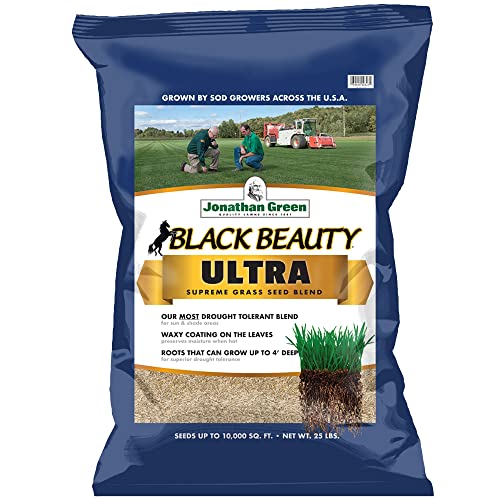
Jonathan Green Black Beauty Ultra
Jonathan Green · Cool Season · $28 (7 lbs) – $105 (25 lbs)
Why this seed for Iowa: BBU gives Iowa homeowners insurance against summer heat stress. The deep-rooting fescue component accesses moisture during July dry spells when even rich Iowa soil dries out.
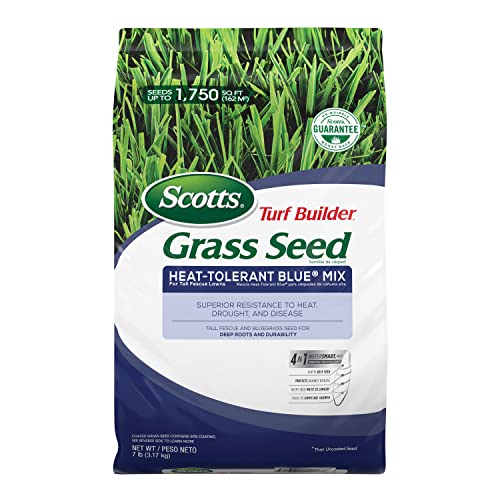
Scotts Turf Builder Heat-Tolerant Blue Mix
Scotts · Cool Season · $30-55 for 7 lbs
Why this seed for Iowa: For central and southern Iowa where summers push into the 90s, Heat-Tolerant Blue gives you KBG genetics that don't collapse in July heat. A smart hedge for Iowa's increasingly hot summers.
Best Grass Seed by Region in Iowa
Des Moines / Central Iowa
Central Iowa is lawn care on easy mode — at least compared to the rest of the country. The deep prairie loam soil around Des Moines, Ames, Ankeny, and Urbandale is genuinely some of the best topsoil in the world: dark, rich, well-structured, with naturally balanced pH around 6.5 to 7.0 and organic matter content above 4 percent. Zone 5a conditions mean cold winters (minus 15 to minus 20 is possible) but a solid growing season from mid-April through mid-October. Kentucky bluegrass absolutely thrives here, and the only real challenges are summer heat stress during July hot spells, compaction from the underlying glacial till clay, and the perennial crabgrass pressure that ramps up every June. If you do the basics right — mow high, fertilize in fall, aerate annually — you can have a showpiece bluegrass lawn without heroic effort.
Top picks for this region:
- ✓Iowa's prairie loam is fantastic soil — don't over-amend it. A soil test through ISU Extension ($25) often shows you need less fertilizer than you think
- ✓Mow bluegrass at 3 to 3.5 inches all season long — this single change produces more improvement than any product you can buy
- ✓Fall is the power season for Iowa lawns: overseed thin spots in early September, fertilize in September and November, and aerate in September while soil is still warm
- ✓Crabgrass pre-emergent goes down when soil temps hit 55 degrees at 4-inch depth — in Des Moines that's typically April 15 to April 25, but check ISU's soil temperature network
- ✓Spring flooding along the Des Moines and Raccoon Rivers deposits silt on lawns — rake or power-wash sediment off turf within a week before it suffocates the grass
Cedar Rapids / Iowa City / Eastern Iowa
Eastern Iowa from Cedar Rapids down through Iowa City and the Quad Cities along the Mississippi is slightly warmer and more humid than the western part of the state, sitting in the Zone 5a to 5b transition. The soil is still excellent prairie loam in upland areas, but the numerous river valleys — Cedar River, Iowa River, Mississippi River — introduce flood risk and variable soil types. The 2008 Cedar Rapids flood demonstrated what Iowa rivers can do when unleashed, and homeowners along these corridors need flood-resilient lawn strategies. Humidity is higher here than in western Iowa, which means fungal disease pressure — particularly dollar spot and brown patch — is more of a factor in July and August. Bluegrass dominates, but tall fescue blends are gaining popularity in Iowa City and Cedar Rapids for their improved heat and drought tolerance during summer stress periods.
Top picks for this region:
- ✓Higher humidity in eastern Iowa increases brown patch and dollar spot pressure — avoid evening irrigation and improve air circulation by pruning low tree branches
- ✓If you're in a flood-prone area along the Cedar or Iowa Rivers, Kentucky bluegrass recovers from silt deposits faster than fescue thanks to its rhizome spreading habit
- ✓The Quad Cities' proximity to the Mississippi creates a microclimate that pushes into Zone 5b — you can push the fall fertilizer window slightly later here than in western Iowa
- ✓Dollar spot thrives in low-nitrogen turf — if you see small tan spots the size of a silver dollar in your bluegrass, a light application of nitrogen (0.25 lb per 1,000 sq ft) often resolves it
- ✓Iowa City's rolling terrain means slopes are common — overseed thin hillside areas with a bluegrass-fine fescue blend that handles the drier conditions on south-facing slopes
Sioux City / Western Iowa
Western Iowa along the Missouri River corridor from Sioux City down through Council Bluffs is where Iowa's legendary soil starts to get more complicated. The loess hills — wind-deposited silt bluffs that line the Missouri Valley — are some of the most dramatic landforms in the state, but the soil on these hillsides is erosion-prone and drains excessively. Down in the river bottoms, you're dealing with heavy Missouri River clay that compacts into a waterlogged mess. Zone 5a in the north (Sioux City) transitions to 5b near Council Bluffs, and the western position means slightly less rainfall (28 to 32 inches) than eastern Iowa. Wind is more of a factor here too — the open terrain along the Missouri Valley channels wind across lawns and accelerates drying. Bluegrass still dominates, but it needs more irrigation support on the well-drained loess hills than in central Iowa.
Top picks for this region:
- ✓Loess hill soils drain fast and erode easily — apply seed with erosion blankets on slopes and water frequently during establishment to keep the silty soil from crusting over
- ✓Missouri River bottom clay soils need annual core aeration and gypsum to combat compaction — the heavy gray clay is a different beast from the loam just a mile uphill
- ✓Western Iowa gets 4 to 6 inches less rainfall than the east — plan for supplemental irrigation during July and August, especially on south-facing loess hill slopes
- ✓Council Bluffs homeowners in the flood plain should consider tall fescue blends for their deeper root systems and faster recovery after spring high-water events
- ✓Wind chill factor desiccates dormant turf in winter — a late November fertilizer application with potassium helps bluegrass survive the exposed western Iowa wind corridor
Northeast Iowa / Driftless Area
Northeast Iowa around Decorah, Dubuque, and the Driftless Area is unlike anywhere else in the state. This region was never glaciated, so instead of the flat prairie and deep loam that defines most of Iowa, you have steep limestone bluffs, narrow valleys, cold-water trout streams, and thin, rocky soil that challenges lawn establishment. The soil is often just 4 to 8 inches of silt loam over fractured limestone, with pH running alkaline at 7.5 or higher due to the limestone parent material. Zone 4b conditions in the valleys (cold air pooling makes this the coldest part of Iowa) mean longer winters and a shorter growing season. Bluegrass works here but establishes more slowly in the thin soil. Fine fescue blends are increasingly popular because they handle the drier, rockier conditions on hilltops and require less fertility than bluegrass.
Top picks for this region:
- ✓Thin soil over limestone means roots hit rock fast — topdress with quality topsoil-compost blend annually to build a deeper growing medium over time
- ✓The Driftless Area's steep terrain makes erosion a constant threat — use fine fescue on slopes where bluegrass thins out, as its deeper fibrous root system holds soil better
- ✓Cold air pooling in the valleys can push temperatures 10 to 15 degrees below hilltop readings — seed selection needs to account for Zone 4b conditions even though official maps say Zone 5
- ✓Limestone-influenced soil runs alkaline — if your bluegrass shows iron chlorosis (yellow blades, green veins), apply chelated iron rather than trying to lower pH in heavily buffered limestone soil
- ✓The shorter growing season means your fall overseeding window is narrow: September 1 through September 20 maximum, as soil temps drop faster here than in Des Moines
Iowa Lawn Care Calendar
Spring
March - May
- •Apply crabgrass pre-emergent when soil temperatures reach 55 degrees at 4-inch depth — in Iowa that's typically mid to late April, but use ISU Extension's soil temperature monitoring for your county rather than guessing
- •Rake or power-rake winter debris, matted leaves, and any sand or salt residue from sidewalks and driveways in late March or early April once the ground thaws
- •Resist the urge to fertilize in spring — ISU Extension recommends saving your nitrogen budget for fall. If you must fertilize, wait until late May when the grass is actively growing and apply no more than 0.5 lb nitrogen per 1,000 sq ft
- •Patch bare spots from winter damage by overseeding with bluegrass in early to mid-May when soil temps are consistently above 50 degrees — keep seeded areas moist for 3 to 4 weeks
- •Begin mowing when bluegrass hits 4 inches — set your deck to 3 to 3.5 inches and never remove more than one-third of the blade height at a time
- •Address drainage problems and grade low spots before the growing season begins — Iowa's wet springs make standing water issues obvious, use this intel to plan corrections
Summer
June - August
- •Maintain 3 to 3.5-inch mowing height throughout summer — this is the single most impactful practice for bluegrass survival during Iowa's July and August heat waves
- •Water deeply and infrequently: 1 to 1.5 inches per week delivered in two sessions. Early morning watering (5 to 7 AM) reduces disease risk from extended leaf wetness
- •Spot-treat broadleaf weeds like clover, dandelions, and creeping charlie with a selective herbicide — avoid blanket applications in temperatures above 85 degrees, as the grass is already stressed
- •Accept that some summer browning during extended hot spells is normal for bluegrass — the grass is dormant, not dead, and will recover when cooler weather and rain return in September
- •Scout for grub activity in late July and August — irregular brown patches that feel spongy underfoot and lift easily indicate white grub damage. Treat if counts exceed 10 per square foot
- •Do not fertilize bluegrass during summer heat stress — nitrogen in July or August forces weak top growth that's vulnerable to disease and drought
Fall
September - November
- •Overseed thin or damaged areas between September 1 and September 20 — this is the single best window for bluegrass establishment in Iowa, as soil is warm, air is cooling, and fall rains help germination
- •Core aerate in early to mid-September — the combination of aeration plus overseeding plus fall fertilizer is the most powerful lawn improvement program available to Iowa homeowners
- •Apply fertilizer in two fall rounds: 1 lb nitrogen per 1,000 sq ft in mid-September, then 1 lb nitrogen per 1,000 sq ft in late October or early November as the final application of the year
- •The late fall fertilizer (often called the winterizer) is the most important single fertilizer application of the year — ISU research shows it promotes root growth, energy storage, and earlier spring green-up
- •Continue mowing at 3 to 3.5 inches until growth stops — typically mid to late November in most of Iowa. Do not scalp the lawn going into winter
- •Mulch fallen leaves with your mower rather than raking — one or two passes with a mulching blade breaks leaves down into small pieces that decompose quickly and add organic matter to the soil
Winter
December - February
- •Avoid walking on frozen, dormant turf when possible — foot traffic on frozen grass blades causes crown damage that shows up as dead footprint-shaped patches in spring
- •Minimize salt and ice-melt product use near lawn edges — sodium chloride damages turf and soil structure. Use potassium chloride or calcium magnesium acetate near grass if you must de-ice
- •Plan your spring and fall lawn care calendar in January — order seed, schedule aeration, and map out fertilizer applications so you're ready when the season starts
- •Submit soil samples to ISU Extension's soil testing lab ($25 per sample) in late winter — test results guide your fertilizer and lime decisions for the coming year
- •Inspect and service lawn equipment: sharpen mower blades, change oil, clean or replace air filters, and test your irrigation system if you have one
- •If snow mold appears in spring (circular gray or pink patches after snow melts), lightly rake the affected areas to promote air circulation — most snow mold is cosmetic and the grass recovers on its own
Iowa Lawn Tips You Won't Find on the Seed Bag
Stop Mowing So Short — Iowa's #1 Lawn Mistake
Drive through any Iowa suburb in July and you'll see the same mistake repeated on every block: bluegrass scalped to 2 inches, turning brown, and getting invaded by crabgrass. Meanwhile, the guy at the end of the street with his mower set at 3.5 inches has a thick, dark-green lawn that looks like it gets professional care. ISU Extension has been beating this drum for years, and the science is clear: taller bluegrass develops deeper roots, shades the soil surface (reducing weed germination and evaporation), and handles summer heat stress dramatically better than short-mown turf. Raising your mowing height to 3 to 3.5 inches is the single most impactful change most Iowa homeowners can make, and it literally costs nothing. Just raise your deck and leave it there all season.
Fall Is the Real Growing Season in Iowa
Most Iowa homeowners think spring is when you do lawn work. They're wrong. Fall — specifically September through early November — is when your lawn builds the foundation for next year's performance. ISU research consistently shows that fall fertilization, fall aeration, and fall overseeding produce better results than any spring program. Here's why: soil temperatures in September are warm (60 to 70 degrees), air temperatures are cooling (reducing heat stress on new seedlings), fall rains provide consistent moisture, and weed competition drops off as annual weeds die. A September aeration, overseed, and fertilizer application — followed by a late October winterizer — is the most effective single intervention you can make for an Iowa bluegrass lawn.
Dealing With Iowa's Spring Saturation Problem
Every spring, Iowa lawns sit in saturated soil for weeks as snowmelt and spring rains keep the ground waterlogged well into April. The prairie loam holds moisture well (that's usually a feature, not a bug), but in spring it can stay too wet for too long. Saturated soil means no oxygen reaching roots, compaction damage from any foot or equipment traffic, and ideal conditions for snow mold and other fungal diseases. The rule is simple: stay off your lawn until it's dry enough that your footprints don't leave visible impressions. That usually means late April in central Iowa. Resist the urge to rake, fertilize, or mow on soggy turf — every pass you make on wet soil compresses it and undoes months of root development.
Why Iowa Lawns Don't Need Lime (Usually)
One of the most common unnecessary lawn care expenses in Iowa is lime application. Many homeowners apply lime every year because they've heard it's 'good for lawns' without ever testing their soil pH. Here's the reality: Iowa's prairie loam typically runs between 6.5 and 7.0 pH — which is already perfect for bluegrass. Adding lime to soil that doesn't need it raises pH above 7.0 and actually starts locking out micronutrients like iron and manganese. A $25 soil test through ISU Extension tells you exactly what your pH is and whether lime is needed. In most of central Iowa, it isn't. Save that lime money for a good fall fertilizer application, which actually will make a visible difference.
The Creeping Charlie Problem and How Iowa Homeowners Actually Beat It
Creeping charlie (ground ivy) is Iowa's most hated lawn weed, and it's earned the title. This aggressive, shade-loving perennial spreads by stolons, roots at every node, and laughs at most broadleaf herbicides. Standard 2,4-D products barely slow it down. The only herbicides that reliably control creeping charlie contain triclopyr — look for products specifically labeled for ground ivy control and apply in fall (October) when the weed is actively translocating nutrients to its root system. That's the key: fall applications move the herbicide into the root system where it actually kills the plant. Spring applications burn back the leaves but the roots survive and it's back in six weeks. Two consecutive fall applications, two to three weeks apart, is the proven protocol for elimination.
Grub Damage vs. Drought Dormancy: Know the Difference
Every August, Iowa homeowners panic when their bluegrass turns brown and assume they have grubs. Often, the grass is just dormant from summer heat — a normal survival response that doesn't require treatment. Here's how to tell the difference: drought-dormant bluegrass turns uniformly tan across the whole lawn and the blades are still firmly rooted. Grub-damaged turf turns brown in irregular patches, feels spongy when you walk on it, and the dead turf peels up like loose carpet because the grubs have eaten the roots. Do the tug test: grab a handful of brown grass and pull. If it comes up easily with no roots attached, you've got grubs. If it resists and stays rooted, it's just dormant and will green up when rain and cooler weather return in September.
What Iowa Lawn Pros Actually Plant
Kentucky Bluegrass
Most PopularKentucky bluegrass owns Iowa. It's planted on roughly 80 percent of residential lawns statewide and it dominates for good reason — it thrives in Iowa's cool springs and falls, handles winter dormancy without issue, and its rhizome spreading habit lets it self-repair from damage caused by Iowa's seasonal extremes. The older bargain blends sold at hardware stores produce a light-green, disease-prone lawn that looks mediocre. Improved cultivars like Midnight Kentucky Bluegrass are a different animal entirely — darker color, denser growth, better disease resistance, and improved heat tolerance for surviving July. ISU Extension's annual turfgrass trials consistently show that investing in improved bluegrass cultivars pays off visibly within the first growing season.
Tall Fescue
Very PopularTall fescue has been quietly gaining ground in Iowa, particularly in the southern tier of counties and in urban areas where homeowners want better drought tolerance than bluegrass provides. Modern turf-type tall fescues like Black Beauty Ultra are a world apart from the old K-31 pasture fescue that gives the species a bad reputation — they're fine-bladed, dark green, and blend reasonably well with bluegrass. Fescue's deep root system (up to 6 inches versus 2 to 3 for bluegrass) gives it a real advantage during Iowa's July dry spells. The trade-off is that fescue doesn't spread via rhizomes, so it won't self-repair — you need to overseed thin spots annually. It's most popular in Des Moines, Iowa City, and Cedar Rapids where summer heat stress is a recurring frustration for bluegrass owners.
Perennial Ryegrass
Very PopularPerennial ryegrass isn't a standalone lawn grass in Iowa — it's a blending partner that shows up in most quality seed mixes alongside bluegrass. Its value is speed: ryegrass germinates in 5 to 7 days versus 14 to 21 for bluegrass, providing quick cover on bare soil while the slower bluegrass establishes underneath. You'll find it at 10 to 20 percent of most bluegrass blend mixes sold in Iowa. As a standalone species, ryegrass lacks the cold hardiness and spreading ability that Iowa lawns demand long-term. But as a nurse grass in blends and for quick overseeding of bare spots, it's a staple that every Iowa lawn has some of, whether the homeowner knows it or not.
Fine Fescue
Growing in PopularityFine fescues — creeping red fescue, chewings fescue, hard fescue, and sheep fescue — fill an important niche in Iowa: shaded areas where bluegrass thins out under mature oaks, maples, and walnuts. Iowa's urban tree canopy creates significant shade challenges, and fine fescues tolerate lower light levels than bluegrass or tall fescue. They're also more drought-tolerant on thin or sandy soils, making them useful in northeast Iowa's rocky Driftless terrain. You'll rarely see a pure fine fescue lawn in Iowa, but shade-mix blends containing fine fescue along with bluegrass are the standard recommendation for any yard with more than 50 percent shade. They need less fertilizer and less water than bluegrass, which appeals to low-maintenance homeowners.
Kentucky Bluegrass / Tall Fescue Blend
Growing in PopularityThe bluegrass-fescue blend is becoming the smart-money choice for Iowa homeowners who want the best of both worlds. A 60/40 or 70/30 blend of Kentucky bluegrass and turf-type tall fescue gives you bluegrass's self-repairing rhizome spread combined with fescue's deep roots and drought tolerance. The fescue component carries the lawn through July and August heat stress while the bluegrass fills in any thin spots the following spring. ISU turf researchers have been studying these blends and finding that they outperform either species alone across a wider range of Iowa conditions. This blend is particularly popular in the Des Moines metro where homeowners are tired of watching their pure bluegrass lawns go dormant every summer.
Iowa Lawn Seeding Tips
Getting the best results from your grass seed in Iowa comes down to timing, soil prep, and choosing the right variety for your specific conditions. Here are our top tips:
- Test your soil first. A $15 soil test from your Iowa extension office tells you exact pH and nutrient levels. Most cool-season grasses prefer pH 6.0-7.0.
- Prep the seedbed properly. Rake or aerate to ensure good seed-to-soil contact. This single step improves germination rates more than any seed coating or starter fertilizer.
- Use a starter fertilizer. Apply a phosphorus-rich starter fertilizer at seeding time to promote root development. We recommend Scotts Starter Fertilizer or The Andersons Starter.
- Water correctly. Keep the seedbed consistently moist (not soaked) for the first 2-4 weeks. Light watering 2-3 times per day is better than one heavy soaking.
- Be patient. Kentucky Bluegrass takes 14-28 days to germinate. Tall Fescue is faster at 7-14 days. Don't panic if you don't see results immediately.
- Consider pre-germinating KBG. If you're planting Kentucky Bluegrass, you can cut germination time from 30 days to under a week using the bucket-and-bubble pre-germination method. This is especially valuable for late-season seeding in Iowa.
Frequently Asked Questions
When is the best time to plant grass seed in Iowa?
Mid-August through early September (fall) is ideal; mid-May through early June for spring seeding after soil warms above 55F
What type of grass grows best in Iowa?
Iowa is best suited for cool-season grasses like Kentucky Bluegrass, Tall Fescue, and Perennial Ryegrass. These grasses thrive in spring and fall, stay green longer into winter, and handle cold temperatures well.
What are the biggest lawn care challenges in Iowa?
The main challenges for Iowa lawns include cold winters with extended sub-zero temperatures, hot humid summers stress cool-season grass, spring flooding from snowmelt, heavy clay subsoil beneath rich topsoil. Choosing the right grass variety that is adapted to these specific conditions is the single most important decision you can make for your lawn.
Can I grow Kentucky Bluegrass in Iowa?
Absolutely — Kentucky Bluegrass is one of the best choices for Iowa. It thrives in the cool-season climate, produces a beautiful dense lawn, and self-repairs through rhizome spread. Midnight KBG is our top pick for the darkest, most premium-looking lawn.
How much does it cost to seed a lawn in Iowa?
For a typical 5,000 sq ft lawn, expect to spend $150-$400 on seed alone depending on the variety. Premium seeds like Midnight Kentucky Bluegrass or Zenith Zoysia cost more per pound but deliver better results. Add $50-$100 for starter fertilizer and $20-$50 for soil amendments. The seed is the smallest part of your total investment — proper soil prep and consistent watering matter more than saving $50 on cheaper seed.
More Lawn Care Resources
Not in Iowa?
We have state-specific grass seed guides for all 50 states.