CO State Guide · Updated March 2026
Best Grass Seed for Colorado
The top-rated grass seeds for Colorado lawns, tested against altitude, drought, and clay soil. Our expert picks for Denver, Colorado Springs, Fort Collins, and the Front Range.
Disclosure: This article contains affiliate links. If you buy through our links, we may earn a commission at no extra cost to you. All opinions are our own. Learn more.
Colorado's Front Range is Kentucky bluegrass country, and the residents know it. Drive through the neighborhoods of Highlands Ranch, Castle Rock, or Broomfield in mid-June and you'll see lawns that rival anything in the Midwest — dense, dark green KBG maintained with the kind of obsessive precision that comes from living at 5,280 feet where every neighbor can see your yard from a mile away in the thin, clear air. Fort Collins homeowners debate bluegrass cultivars the way Boulder residents debate IPA hops. Colorado Springs HOAs issue violation letters for dormant brown patches. This is a state where people care deeply about their lawns — and where the environment makes keeping one genuinely difficult.
Water is the conversation that overshadows everything else in Colorado lawn care. Denver Water's tiered pricing system punishes heavy irrigators with rates that can triple once you exceed the baseline allocation. Aurora Water has imposed mandatory watering restrictions that limit irrigation to three days per week, and some years have dropped to two. Castle Rock nearly ran out of water entirely in the early 2010s and now enforces some of the strictest outdoor watering rules on the Front Range. The state legislature has even debated limiting the percentage of new residential lots that can be turfgrass. If you're planting a lawn in Colorado in 2026, drought tolerance isn't a nice-to-have — it's the price of admission. Every gallon counts, and your grass choice determines whether your August water bill is $80 or $300.
Here's what catches most Colorado transplants off guard: the soil is trying to kill your lawn. Front Range soil is overwhelmingly clay-heavy and alkaline, with pH levels running 7.5 to 8.5 across most of the Denver metro, Colorado Springs, and Fort Collins areas. That high pH locks out iron, manganese, and zinc — micronutrients that grass needs to maintain color and vigor. The result is iron chlorosis, and it's absolutely everywhere along the Front Range. You'll see it as yellow blades with green veins, and it strikes bluegrass, fescue, and even buffalo grass when the pH climbs above 8.0. Adding standard granular iron to alkaline soil is throwing money away — the iron oxidizes and becomes unavailable within hours. You need chelated iron (EDDHA formulation specifically) applied as a foliar spray, and you need to commit to a long-term sulfur amendment program to inch that pH down over years.
The buffalo grass and eco-lawn movement is gaining real traction along the Front Range, driven by a combination of water costs, environmental consciousness, and the practical reality that native grasses evolved for exactly these conditions. Sharp's Improved buffalo grass was developed at the University of Nebraska specifically for the high plains, and it thrives on 12 to 15 inches of annual rainfall — which is exactly what most of the Front Range receives naturally. Boulder, with its progressive environmental culture, has been at the forefront. Fort Collins is close behind. Even conservative communities like Castle Rock and Parker are seeing buffalo grass installations double year over year as homeowners do the math on water bills and realize that a grass requiring zero supplemental irrigation once established isn't just an ecological statement — it's a financial decision.
Then there's the factor that makes Colorado genuinely unique among lawn care states: altitude and UV intensity. At 5,280 feet in Denver — and considerably higher in mountain communities like Evergreen (7,200 feet), Woodland Park (8,400 feet), or Breckenridge (9,600 feet) — the sun hits differently. UV radiation is 25 to 30 percent more intense than at sea level, which accelerates photodegradation of leaf tissue and increases evapotranspiration rates dramatically. Your lawn is losing moisture faster than an identical lawn in Kansas planted with the same seed. Colorado also averages 300 days of sunshine annually, meaning the UV stress is relentless and cumulative. This is why cultivar selection matters so much here — varieties bred for the high plains and intermountain west, like Midnight Kentucky bluegrass, handle the UV load far better than generic big-box seed blends that were formulated for Ohio.
Quick Picks: Our Top 3 for Colorado
Understanding Colorado's Lawn Climate
Semi-arid continental with cold winters, hot summers, and persistently low humidity. Elevation varies dramatically from the eastern plains at 3,500 feet to Front Range cities at 5,000-6,000 feet and mountain towns above 9,000 feet. The Front Range corridor (Denver to Fort Collins) gets 300 days of sunshine with intense UV radiation that stresses turf. Winter brings periodic Arctic blasts and heavy snow, but rapid chinook winds can melt everything in 24 hours. Eastern plains are windswept and dry.
Key Challenges
Best Planting Time for Colorado
Late August through mid-October (fall) or April through May (spring); fall is strongly preferred on the Front Range
Our Top 3 Picks for Colorado

Outsidepride Midnight Kentucky Bluegrass Seed
Outsidepride · Cool Season · $35 (5 lbs) – $300 (50 lbs)
Why this seed for Colorado: KBG is the most popular lawn grass along Colorado's Front Range, and Midnight is the best variety. It handles the intense UV at altitude, clay soil, and cold winters while staying dense and green with proper irrigation.
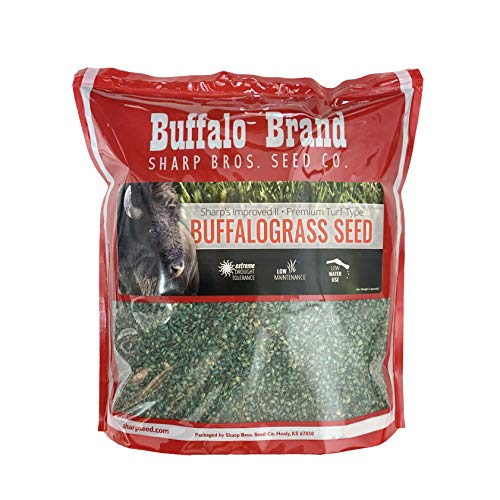
Sharp's Improved II Buffalo Grass
Sharp Bros. Seed Co. · Warm Season · $24 (3 lbs)
Why this seed for Colorado: The ultimate eco-lawn for Colorado. Buffalo grass is native to the High Plains, survives on 12-15 inches of rain annually, and requires no supplemental irrigation once established. Perfect for water-conscious homeowners.
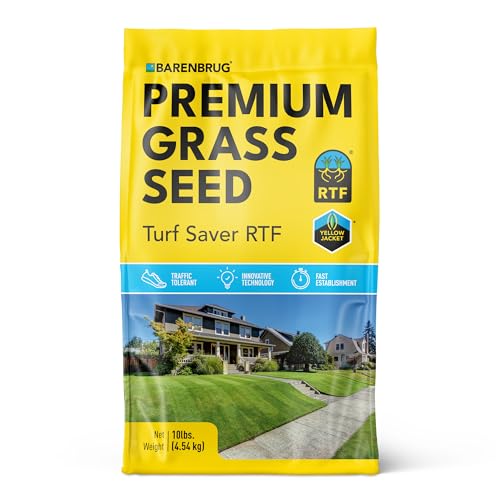
Barenbrug RTF Water Saver
Barenbrug · Cool Season · $40-55 for 5 lbs
Why this seed for Colorado: RTF gives Colorado homeowners a lush green fescue lawn that uses significantly less water than KBG. The self-repairing rhizomes handle foot traffic, and the deep roots access moisture below the alkaline clay layer.
Best Grass Seed by Region in Colorado
Denver Metro / Front Range
The Denver metropolitan area — stretching from Longmont south through Boulder, Westminster, Lakewood, Littleton, Highlands Ranch, and Castle Rock — is the heart of Colorado's lawn care culture. Sitting at 5,000 to 6,200 feet, the metro occupies Zones 5b to 6a with 300 days of sunshine, 15 to 17 inches of annual precipitation, and summer highs that regularly crack 95 degrees. The soil is the defining challenge: heavy clay with a strong alkaline lean (pH 7.5 to 8.5), often layered with expansive bentonite that swells when wet and cracks when dry with enough force to shift fence posts and crack foundation slabs. Denver Water's tiered pricing and Aurora's mandatory watering restrictions make drought-tolerant cultivars essential. Kentucky bluegrass dominates established neighborhoods from Washington Park to Stapleton, but the trend is clearly moving toward water-saver blends and buffalo grass, especially in new developments south of C-470 where water taps are increasingly expensive.
Top picks for this region:
- ✓Core aerate twice annually — late April and early September — the Front Range clay compacts so aggressively that single aeration provides only marginal benefit
- ✓Apply elemental sulfur at 5 lbs per 1,000 sq ft each spring and fall to gradually lower the alkaline pH — this is a multi-year commitment, not a one-time fix
- ✓Set irrigation to cycle-and-soak mode: three 10-minute cycles with 30-minute breaks between each, rather than one 30-minute run that sheets off clay soil
- ✓Denver Water offers rebates of up to $3 per square foot for replacing bluegrass with xeriscape or buffalo grass — check their website for current program details before ripping anything out
- ✓Pre-emergent timing on the Front Range is late April, not early March like lower elevations — soil temps at 4 inches need to sustain 55 degrees, which happens 4 to 6 weeks later than the national average
Colorado Springs / Southern Front Range
Colorado Springs, Pueblo, and the southern Front Range corridor from Monument south to Trinidad sit at 4,600 to 6,800 feet in Zones 5a to 6a, with even less precipitation than Denver — Pueblo averages just 11 inches annually, making it one of the driest cities in the state. Colorado Springs averages 16 inches but the rain shadow effect from Pikes Peak creates dramatic micro-climate variation: the Broadmoor neighborhood on the southwest side gets measurably more moisture than the Powers corridor on the northeast. The soil ranges from rocky decomposed granite on the west side near the mountains to heavy alkaline clay on the east side toward Peterson Space Force Base. Wind is a bigger factor here than in Denver, with persistent afternoon gusts of 30 to 50 mph in spring that desiccate newly seeded lawns and strip moisture from established turf. Colorado Springs Utilities enforces tiered water pricing that makes overwatering financially painful.
Top picks for this region:
- ✓On the east side of Colorado Springs, the clay-alkaline soil is nearly identical to Denver's — apply gypsum at 40 lbs per 1,000 sq ft annually alongside sulfur to improve both structure and pH
- ✓Spring wind desiccation is the number one killer of new seed here — cover seeded areas with straw mulch or erosion blankets and increase watering frequency during windy weeks in April and May
- ✓In Pueblo's extreme aridity (11 inches annual rainfall), buffalo grass isn't just recommended — it's essentially the only sustainable turfgrass choice without heavy irrigation
- ✓The Broadmoor and west-side neighborhoods near Cheyenne Mountain get 2 to 3 extra inches of precipitation annually compared to the Powers corridor — this genuinely affects what you can grow without irrigation
- ✓Chinook winds can raise temperatures 30 to 40 degrees in hours during winter, triggering premature green-up followed by hard freeze damage — resist the urge to fertilize during January warm spells
Northern Colorado / Fort Collins
Fort Collins, Loveland, Greeley, and the Northern Colorado corridor share the Front Range's general climate profile but with colder winters (Zone 5a, sometimes pushing Zone 4b in outlying areas), slightly more precipitation from upslope storms, and some of the best lawn conditions on the Front Range — if you can manage the soil and water. Fort Collins has a strong lawn culture driven partly by CSU's turf research program, which means local garden centers and lawn services are genuinely knowledgeable. The soil is clay-heavy like Denver but tends to be slightly less alkaline in areas near the Cache la Poudre River with alluvial deposits. Greeley, by contrast, sits on some of the heaviest clay on the Front Range and deals with sugar beet processing odors that, while unrelated to lawn care, speak to the agricultural character of the soil. Windsor and Timnath are booming with new construction, and the HOA pressure to maintain green lawns in these communities is intense despite water supply concerns from the Colorado-Big Thompson project.
Top picks for this region:
- ✓Fort Collins gets more upslope snow events than Denver, providing natural moisture through March and April — delay spring irrigation startup until late April or early May unless conditions are abnormally dry
- ✓CSU's turf research recommends Midnight Kentucky bluegrass as the top cultivar for Northern Colorado — it handles the UV intensity and alkaline conditions better than most commercial blends
- ✓Greeley's heavy clay requires aggressive aeration — rent a commercial-grade core aerator rather than relying on the lightweight consumer models that barely scratch the surface
- ✓In new construction areas like Timnath and Windsor, the topsoil was likely scraped during grading — invest in 4 to 6 inches of quality topsoil amendment before seeding, or you're planting into raw subsoil clay
- ✓Northern Colorado's earlier fall frost (first frost often hits by mid-September) means your fall overseeding window is tight — seed by August 25th to give grass 3 weeks of growth before frost
Eastern Plains / Western Slope
Colorado's eastern plains — from Limon and Burlington east to the Kansas border — and the Western Slope communities like Grand Junction, Montrose, and Durango represent the state's extremes. The eastern plains sit at 3,500 to 5,000 feet with 13 to 16 inches of annual rainfall, relentless wind, and sandy loam to clay-loam soils. This is native shortgrass prairie, and buffalo grass is what belongs here. On the Western Slope, Grand Junction bakes in Zone 6b semi-desert heat with alkaline soils and 8 to 9 inches of annual rainfall, while Durango at 6,500 feet in the southwest gets more moisture from monsoon patterns and supports decent cool-season lawns. Mountain towns like Vail (8,150 feet), Breckenridge (9,600 feet), and Steamboat Springs (6,700 feet) are Zone 4a to 4b territory where the growing season is just 60 to 90 days long and only the hardiest cool-season grasses survive.
Top picks for this region:
- ✓On the eastern plains, buffalo grass seeded in late May will establish by fall — but cover seed with erosion blankets because the wind will literally blow it to Nebraska otherwise
- ✓In Grand Junction, bermuda grass is actually viable (Zone 6b with hot summers) but most residents stick with tall fescue or buffalo grass to avoid the long dormancy period from October through April
- ✓Mountain towns above 8,000 feet have a 60 to 90 day growing season — seed only with cold-hardy KBG or fine fescue blends in June, and expect establishment to take an entire season or more
- ✓Western Slope soils in the Grand Valley are often saline and sodic from ancient marine deposits — get a soil test before planting and be prepared for gypsum and sulfur amendments
- ✓Durango benefits from late-summer monsoon moisture that most of Colorado doesn't receive — take advantage of this natural irrigation window for fall overseeding in late August
Colorado Lawn Care Calendar
Spring
March - May
- •Resist the urge to start work during March chinook wind warm spells — these false springs with 60-degree days followed by single-digit nights will kill any newly emerging seedlings and waste pre-emergent applications
- •Apply pre-emergent herbicide when soil temps at 4-inch depth sustain 55 degrees — on the Front Range this is typically late April to early May, a full month later than national averages due to altitude
- •Core aerate in late April once the soil thaws completely — the clay soils along the Front Range compact over winter from freeze-thaw cycles and need early-season relief for root development
- •Begin irrigation in late April or early May using cycle-and-soak scheduling — clay soil absorbs water slowly, so three short cycles are better than one long run that causes runoff
- •Apply elemental sulfur at 5 lbs per 1,000 sq ft in mid-April to begin the season-long battle against alkaline pH — work it into aeration holes for faster incorporation
- •Seed bare spots with KBG or water-saver blends once soil temps hold above 55 degrees for two weeks — typically early to mid-May on the Front Range, late May above 7,000 feet
Summer
June - August
- •Raise mowing height to 3 to 3.5 inches for bluegrass to reduce UV stress — at Colorado's altitude, the intense solar radiation burns grass mowed below 2.5 inches
- •Water deeply twice per week within your municipality's watering schedule — target 1 to 1.5 inches total per week, delivered in early morning sessions to minimize evaporation in the thin dry air
- •Apply chelated iron (EDDHA formulation) as a foliar spray every 4 to 6 weeks to combat iron chlorosis — this is not optional on Front Range soils with pH above 7.5
- •Watch for billbug damage in June and July — these weevils are the most destructive lawn pest along the Front Range, causing irregular brown patches where grass stems pull away cleanly at the crown
- •Apply a light nitrogen fertilizer (0.5 lb N per 1,000 sq ft) in early June — avoid fertilizing after July 4th as it pushes tender top growth during the hottest period and increases water demand
- •Afternoon thunderstorms in July provide supplemental moisture but also bring hail — inspect turf after severe storms for shredded leaf blades and reduce mowing for a week to allow recovery
Fall
September - October
- •Fall is the single best time to seed or overseed in Colorado — soil is still warm from summer, air temps are cooling, and September precipitation on the Front Range provides natural moisture
- •Seed or overseed by September 10th at the latest on the Front Range — first frost typically arrives between September 20th and October 5th, and seedlings need 3 to 4 weeks of growth before going dormant
- •Core aerate again in early September — this is the most critical aeration window for Front Range clay, as the grass is actively growing and can recover before dormancy
- •Apply a winterizer fertilizer (high potassium, such as 8-2-14) in early October to harden off grass before winter — potassium strengthens cell walls against freeze-thaw damage
- •Apply a second round of elemental sulfur in September to continue pH reduction — fall applications work well because winter moisture slowly moves sulfur into the root zone
- •Lower mowing height to 2.5 inches for the final two mowings to reduce snow mold risk — long grass matted under snow is a breeding ground for pink and gray snow mold along the Front Range
Winter
November - February
- •Leave dormant bluegrass alone — do not fertilize, do not water unless you go 4 or more weeks without snow cover or precipitation (this happens more often than you'd think on the Front Range's dry winters)
- •Chinook winds in January and February can melt snow and dry out exposed turf rapidly — if you see soil cracking and no snow cover for extended periods, run one deep irrigation cycle on a warm afternoon when temps are above 40
- •Avoid walking on frozen or frost-covered grass — ice crystals in the leaf blades shatter cell walls when compressed, causing brown footprint damage that won't recover until spring green-up
- •Spot-treat winter annual weeds like henbit and chickweed on warm days (above 50 degrees) when they're actively growing — these weeds exploit dormant bluegrass and can establish thick colonies by March
- •Sharpen mower blades and service irrigation systems in January — Front Range lawn services book up by March, so schedule spring aeration and sprinkler blowout recovery early
- •Plan your sulfur and iron amendment program for the coming season and order chelated iron (EDDHA) in advance — local garden centers frequently sell out of the specific formulation needed for alkaline soils
Colorado Lawn Tips You Won't Find on the Seed Bag
Sulfur Is Your Best Friend on the Front Range — But It Takes Years
The alkaline clay soils across Denver, Colorado Springs, and Fort Collins typically test between pH 7.5 and 8.5, and that high pH is the root cause of most nutrient uptake problems along the Front Range. Elemental sulfur is the primary tool for lowering pH, but Colorado's calcareous soils have enormous buffering capacity — meaning the calcium carbonate in the soil actively resists pH change. You need to apply 5 to 10 pounds of elemental sulfur per 1,000 square feet per application, twice annually (spring and fall), for three to five consecutive years before you'll see meaningful pH movement. Work the sulfur into core aeration holes for faster soil contact. Test your soil pH annually to track progress. This is a marathon, not a sprint, and most Colorado homeowners give up after one season when they don't see immediate results. Don't. The cumulative effect is real, and by year three you'll notice visibly darker green grass as iron and micronutrient availability improves.
Iron Chlorosis Treatment That Actually Works Above pH 7.5
Iron chlorosis — yellow blades with green veins — is the most visible lawn problem on the Front Range, and it drives homeowners crazy because they keep buying iron products that don't work. Here's why: standard iron sulfate and iron chelates (DTPA, EDTA formulations) break down and become unavailable in soils above pH 7.0. The iron binds to calcium carbonate in the soil within hours and becomes completely useless. The only chelated iron that remains plant-available in Colorado's alkaline conditions is EDDHA iron chelate — it's stable up to pH 11. Apply it as a foliar spray at 2 to 4 ounces per 1,000 square feet every 4 to 6 weeks during the growing season. Yes, it's more expensive than the products at Home Depot. No, those cheaper products will not work in your soil. This is one area where buying the right product matters more than anything else you do.
UV Stress at Altitude Is Silently Damaging Your Lawn
At Denver's elevation of 5,280 feet, UV radiation is roughly 25 percent more intense than at sea level. In mountain communities like Evergreen or Woodland Park, it's 30 to 40 percent more intense. This UV stress accelerates photodegradation of chlorophyll, increases evapotranspiration rates, and causes turf to thin and bleach in ways that homeowners from lower elevations never experienced before moving to Colorado. The practical response is threefold: choose UV-tolerant cultivars (Midnight Kentucky bluegrass was specifically selected for dark color retention under stress), mow higher than you would at lower elevations (3 to 3.5 inches minimum for bluegrass, versus the 2.5 inches recommended in the Midwest), and water slightly more frequently to offset the elevated evapotranspiration. Applying a light topdressing of compost in spring and fall also helps by shading the soil surface and reducing moisture loss.
Water-Wise Landscaping Rebates Are Free Money — Use Them
Multiple Front Range water utilities offer substantial rebates for replacing traditional bluegrass with water-wise alternatives, and most homeowners have no idea these programs exist. Denver Water's Slow the Flow program offers up to $3 per square foot for converting turf to xeriscape or low-water plantings. Aurora Water has a similar program with rebates for smart irrigation controllers, rain sensors, and turf replacement. Castle Rock's water authority, which has some of the most aggressive conservation programs in the state, offers rebates plus free landscape consultations. Even Colorado Springs Utilities provides incentives for reducing outdoor water use. Before you rip out bluegrass and plant buffalo grass or install xeriscaping, apply for the rebate first — most programs require pre-approval and before photos. A typical Front Range homeowner converting 2,000 square feet of bluegrass can recoup $3,000 to $6,000 in rebates, which more than covers the cost of the replacement landscaping.
Understanding Bentonite Clay Expansion Before It Cracks Your Foundation and Your Lawn
Bentonite clay is the invisible menace lurking under lawns across the southern Denver metro, Castle Rock, Colorado Springs, and much of the Palmer Divide. This expansive clay swells up to 15 percent in volume when wet and shrinks dramatically when dry, creating cracks in the soil surface wide enough to stick your hand into. For lawns, this expansion-contraction cycle tears root systems apart, creates an uneven surface that scalps during mowing, and can heave sprinkler heads and pop irrigation lines. The key to managing bentonite is consistent moisture — not too wet, not too dry. Ironically, the best strategy is to maintain light, frequent irrigation during dry periods rather than the deep-and-infrequent watering that's otherwise optimal. Core aeration helps break up surface compaction, and annual gypsum applications (40 lbs per 1,000 sq ft) help flocculate the clay particles over time. If you're building a new home in Douglas County or El Paso County, ask your builder specifically about bentonite — if it's present, invest in a soaker hose perimeter system to keep moisture levels stable around your foundation and lawn edges.
Creating Xeriscape Transition Zones for the Best of Both Worlds
The all-or-nothing approach to Colorado lawns — either wall-to-wall bluegrass or full xeriscaping — misses the sweet spot that most Front Range homeowners actually want. The smartest approach is a transition zone design: maintain a core area of irrigated turfgrass where you actually walk, play, and use the space (typically the backyard and a modest front lawn panel), then surround it with low-water transition zones planted with buffalo grass, blue grama, or ornamental native grasses that receive little to no supplemental irrigation. The transition zone acts as a visual bridge between manicured turf and hardscaped or xeriscaped areas, and it slashes your total irrigation footprint by 40 to 60 percent. Many Front Range landscape designers are now specializing in this approach, and it satisfies most HOA requirements while dramatically reducing water use. The key detail: install a separate irrigation zone for the transition area so you can dial it back independently from the main lawn — you want the buffer grasses on a starvation diet of water, not the same schedule as your bluegrass.
What Colorado Lawn Pros Actually Plant
Kentucky Bluegrass
Most PopularKentucky bluegrass is the dominant lawn grass along the entire Front Range, planted on an estimated 75 to 80 percent of residential properties from Fort Collins through Denver to Colorado Springs. Coloradans love the dense, deep green carpet that KBG produces, and the grass handles the cold winters (Zone 5) without issue — its rhizomatous growth habit means it self-repairs from winter damage and foot traffic. The premium choice is Midnight Kentucky bluegrass, which produces exceptionally dark green color and handles Colorado's UV intensity better than generic blends. The honest downside is water demand: KBG needs 1 to 1.5 inches per week through the summer, and on the Front Range's 15 to 17 inches of annual rainfall, that means every drop comes from your sprinkler system and your water bill. Iron chlorosis on alkaline soils is also a constant battle. But for homeowners willing to invest in proper irrigation and soil management, nothing beats the look and feel of a well-maintained KBG lawn at altitude.
Tall Fescue / Water-Saver Blends
Growing FastTall fescue and RTF (rhizomatous tall fescue) water-saver blends have surged in popularity along the Front Range over the past five years as water costs have climbed. Barenbrug's RTF Water Saver is the most widely planted blend in this category — its deep root system (3 to 4 feet compared to KBG's 6 inches) makes it dramatically more drought-tolerant, requiring 30 to 40 percent less water than bluegrass. The trade-off is texture: tall fescue has a coarser blade than KBG, and purists will notice the difference. But for the homeowner who wants a green lawn without a $250 monthly water bill from July through September, water-saver fescue blends are the practical choice. They handle Colorado's alkaline soil reasonably well and tolerate partial shade better than bluegrass, making them ideal for lots with mature trees along the older streets of Littleton, Arvada, and Fort Collins.
Buffalo Grass
Rapidly GrowingBuffalo grass is the native grass of the Colorado plains and the only turfgrass species that can survive on natural rainfall alone along the Front Range. Sharp's Improved buffalo grass produces a fine-textured, blue-green lawn that stays attractive with zero supplemental irrigation once established — a radical proposition in a state where outdoor watering accounts for 50 to 60 percent of residential water use. Buffalo grass is gaining ground rapidly in Boulder (where environmental values align perfectly with its zero-irrigation promise), Castle Rock (where water restrictions make it pragmatic), and across the eastern plains where it's simply what belongs. The drawbacks are real: buffalo grass goes dormant and turns straw-brown from October through May (that's seven months of dormancy), it's slow to establish from seed (plant in May, expect coverage by the following June), and it can't handle shade or heavy traffic. But the water savings — potentially $1,000 or more annually for a typical Front Range lot — make the math compelling.
Fine Fescue
Niche / Shade & Mountain UseFine fescues — including creeping red fescue, chewings fescue, and hard fescue — fill a specific niche in Colorado lawns: shaded areas under mature trees where bluegrass thins out and buffalo grass won't grow. The older neighborhoods in Fort Collins along the Poudre River, Boulder's Mapleton Hill, and Denver's Park Hill all have significant mature tree canopy that creates shade conditions too dense for KBG. Fine fescue blends tolerate 60 to 70 percent shade, need less water than bluegrass, and stay green with minimal fertilization. They're also the grass of choice for mountain properties between 7,000 and 9,000 feet where the short growing season and cold winters eliminate most other options. The limitation is heat tolerance — fine fescues struggle when summer temperatures exceed 90 degrees for extended periods, which is increasingly common in Denver and Colorado Springs. They work best as part of a sun-shade blend rather than a monostand.
Blue Grama Grass
Emerging / Eco-Lawn NicheBlue grama is Colorado's other native grass option, and while it doesn't have the commercial seed availability of buffalo grass, it's increasingly showing up in eco-lawn blends and low-maintenance installations along the Front Range. Blue grama is even more drought-tolerant than buffalo grass and stays shorter (4 to 6 inches unmowed), making it attractive for homeowners who want a truly low-input lawn. It's often planted in a 50/50 blend with buffalo grass for a more diverse, resilient native lawn. The distinctive eyelash-shaped seed heads are a dead giveaway — if you see them in someone's front yard in Boulder or Longmont, you're looking at a deliberate eco-lawn, not a neglected property. Blue grama handles Colorado's alkaline soils without issue and tolerates the UV intensity at altitude naturally. The main limitation is that pure blue grama stands are bunch-type grasses that don't form a dense, uniform turf — blending with buffalo grass fills in the gaps.
Colorado Lawn Seeding Tips
Getting the best results from your grass seed in Colorado comes down to timing, soil prep, and choosing the right variety for your specific conditions. Here are our top tips:
- Test your soil first. A $15 soil test from your Colorado extension office tells you exact pH and nutrient levels. Most cool-season grasses prefer pH 6.0-7.0.
- Prep the seedbed properly. Rake or aerate to ensure good seed-to-soil contact. This single step improves germination rates more than any seed coating or starter fertilizer.
- Use a starter fertilizer. Apply a phosphorus-rich starter fertilizer at seeding time to promote root development. We recommend Scotts Starter Fertilizer or The Andersons Starter.
- Water correctly. Keep the seedbed consistently moist (not soaked) for the first 2-4 weeks. Light watering 2-3 times per day is better than one heavy soaking.
- Be patient. Kentucky Bluegrass takes 14-28 days to germinate. Tall Fescue is faster at 7-14 days. Don't panic if you don't see results immediately.
- Consider pre-germinating KBG. If you're planting Kentucky Bluegrass, you can cut germination time from 30 days to under a week using the bucket-and-bubble pre-germination method. This is especially valuable for late-season seeding in Colorado.
Frequently Asked Questions
When is the best time to plant grass seed in Colorado?
Late August through mid-October (fall) or April through May (spring); fall is strongly preferred on the Front Range
What type of grass grows best in Colorado?
Colorado is best suited for cool-season grasses like Kentucky Bluegrass, Tall Fescue, and Perennial Ryegrass. These grasses thrive in spring and fall, stay green longer into winter, and handle cold temperatures well.
What are the biggest lawn care challenges in Colorado?
The main challenges for Colorado lawns include low rainfall and semi-arid conditions, alkaline soil, intense uv radiation at altitude, temperature extremes (100f summer to -20f winter). Choosing the right grass variety that is adapted to these specific conditions is the single most important decision you can make for your lawn.
Can I grow Kentucky Bluegrass in Colorado?
Absolutely — Kentucky Bluegrass is one of the best choices for Colorado. It thrives in the cool-season climate, produces a beautiful dense lawn, and self-repairs through rhizome spread. Midnight KBG is our top pick for the darkest, most premium-looking lawn.
How much does it cost to seed a lawn in Colorado?
For a typical 5,000 sq ft lawn, expect to spend $150-$400 on seed alone depending on the variety. Premium seeds like Midnight Kentucky Bluegrass or Zenith Zoysia cost more per pound but deliver better results. Add $50-$100 for starter fertilizer and $20-$50 for soil amendments. The seed is the smallest part of your total investment — proper soil prep and consistent watering matter more than saving $50 on cheaper seed.
More Lawn Care Resources
Not in Colorado?
We have state-specific grass seed guides for all 50 states.