
Last updated:
Disclosure: This article contains affiliate links. If you buy through our links, we may earn a commission at no extra cost to you. All opinions are our own. Learn more.
Quick Stats
- Warm Season
- Full Sun (6+ hours)
- 5, 6, 7, 8
- 14-30 days
- 3-6 lbs (burrs) per 1,000 sq ft
- 2-4 inches
Pros & Cons
What We Like
- Survives on natural rainfall alone in most Great Plains climates
- Native prairie grass — ecologically appropriate and sustainable
- Virtually zero fertilizer needed — over-fertilizing actually hurts it
- Very low mowing needs — can even be left unmowed for a natural look
- Pre-treated burrs improve germination vs raw buffalo seed
Watch Out For
- Very slow establishment — 3-5 months to fill in
- Goes dormant (brown) for 4-5 months in most climates
- Aggressive weed pressure during long establishment period
- Requires full sun — no shade tolerance whatsoever
- Only 16 Amazon reviews — niche product with limited consumer feedback
- Requires pre-soaking burrs for best germination results
Best For
Homeowners in the Great Plains and semi-arid West who want a native, ultra-low-water lawn that stays green with minimal intervention.
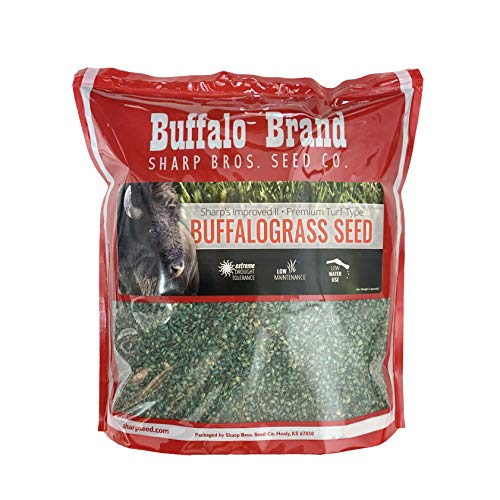
Sharp's Improved II Buffalo Grass: Editorial Assessment
Buffalo grass is the most genuinely "native lawn" option available for the American Great Plains and semi-arid West. While most lawn grasses were imported from Europe or Africa, buffalo grass (Buchloe dactyloides) evolved right here — surviving centuries of drought, bison herds, and prairie fires. Sharp's Improved II is a selected cultivar with better density and color than wild-type buffalo grass.
The water savings are the headline feature, and they're not marketing hype. Buffalo grass has survived on the Great Plains for millennia with nothing but natural rainfall. In most of zones 5-8, you can maintain a buffalo grass lawn without supplemental irrigation. Period. In an era of water restrictions and rising utility bills, that's a powerful argument.
Important note: you're buying burrs, not pure seed. Buffalo grass seed naturally comes encased in a hard burr that inhibits germination. Sharp Bros. pre-treats and primes the burrs to improve germination rates, but you should still soak them in water for 24-48 hours before planting. Even with treatment, germination is slow (14-30 days) and establishment takes 3-5 months. This is not a quick-results grass.
Here's where we need to be completely honest: buffalo grass is an advanced-level choice. It's slow to establish, which means aggressive weeds can move in during the long grow-in period. You'll likely need a pre-emergent herbicide strategy. It also goes dormant (turns brown) from late fall through mid-spring — that's 4-5 months of tan lawn in many climates. And it only performs in full sun; shade is a dealbreaker.
But for the right homeowner — someone in Kansas, Nebraska, Oklahoma, Colorado, or the western reaches of the transition zone who wants a native, sustainable lawn that doesn't require a sprinkler system — Sharp's Improved II buffalo grass is a genuinely responsible and ultimately rewarding choice. Just bring patience.
Purchase Options
Seeding Calculator
Pairs Well With
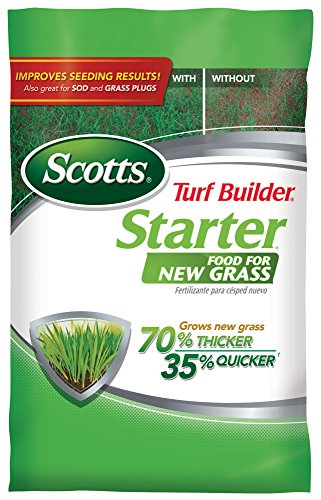 FertilizerEditor's Pick
Anyone planting grass seed or laying sod. The default starter fertilizer recommendation for its proven 24-25-4 formula.
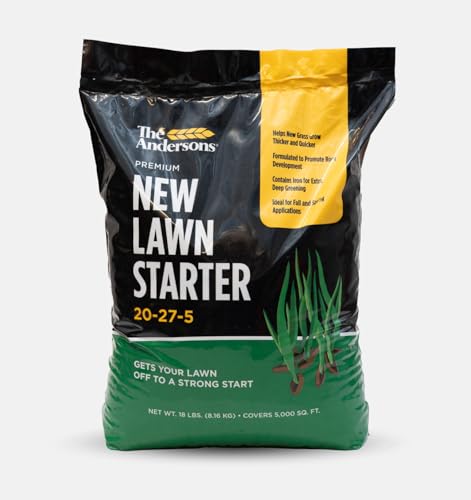 Fertilizer
The Andersons
The Andersons Starter Fertilizer 18-24-12
Homeowners who want the best possible starter fertilizer and are willing to invest in a premium product. The enthusiast upgrade over Scotts Starter.
Similar Products
 Grass Seed
Outsidepride
Outsidepride Xeriscape Native Prairie Grass Mix
Great Plains and arid-West homeowners who want a native, no-irrigation, ultra-low-maintenance lawn alternative that thrives on neglect.
 Grass Seed
Patten Seed Company
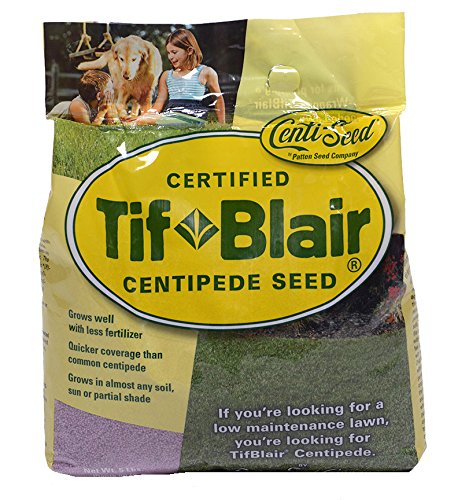
TifBlair Centipede Grass Seed
Southeast homeowners who want a beautiful, low-maintenance lawn that practically takes care of itself — just don't over-fertilize it.
 Grass SeedEditor's Pick
Outsidepride
Outsidepride Yukon Bermudagrass
Transition zone homeowners (zones 6-7) who want a bermuda lawn but need cold hardiness that common bermuda can't provide.