Best Grass Seed for Shade (2026 Guide)
Primary shade seed pick
Outsidepride Combat Extreme Northern Zone
Outsidepride
Northern homeowners in zones 3-6 with shaded yards who want quality seed genetics without big-brand pricing.
Choose this fine-fescue-heavy blend only after confirming the area gets at least two hours of usable light.
Shady yards are the single biggest challenge in lawn care. Most grass species evolved in open meadows and savannas — they want full sun. But with the right seed selection and a few adjustments to your maintenance routine, you can grow a respectable lawn even under mature trees. Here is what actually works.
Weekend work order
Thin shade repair loadout
For a cool-season side yard or under-tree repair, buy the seed only after the light audit clears the area. Then pair it with a starter and a spreader so the repair is a process, not a random bag toss.
- Do not buy grass seed for areas with under 2 hours of usable light.
- Seed in early fall for the highest survival odds in cool-season shade.
- Run starter at a reduced rate in shade to avoid pushing soft, disease-prone growth.
Heavy-shade seed
Outsidepride Combat Extreme Northern Zone
Outsidepride
Northern homeowners in zones 3-6 with shaded yards who want quality seed genetics without big-brand pricing.
The fine-fescue-heavy choice when tree canopy is the main reason the lawn thinned.
Seed-day starter
Scotts Turf Builder Starter Food for New Grass
Scotts
Homeowners seeding or overseeding who want the simplest reliable starter fertilizer.
Use at seeding time unless a soil test or local phosphorus rule says not to.
Even application tool
Scotts Turf Builder EdgeGuard DLX Broadcast Spreader
Scotts
The default broadcast spreader recommendation for most homeowners. Especially for lawns with sidewalks, beds, and edges that need spread control.
A broadcast spreader keeps seed and starter from landing in stripes and hot spots.
Why Growing Grass in Shade Is Hard
Grass is a sun-loving plant. Photosynthesis — the process that converts light into energy for growth — drops off dramatically once you fall below about 4 hours of direct sunlight per day. In heavy shade, grass plants stretch thin trying to reach light, producing fewer tillers (side shoots) and thinner blades. The result is a sparse, weak lawn that cannot compete with shade-tolerant weeds.
But reduced light is only part of the problem. Shady areas under trees also deal with root competition for water and nutrients, reduced air circulation that promotes fungal disease, and leaf litter that smothers seedlings in fall. Shade from buildings is somewhat easier to work with because you do not have the root competition factor, but you still face the reduced light issue.
The practical takeaway: you cannot make shade grass look like a full-sun lawn. The goal is a reasonably dense, green turf that covers the soil and looks intentional. With the right seed variety and maintenance adjustments, that goal is achievable for most partially shaded yards.
Understanding Your Shade Level
Not all shade is the same. Before choosing a seed, you need to honestly assess how much light your problem area actually gets. Walk out on a sunny day and track the light from morning to evening — or just pay attention over a week.
Deep Shade (Under 2 Hours of Sun)
Areas under dense evergreens, between buildings, or on the north side of structures with no reflected light. The honest truth: no turfgrass will thrive here long-term. Even the most shade-tolerant fine fescues need around 3 hours of filtered light. For deep shade areas, consider ground covers like pachysandra, hostas, or a mulch bed instead of fighting a losing battle with grass.
Partial Shade (2-4 Hours of Direct Sun)
This is the sweet spot where shade-tolerant grass seed can succeed. The area gets some direct sun — usually in the morning or late afternoon — plus indirect light during the rest of the day. North-facing slopes that are open to the sky, or areas under high-canopy deciduous trees, often fall into this category. A fine fescue or shade-tolerant tall fescue blend is your best bet here.
Dappled Shade (Filtered Sun Through Canopy)
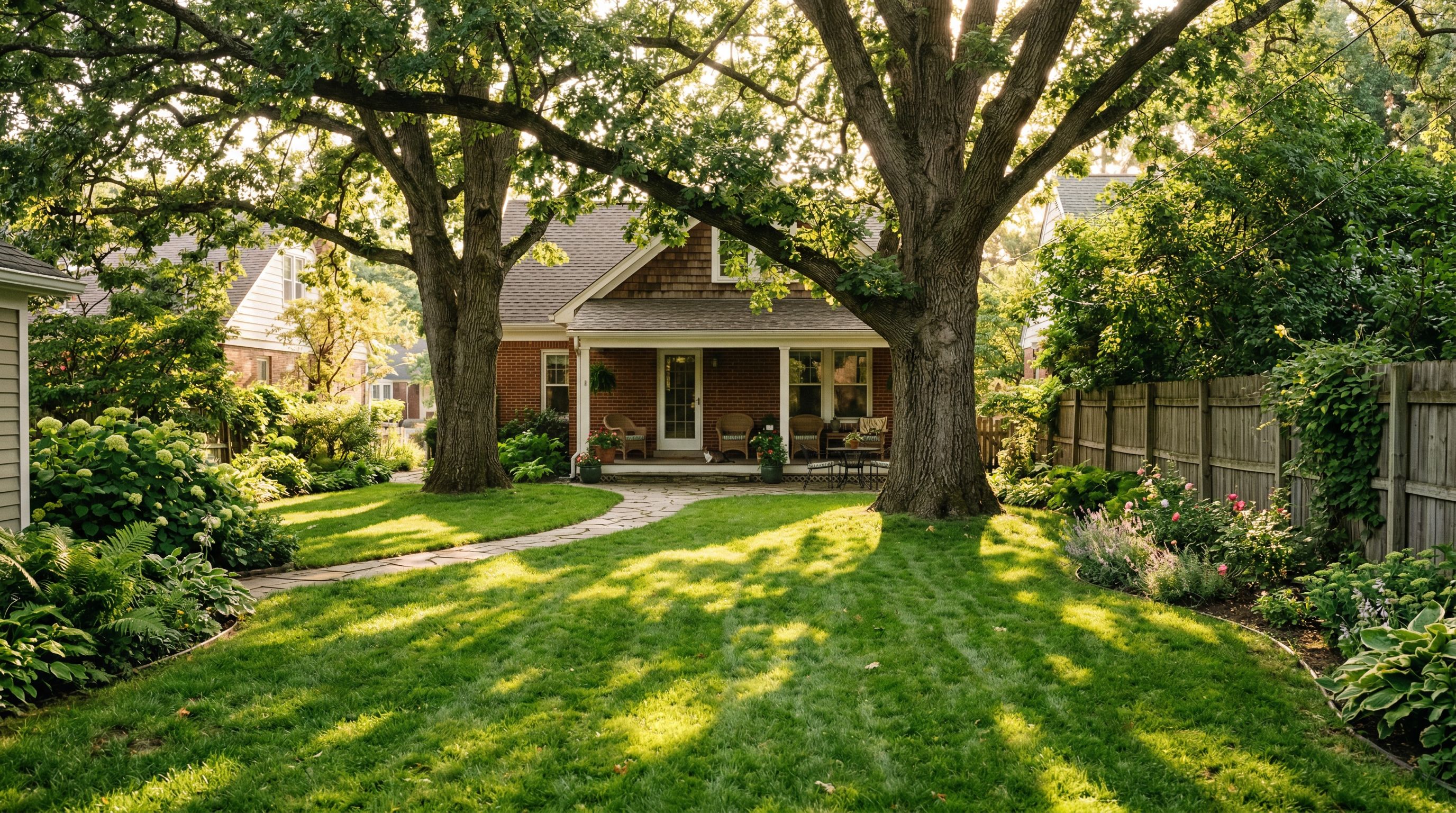
Areas under trees with an open canopy — think mature oaks or birches — where sunlight filters through shifting gaps in the leaves throughout the day. The total light accumulation can be 4-6 hours equivalent. This is the easiest shade situation. Most shade-tolerant blends will do well, and even some sun/shade mixes will establish successfully. The key is pruning lower branches to raise the canopy and let in more light.
Pro Tip
Take a "sun audit" of your shady area by checking it every 2 hours from 8 AM to 6 PM on a clear day. Note which sections get direct sun and for how long. This 10-minute exercise saves you from buying the wrong seed.
Best Grass Species for Shade
Fine Fescue (Best Overall for Shade)
Fine fescue is the gold standard for shade tolerance in cool-season climates. The category includes creeping red fescue, chewings fescue, hard fescue, and sheep fescue — all of which tolerate lower light levels than any other common turfgrass. Fine fescues produce thin, wispy blades that give a soft, almost meadow-like appearance. They require less fertilizer and water than most grasses, which is actually an advantage in shady areas where you want to avoid lush growth that invites disease.
The downside: fine fescues do not handle heavy foot traffic or heat well. In zones 7 and warmer, they tend to thin out during summer. They also do not recover from damage since they lack stolons or rhizomes (except creeping red fescue, which spreads modestly). For a low-traffic shady area in zones 3-6, fine fescue is hard to beat.
Tall Fescue (Best Shade + Traffic Tolerance)
Tall fescue is not as shade-tolerant as fine fescue, but it is significantly tougher. Its deep root system (up to 6 inches) helps it compete with tree roots for water and nutrients, which is a major advantage in under-tree planting. Modern turf-type tall fescues have finer blades than the old KY-31 pasture varieties and look perfectly presentable in a home lawn.
Most shade-tolerant seed blends are built around tall fescue with fine fescue mixed in. This gives you the toughness of tall fescue with the shade tolerance of fine fescue. The blends work well because the fine fescue fills in the shadiest spots while the tall fescue dominates in the areas that get a bit more light.
Kentucky Bluegrass (Limited Shade Tolerance)
KBG is the most popular lawn grass in the northern US, but it needs at least 4-6 hours of direct sun. In partial shade, it thins out quickly and becomes susceptible to powdery mildew. Some newer shade-tolerant KBG cultivars (like Bewitched and Mazama) perform better than older varieties, but even these cannot match fine fescue in low-light conditions.
If your shady area also gets decent sun for part of the day, a blend with a small KBG component (10-15%) can work. The KBG provides self-repair capability through rhizomes, while the fescue species handle the shade. Just do not expect KBG to be the dominant grass in the shaded sections.
Warning
Avoid warm-season grasses (bermuda, zoysia, St. Augustine) for shade in northern climates. While St. Augustine handles shade reasonably in the deep South, none of these species have meaningful shade tolerance in zones 3-7.
Our Top Picks for Shady Lawns
After comparing labels, extension guidance, cultivar claims, and owner reports across dozens of shade-tolerant seed blends, these three are the best fits for homeowners dealing with less-than-ideal light.
| Spec | Pennington Smart Seed Sun & Shade | Outsidepride Combat Extreme Northern Zone | Jonathan Green Black Beauty Ultra |
|---|---|---|---|
| Brand | Pennington | Outsidepride | Jonathan Green |
| Rating | 8.8/10 | 8.3/10 | 9.3/10 |
| Price | $25-40 for 7 lbs | $25-35 for 5 lbs | $28 (7 lbs) – $105 (25 lbs) |
| Species | Tall Fescue / Kentucky Bluegrass Blend | Turf-Type Tall Fescue / Kentucky Bluegrass Blend | 80% Turf-Type Tall Fescue / 10% Kentucky Bluegrass / 10% Perennial Ryegrass |
| Germination | 7-14 days | 10-14 days | 7-14 days |
| Coverage | Up to 1,750 sq ft (new lawn) | Up to 625 sq ft (new lawn) | Up to 3,125 sq ft (new lawn) |
| Best For | Budget-conscious homeowners in zones 3-8 with mixed sun/shade conditions who want reliable results without premium pricing. | Northern homeowners in zones 3-6 with shaded yards who want quality seed genetics without big-brand pricing. | Lawn enthusiasts who want the darkest, most drought-tolerant cool-season lawn possible — the internet's most recommended grass seed for a reason. |
Best Value: Pennington Smart Seed Sun & Shade
Pennington's Sun & Shade mix is our go-to recommendation for most homeowners with shady yards. The blend includes tall fescue, fine fescue, and a small percentage of Kentucky bluegrass, giving you solid performance in both sun and shade. The Smart Seed coating includes a moisture-retaining layer that helps with germination — particularly useful in shady spots where watering can be tricky due to tree canopy interception.
At roughly $2/lb, it hits the sweet spot between quality and value. You are not getting the premium cultivars found in enthusiast blends, but for most yards the difference is subtle. This is the seed to reach for if you are overseeding a large shady area where per-pound cost matters.
Pennington Smart Seed Sun & Shade
Pennington
Budget-conscious homeowners in zones 3-8 with mixed sun/shade conditions who want reliable results without premium pricing.
Most Shade-Tolerant: Outsidepride Combat Extreme
If you have a seriously shady yard — the kind where other mixes have failed — Combat Extreme is worth the premium. This is a fine fescue-heavy blend specifically engineered for low-light conditions. It includes creeping red fescue, chewings fescue, and hard fescue varieties selected for shade performance.
The tradeoff is traffic tolerance. Fine fescue dominant blends do not hold up to heavy foot traffic or dog runs. But for a side yard, under-tree area, or north-facing slope that just needs to look green, Combat Extreme delivers where others thin out.
Outsidepride Combat Extreme Northern Zone
Outsidepride
Northern homeowners in zones 3-6 with shaded yards who want quality seed genetics without big-brand pricing.
Partial Shade with Traffic: Jonathan Green Black Beauty Ultra
Black Beauty Ultra is the go-to pick for partial-shade yards that also see real foot traffic — kids, dogs, paths cutting between beds. The 80 percent elite turf-type tall fescue base handles 3 to 5 hours of dappled or direct sun comfortably; the 10 percent KBG content provides the rhizome spread that knits damaged sections back together. Its waxy blade coating also reduces fungal pressure, which matters in low-airflow shaded corners.
It is not a fine-fescue blend, so do not expect performance under heavy shade (under 2 hours of light). For dense-canopy zones, lead with Combat Extreme. For everything else in the partial-shade band — driveway strips, under maples, the north side of the house — Black Beauty Ultra is the most resilient of the three picks. See our complete grass seed selection guide for the broader decision framework.
Jonathan Green Black Beauty Ultra
Jonathan Green
Lawn enthusiasts who want the darkest, most drought-tolerant cool-season lawn possible — the internet's most recommended grass seed for a reason.
Tips for Seeding Shady Areas
Even the best shade-tolerant seed needs a few adjustments to your normal seeding routine. These tips will significantly improve your germination rate and long-term lawn density.
1. Raise Your Mowing Height
This is the single most impactful change you can make. Mow shady areas at 3.5-4 inches — a full inch higher than your sunny areas. Taller blades capture more of the available light, which directly translates to denser turf. Many homeowners mow their entire lawn at one height and wonder why the shade sections are thin. Just raise the deck when you mow under trees.
2. Overseed at a Higher Rate
Increase your seeding rate by 30-50% in shady areas compared to the bag recommendations (which assume full sun). Not all seeds will survive in reduced light, so putting down more seed compensates for the lower germination and establishment rate. For a typical shade blend, aim for 8-10 lbs per 1,000 sq ft for new lawns versus the standard 6-8 lbs.
3. Reduce Foot Traffic
Shade-stressed grass recovers from wear much more slowly than grass in full sun. If possible, route foot paths around shady lawn sections or install stepping stones through high-traffic shady corridors. This alone can make the difference between a thin, worn path and a decent-looking lawn.
4. Prune Trees Strategically
Limbing up trees — removing branches below 8-10 feet — opens up the canopy and dramatically increases the light reaching the ground. Even removing 2-3 major lower branches can shift an area from deep shade to dappled shade, which makes a significant difference in grass performance. Hire an arborist for large trees; the investment pays off in lawn quality.
Pro Tip
Apply a starter fertilizer when seeding shady areas, but reduce the rate by 25%. Shade grass needs less nitrogen because it grows more slowly, and excess nitrogen promotes disease in low-light, low-airflow conditions.
5. Overseed Every Fall
Unlike sunny lawns that can go years between overseedings, shady areas benefit from annual overseeding in early fall. The existing grass will naturally thin over summer when the tree canopy is at its densest. A fall overseeding — timed when deciduous trees start dropping leaves and more light reaches the ground — replenishes the turf before winter. This consistent annual maintenance is the real secret to a good-looking shade lawn.
Turn this into a yard order
Thin shade repair has its own basket now
If the problem is a side yard, under-tree patch, or north-facing strip that keeps thinning, use the work-order version for the light audit, buy-or-wait warning, seed pick, starter fertilizer, and spreader.
Open the thin-shade repair plan →Frequently Asked Questions
Can I grow grass in full shade?
No turfgrass will survive in full shade (under 2 hours of any sunlight). If an area gets zero direct or reflected light, your best options are shade-tolerant ground covers, mulch, or hardscaping. Do not waste money on seed that will germinate and then die within weeks.
When is the best time to seed shady areas?
Early fall (late August through mid-September in most northern zones) is ideal. Soil temperatures are still warm enough for germination, but air temperatures are cooling down, which reduces disease pressure. Fall also coincides with leaf drop from deciduous trees, meaning more light reaches the ground right when your seedlings need it most. Spring seeding can work but you will fight more weed competition.
Should I use a different fertilizer for shade grass?
Use the same type of fertilizer but at a reduced rate — typically 25-30% less nitrogen than sunny areas. Shade grass grows more slowly and does not need as much feed. Over-fertilizing in shade promotes tender growth that is more susceptible to fungal diseases. A slow-release fertilizer applied once in early fall and once in late spring is usually sufficient.
Will a sun/shade mix work, or do I need a shade-specific blend?
For partial shade (3-4 hours of sun), a quality sun/shade mix like Pennington Smart Seed Sun & Shade works well. For heavier shade (2-3 hours of sun), go with a shade-specific blend that is dominated by fine fescue species. The fine fescue content is what makes the difference in truly low-light situations.
Related Guides